By Megan Matthews
It’s no secret that today’s political climate has created a harsh environment for members of the LGBTQ+ community. Those who identify outside of the heteronormative ideals of our society often face more prejudice and discrimination. Now, we see attacks on the human rights of the queer community in terms of bills and legislation in addition to a multitude of obstacles facing the LGBTQ+ community.
“Luckily Michigan’s a pretty safe state, but as we’ve seen, a lot of states right now are essentially outlawing trans youths. So, a lot of them are really scared,” said Lauren Brunelle, a Master of Social Work Intern at Grand Rapids Pride Center.
As of March of 2023, the American Civil Liberties Union is tracking 452 anti-LGBTQ bills in the U.S. Many members of the queer community find themselves feeling helpless as they see parts of the country turn away from them, or even people within their own homes. This fear can lead to many detrimental effects on their mental health.
The Trevor Project’s 2022 National Survey on LGBTQ+ Youth Mental Health demonstrates the experiences of almost 34,000 LGBTQ+ youth ages 13 to 24 across the United States. Of the respondents, 45% were LGBTQ+ youth of color and 48% were transgender or nonbinary.
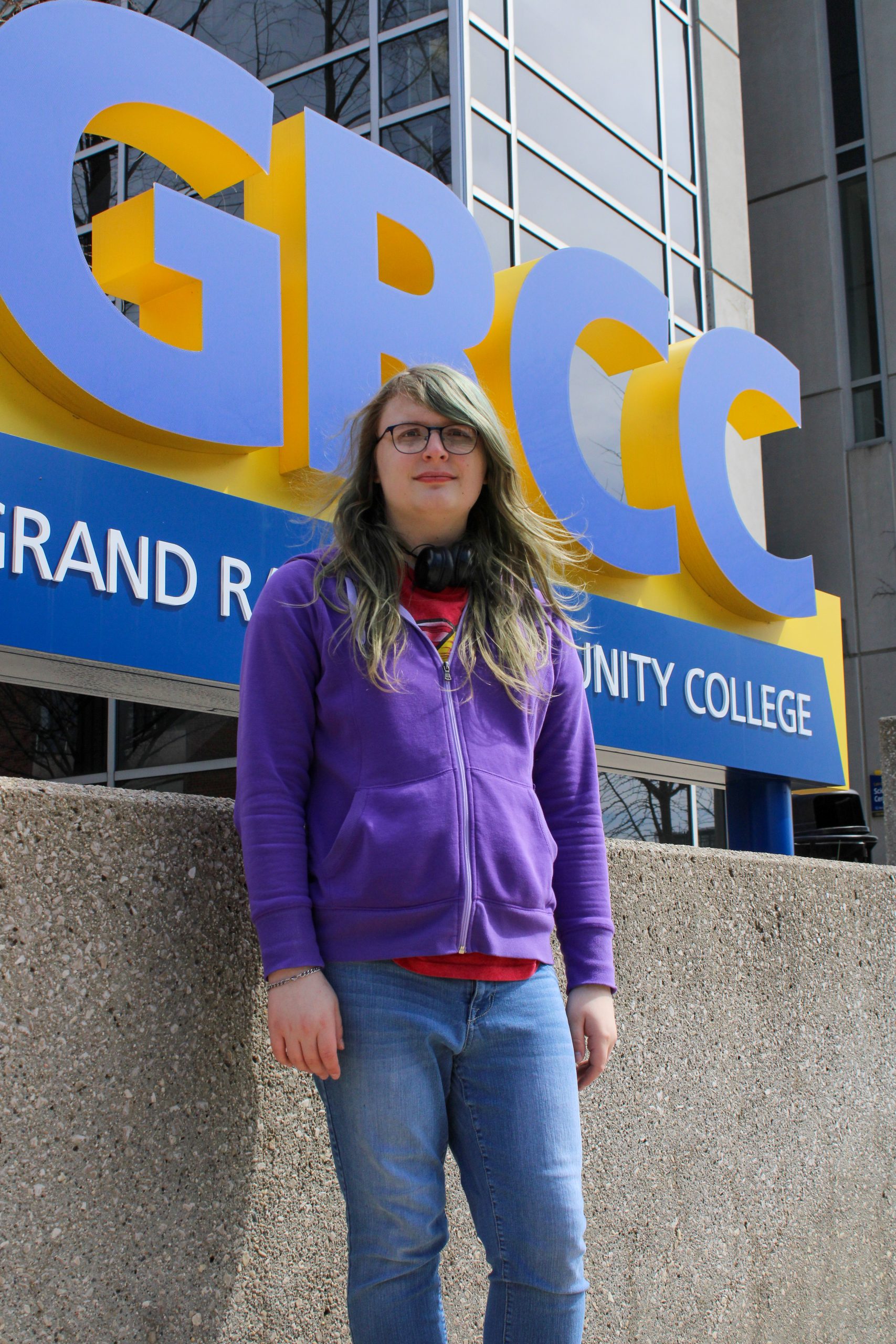
“Not knowing who you are kind of gives you a ‘disconnect’ where you just don’t feel like you,” said Grand Rapids Community College’s Standout President Zoey Kuhn. “Some people can go their entire life without realizing who they are, and not having, or not knowing what they want is kind of stressful.”
Kuhn finds that the first hurdle when tackling mental health symptoms that result from society’s treatment of the LGBTQ+ community, is simply realizing and accepting your queer identity.
“For most people… it’s an ongoing process that you live with through your life,” said GRCC Standout Vice President Elisa LaBarge. “Even for straight people, learning about yourself and changing or accepting yourself is an important part of life. The difference is LGBTQ people don’t have as much representation and aren’t seen as ‘real.’”
In addition to simply coming to terms with an LGBTQ identity, there are many factors contributing to mental health issues. Coming out or transitioning can be a very scary, or even dangerous situation for queer individuals.
“From my perspective, the number one resource people come to us for is mental health support in general,” said Cheyanne Killin, one of the healthcare coordinators at the Grand Rapids Pride Center. “People come to us saying ‘Just being a human is hard. Can I talk to you?’ We do a lot of support via folks that call in regularly just to have a place to talk to. And then housing. I cannot tell you how often people come into our space that are either at risk of being unhoused or are actively unhoused, or are housed and unsafe or in an unhealthy situation.”
While GR Pride doesn’t provide housing, they refer out for housing resources and other supports including therapy, mental health support doctors, transition-based providers and more.
Another obstacle facing trans individuals includes their period of transitioning, a process that can be very difficult. Many face stigma from those around them as they have to take steps to being referred to using their preferred pronouns and/or name. This is often a difficult time for trans individuals as in many cases they are still faced with being misgendered or dead named. Constantly having your gender identity invalidated contributes to many of the mental health issues affecting members of the transgender community.
“The issue of being deadnamed and misgendered in class by professors, is that there isn’t any actual support for dealing with it,” said Aaminah Shakur, GR Prides Accessibility & Healthcare Coordinator after experiencing gender discrimination in the past at another local school. “There is no support. You can go to the dean, you can file a Title IX report. Nothing comes of it though. There is no effort by the schools to hold professors accountable regarding it. They just tell them to do better.”
This is an issue facing many trans students as they are constantly having to correct and remind peers and professors to respect and use their preferred pronouns and/or name. Many students are often too afraid to correct them, and are forced to be continuously misgendered in classes. Fears of this can cause students to even hesitate to transition on campus to avoid these issues.
“GRCC really needs to have easier ways to specify preferred names and preferred pronouns, and it should be like if you change them, they will get sent out to all of your professors,” suggests LaBarge.
While GRCC does have resources to change names and pronouns, many students find that it is either difficult to use, fill out, or the form is not respected in classes or in emails.
“Professors should be required to attend the training that is offered, not just “suggested” but required, and fired if they don’t,” said Shakur
This is a common issue that may seem small or insignificant to those who have never faced the issues of gender discrimination or dysmorphia, but is a major obstacle for transitioning college students.
While these issues seem like massive clouds looming over the lives of queer individuals, it’s important to find others in your community who might be going through similar obstacles.
“Queer people are everywhere, “ said LaBarge. “You know, we don’t just exist in one bubble, so we need to reach out to each other.”
GRCC’s Standout Club offers this sense of community as all members of the LGBTQ+ community and allies are welcome to attend meetings. Their mission is to create a safe, fun environment for our community that welcomes all and creates a stable support system for GRCC’s queer population.
“Remember that you are not alone and you do not take up space, it’s okay to get help and if you have a close friend you can talk to, go talk to somebody,” said LaBarge
Finally, GR Pride staff members encourage LGBTQ+ youth to find ways to focus on celebrating your identities. Remember that there is nobody who gets to control your identities and the way you choose to express them, so be true to who you are.
“Even if there’s no physical community to latch onto, there are still places online that you have access to, that you can talk to someone and you can find those people,” said Killin. “And this idea that regardless of where you are and regardless of what you’re dealing with, you deserve that space. You deserve your people, and you deserve to be happy.”