By Gabriel Solis
Timothée Chalamet is on a hot streak. And he knows it.
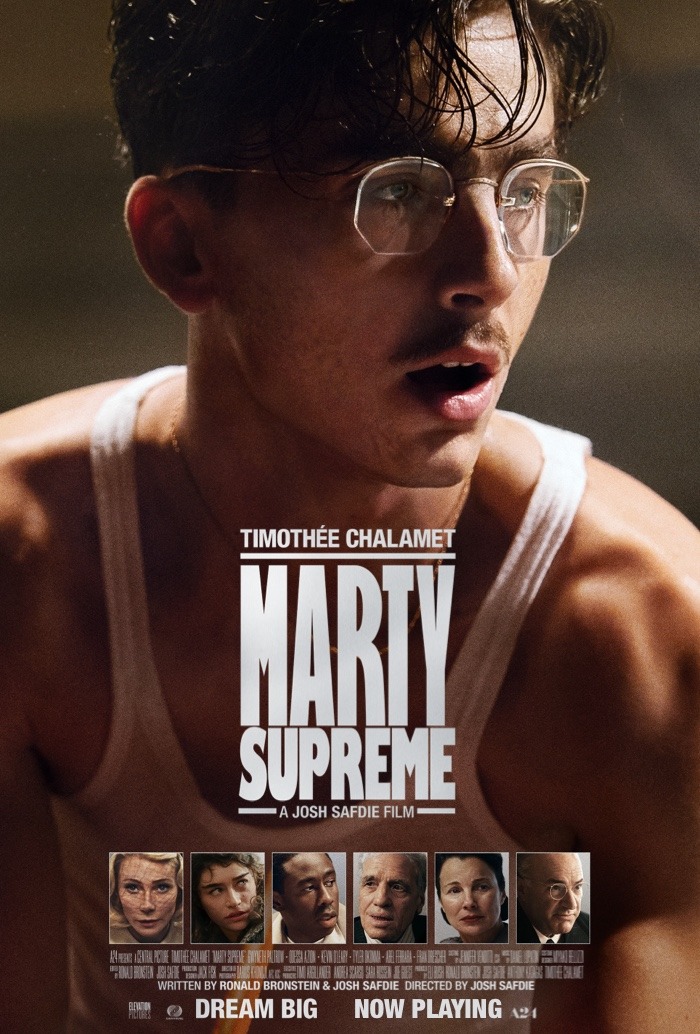
Coming off of a string of critically acclaimed performances, the actor has netted himself an Oscar nomination and a Golden Globe win for his starring role in Josh Safdie’s “Marty Supreme.” It was a victory a long time in the making, and one that Chalamet very much deserved – just ask him.
“It’s been like seven, eight years that I feel like I’ve been handing in really, really committed, top-of-the-line performances,” he told interviewer Margaret Gardiner. “It’s important to say it out loud because the discipline and the work ethic I’m bringing to these things, I don’t want people to take for granted. I don’t want to take it for granted. This is really some top-level s***.”
These comments come amidst a string of many others in the wake of the film’s release, and even before that. This apparently newfound propensity for bragging has sparked controversy among the actor’s fans and peers. Comedian Chelsea Handler, on a recent podcast appearance, used her platform to echo a sentiment that has become fairly widespread.
“It’s hard to hear someone talk about how great they are at acting,” she said, later commenting, “Leo (DiCaprio) wouldn’t do that…he wouldn’t talk like that.”
So, what gives? Is this a case of passion and pride gone a little too far? Or does the ambitious young talent simply enjoy the sound of his own praises? The answer may be a little more complicated.
In “Marty Supreme,” Timothée Chalamet plays an aspiring young table tennis player named Marty Mauser with dreams of a world championship win. The film has several noteworthy components. Chalamet, to address the elephant, is almost as excellent as he says he is. Gwyneth Paltrow is sufficiently effective in her first non-Marvel role in years, and Tyler, the Creator adds a healthy dose of levity, even if he’s just playing himself. Relative newcomer Odessa A’zion does well with what little agency the script gives her. The whole movie is extremely well-shot, well-scored, and creatively edited, among other elements. But this film is greater than the sum of its parts; the real power comes from the story itself.
On premise alone, one might draw comparisons to classic sports movies like “Rocky” or “Raging Bull.” But the similarity ends there. “Marty Supreme” isn’t about ping-pong so much as it is about obsession. Marty Mauser is a virtual black hole of pain and suffering. He lies, cheats, steals from, abuses, and manipulates everyone who comes into his path. He says disgusting, vile things, and only regrets them when they don’t work in his favor. He hurts people, even those closest to him, and moves on without a second’s pause. He justifies all of this to himself as a necessary moral casualty in pursuit of what he really wants, the person he burns to be…the ping-pong champion of the world. The juxtaposition is effectively ridiculous, and does well to highlight the insanity of Marty’s actions, but here’s the thing: he is really, really good at ping pong. And he spends nearly the whole film reminding everybody of it, bragging about his past and even future accomplishments, constantly talking up his talent and pursuit of greatness.
Sound familiar? It should.
Chalamet’s talk surrounding the film may be controversial, but it’s controversial by design. It’s performance art. Does he believe it? Maybe. But that’s not the point. It’s meant to get people arguing, and therefore talking, about his performance and about the movie. Chalamet himself all but confirmed this in an interview with IndieWire last month.
“I’m trying to get this out in the biggest way possible. In the spirit of Marty Mauser,” he said at the time.
It’s working incredibly well. The vast majority of online discourse surrounding the film can be traced back to his comments. Chelsea Handler’s public criticism was merely a blessing in disguise, feeding into the conversation machine. Leonardo DiCaprio may not talk like that, but if Timothée Chalamet wins an Oscar, it will be because he did.
At the end of the film, Marty Mauser learns his lesson. He weeps as he becomes painfully aware of the time he has wasted, the people he has sacrificed, and the futility of his incessant braggadocio. Whether the actor playing him shares that awareness of his own rhetoric is up for debate, but one thing is for certain: I might not have bought a ticket without it.
“Marty Supreme” is in theaters now.