Every single year over 625,000 tons of trash are processed by the Kent County Department of Public Works, which includes the everyday trash you and I throw away on Grand Rapids Community College’s campus. That’s enough trash to fill the 107,601-person capacity University of Michigan football stadium, twice. So, at the end of the day, where does all of this trash go?

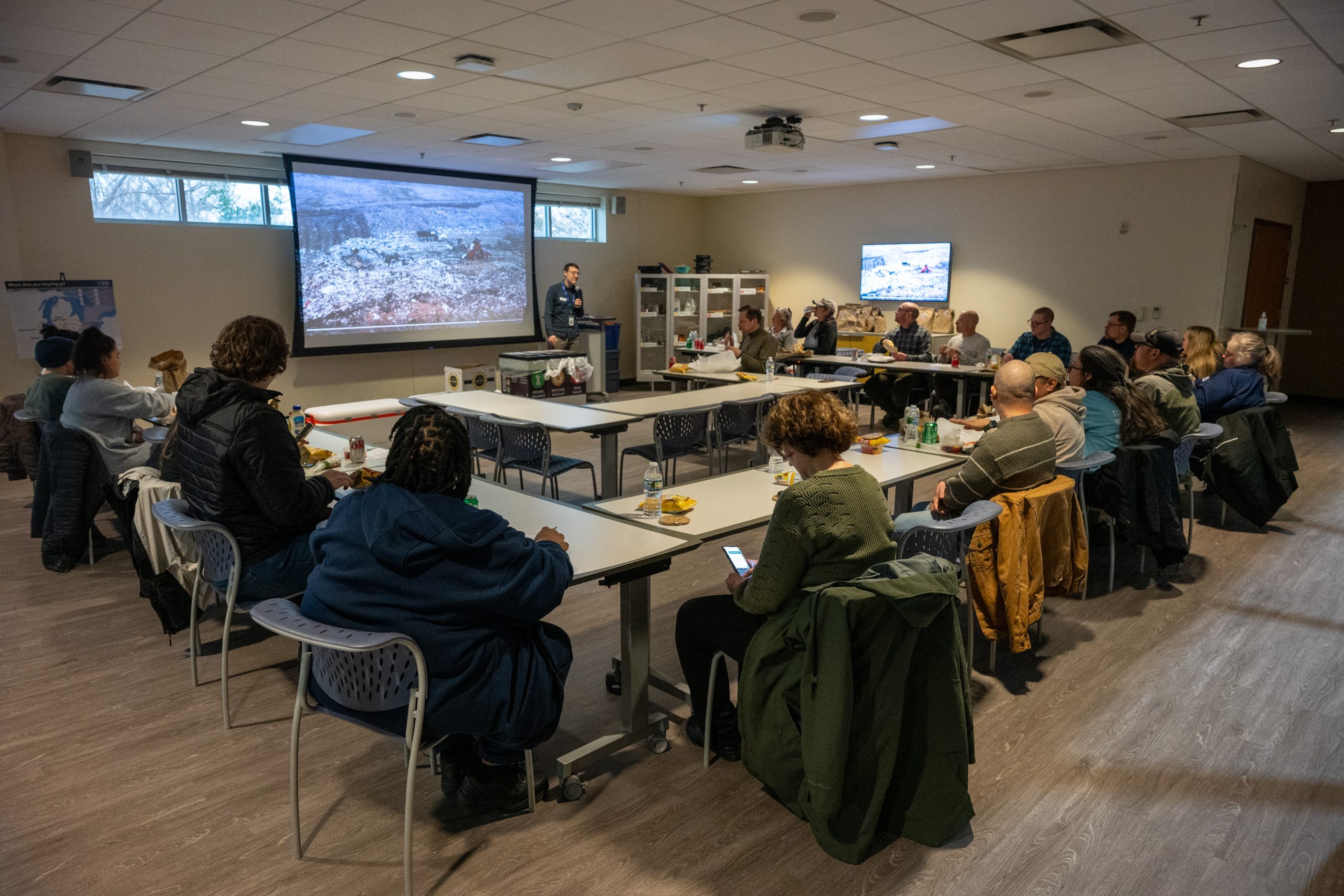
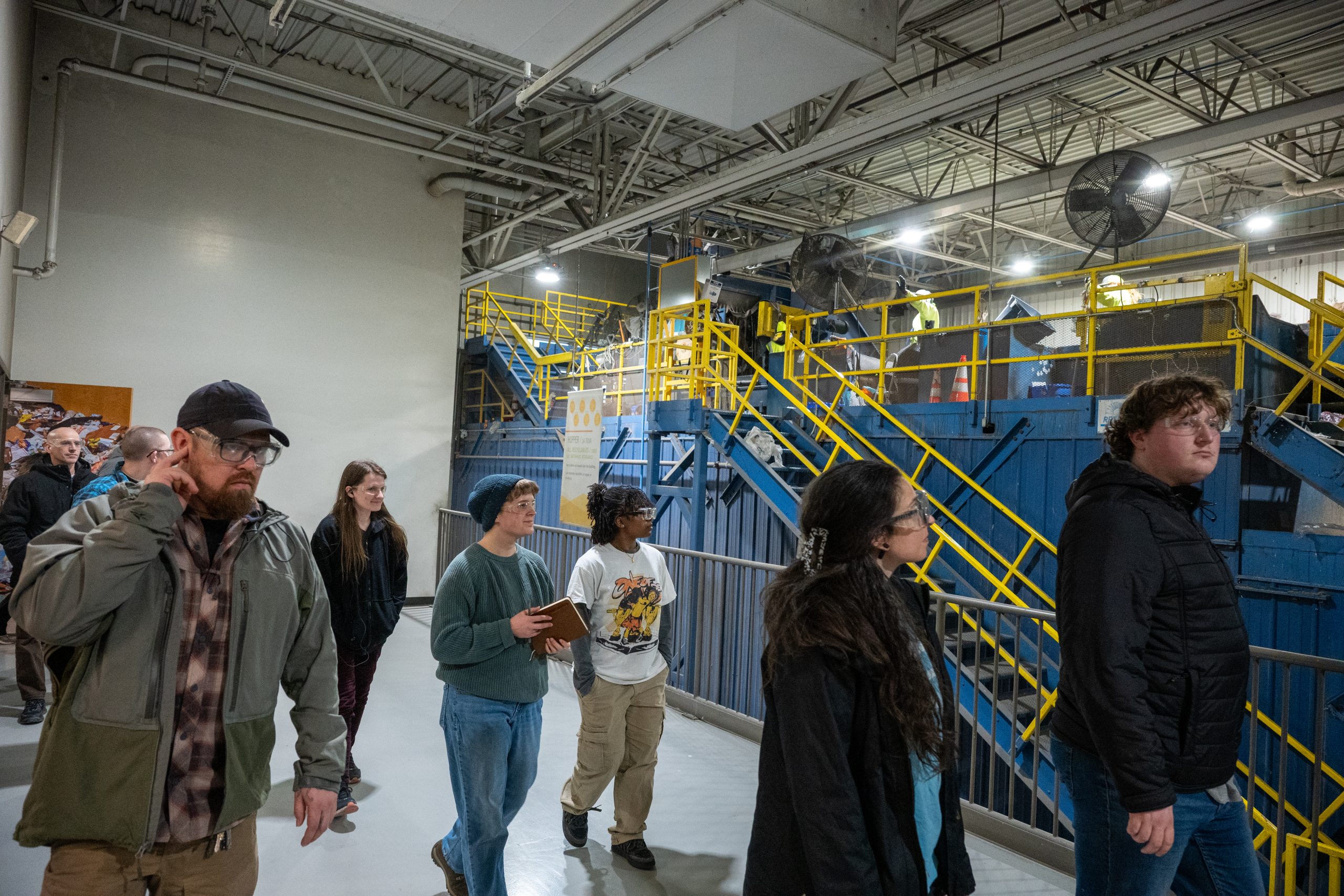
As a part of GRCC’s campus initiative, “Race to Zero Waste,” the Kent County DPW offered a tour for students and staff to learn about the full lifecycle of waste and recycling to help reduce landfill use. Along this tour, we visited the Kent County Waste to Energy Facility, the South Kent Recycling & Waste Facility, and the Kent County Recycling & Education Center.
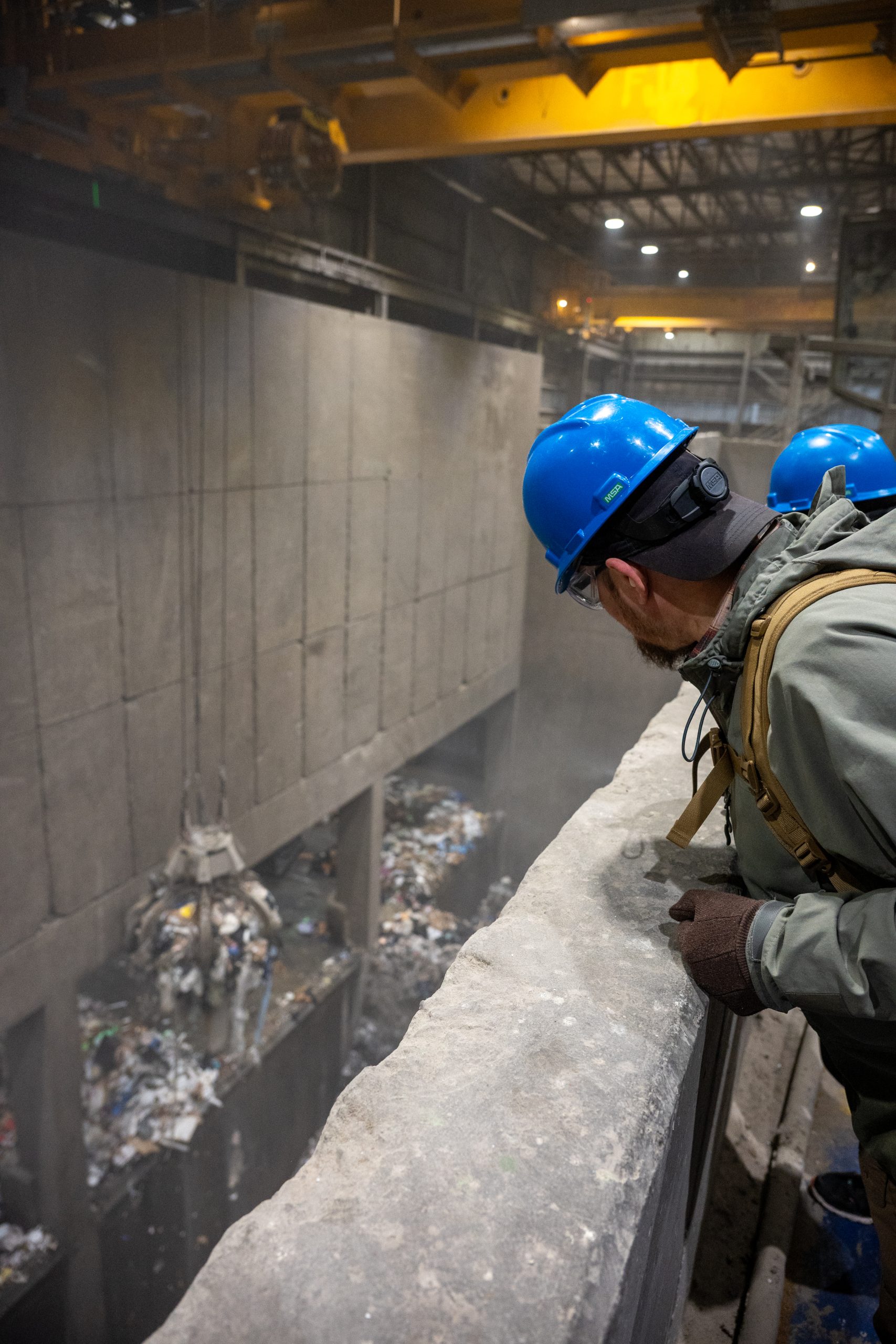
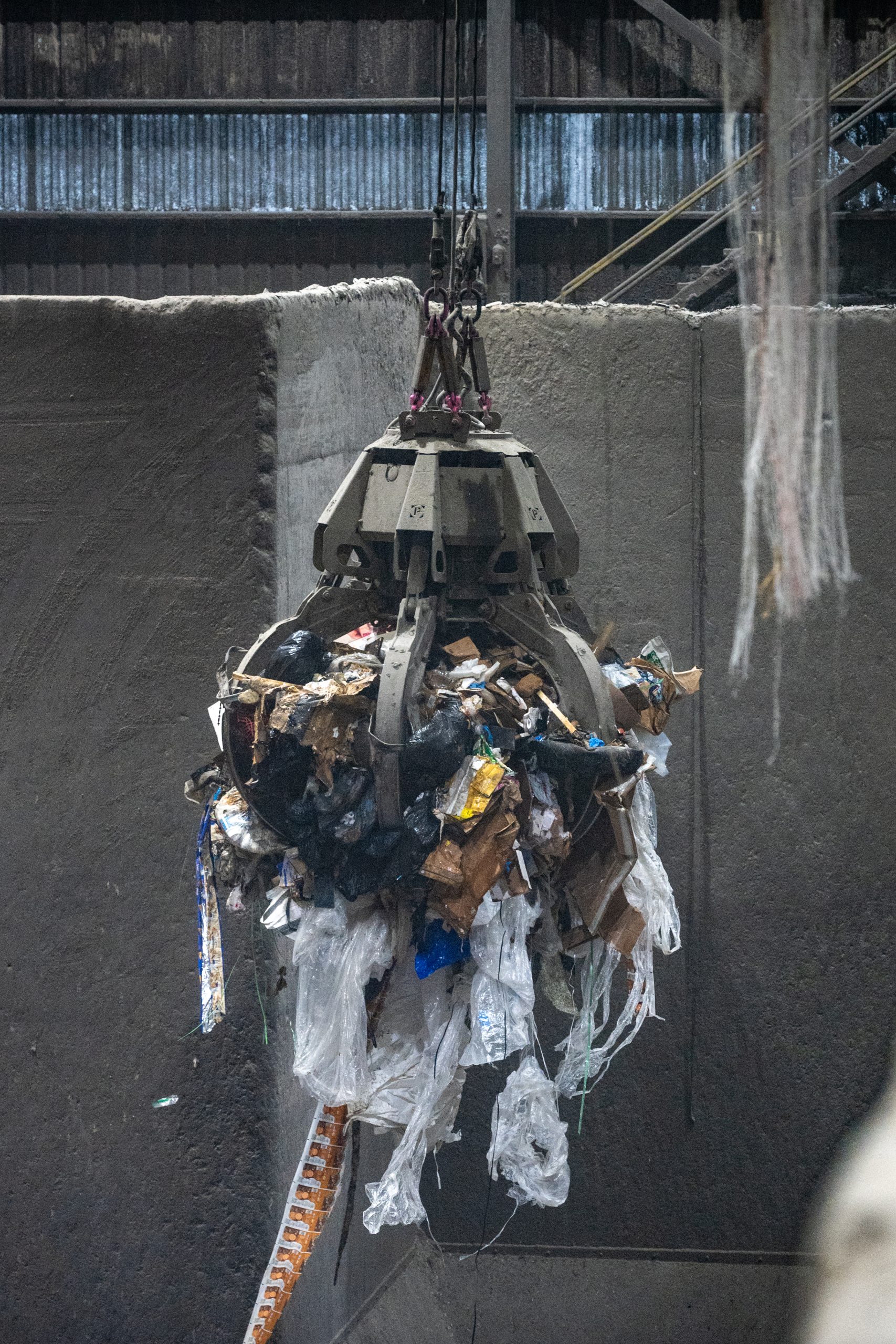
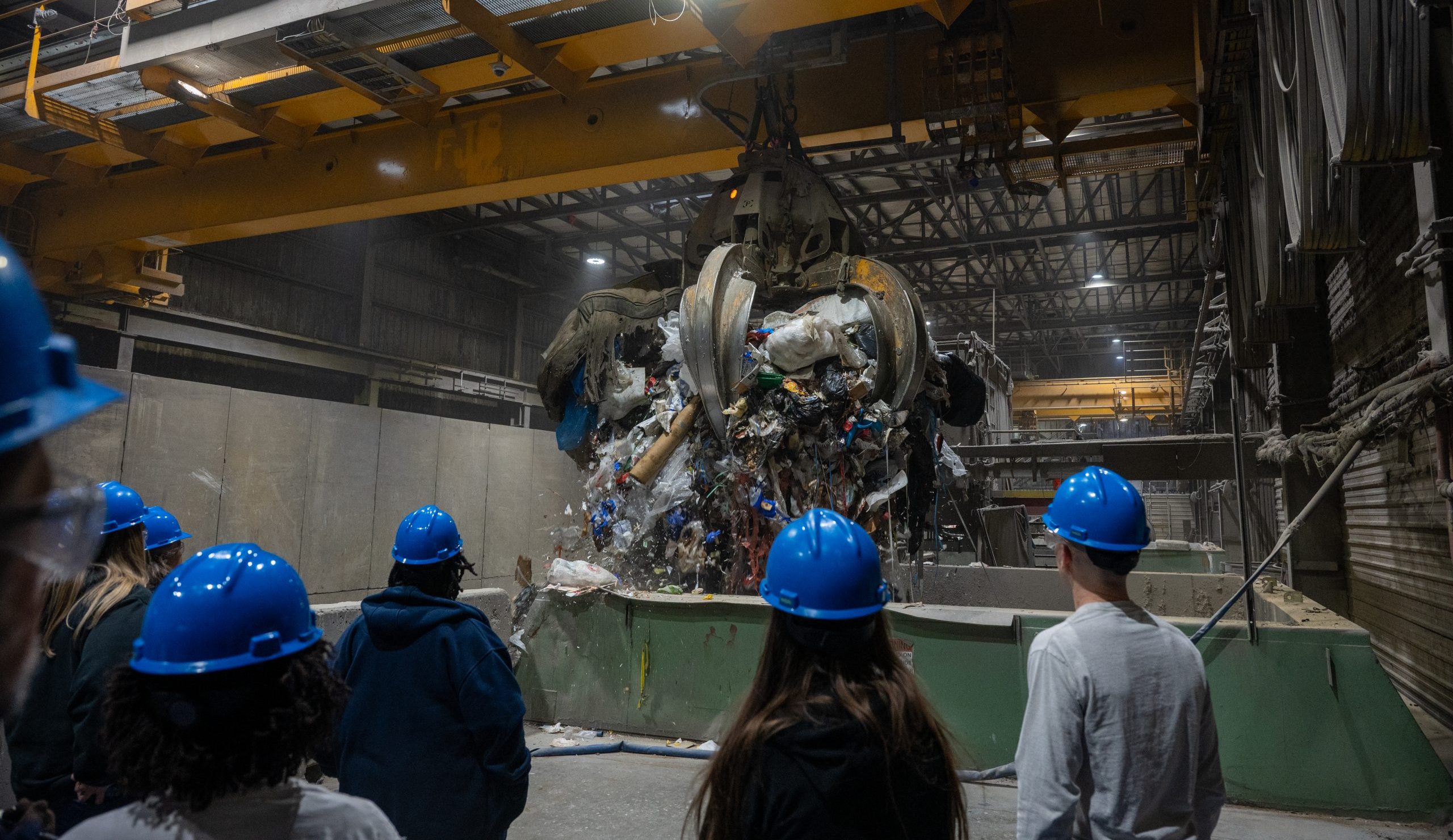
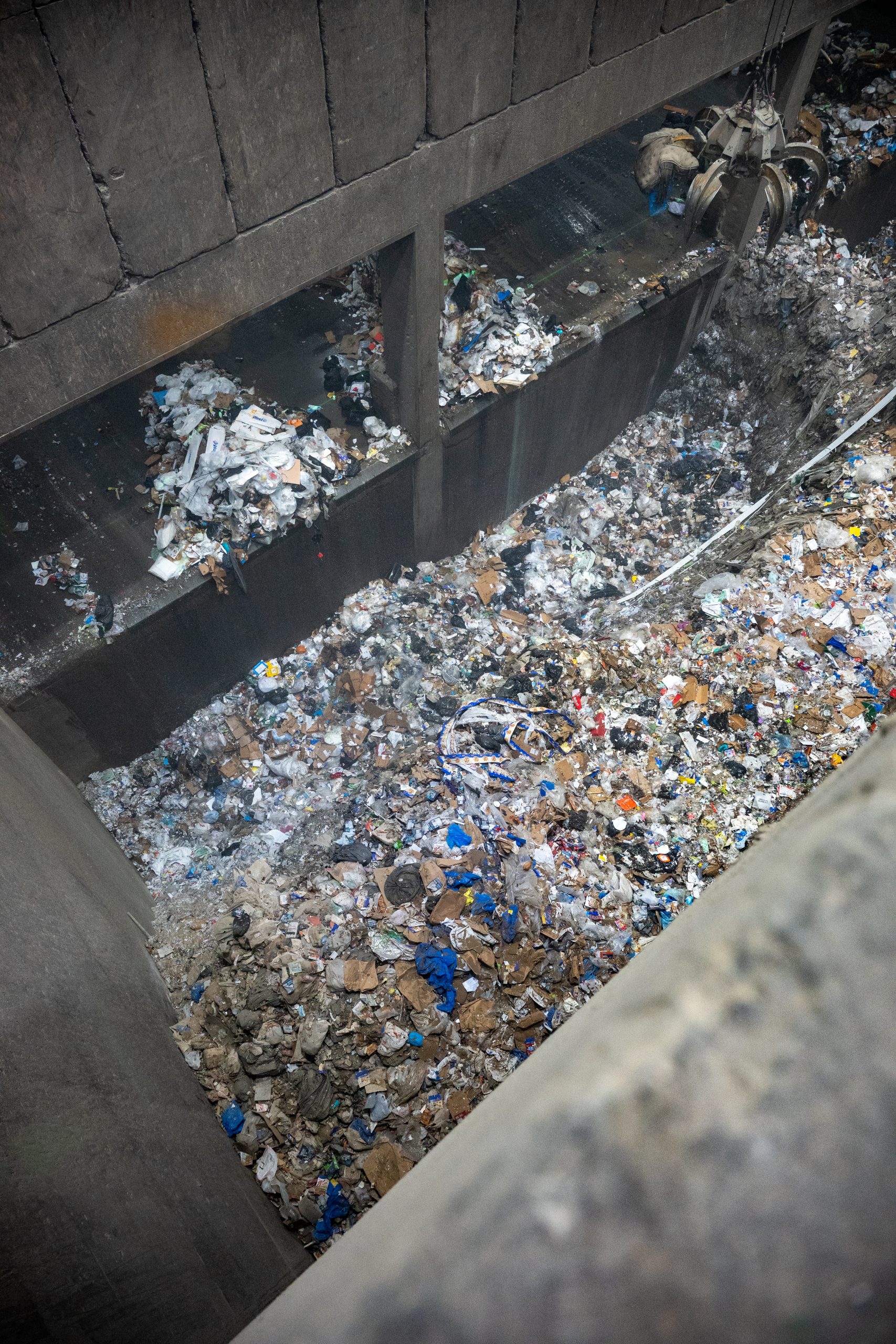
Beginning at the Waste to Energy facility, this space is designed for commercial hauling vehicles that deposit waste and, through an extensive process, repurpose waste into steam power used by the facility. Once trucks arrive at the Waste to Energy facility, they are weighed and sent to the tipping floor, where waste is visually inspected for unacceptable items, such as scrap tires and mattresses. The rest of the waste is then pushed into storage pits and thoroughly mixed before being loaded into hoppers, which transfer the waste the rest of the way to the almost entirely self-sustaining combustion chamber. The chamber burns at over 2,000 degrees and can finish a hopper load in 1-2 hours.
“Do you guys smell trash right now?” asked Rachael Underwood, Environmental Manager of the Waste to Energy facility.
The answer was no, we couldn’t smell any trash.
In response, Underwood explained why this was.
“See that building right there (next door)? There’s almost 8 million pounds of trash in there right now,” Underwood said. “We pull the oxygen directly over the trash pit, so what that means is that there is no smell here, there’s no smell outside, and there’s no smell in the neighborhoods.”
As the waste burns, heat converts water into steam, which is superheated to produce power for their turbine-driven generator. The energy produced by this process goes back into the building.
Underwood added, “So our power here, all the lights you see, are generated with trash. We do not buy electricity off of the grid. We can make up to 18 megawatt hours, three that we use internally, and the rest we can sell to Consumers (Energy)… and we can power about 11,000 homes a year.”
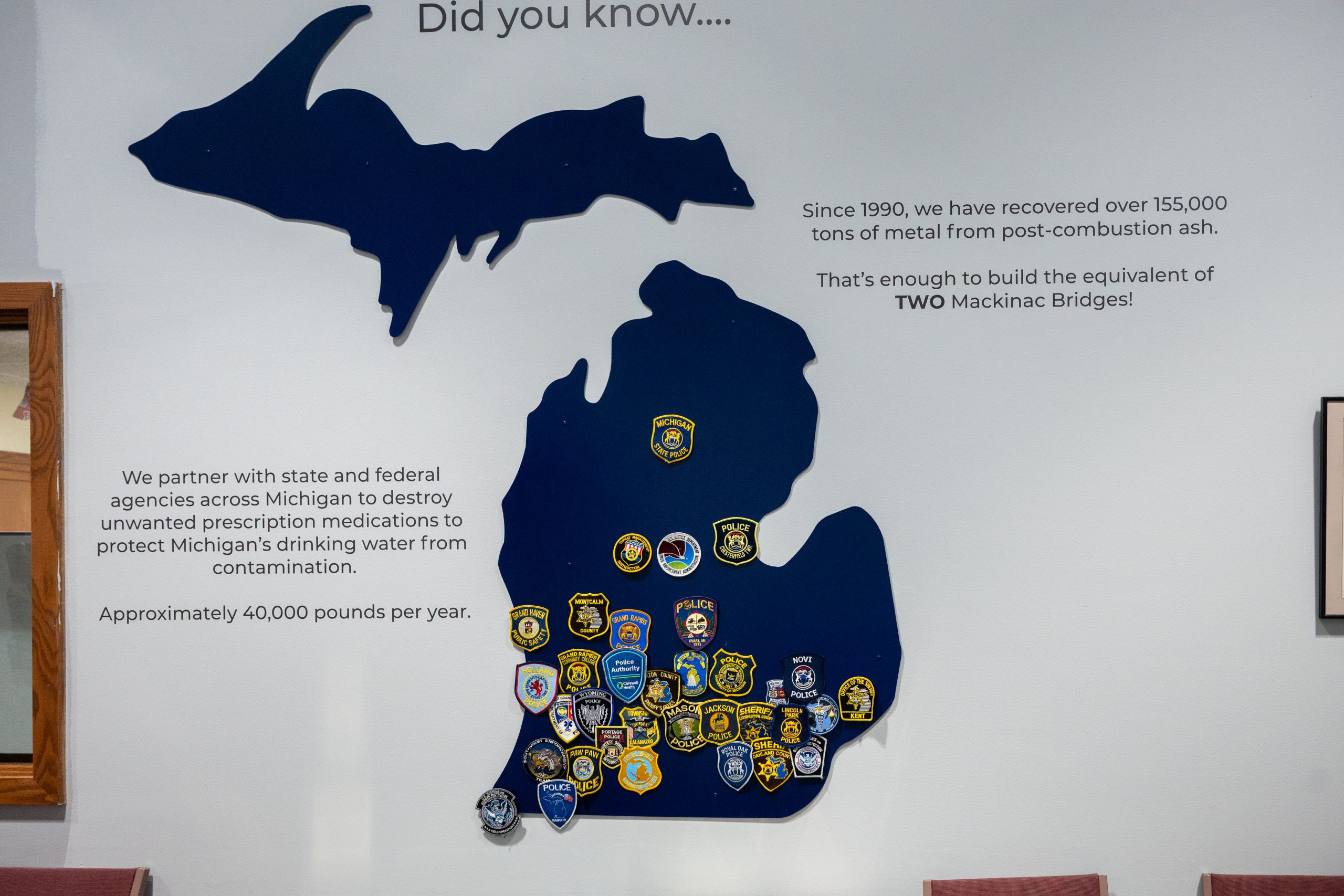
After combustion, the volume of the waste is reduced by 90%, and all that’s left behind is ash and metal. Ferrous metals, such as iron and steel, are recovered using rotating drum magnets. Non-ferrous metals, like aluminum and copper, are separated by an eddy current system. Metal collected through this process is then sold for the purpose of making new products. In the last year alone, over 5,300 tons of ferrous metals and 610 tons of non-ferrous metals have been collected.
“So, for the metal recovery system, since this facility opened, we’ve had enough metal to build two Mackinac Bridges. Now we have, at the end of 2024, put in a new metal recovery system, and we’re able to recover even more metal than that. Again, that’s all stuff that would have gone to the landfill,” added Underwood.
Since beginning operations at the 150-acre Kent Landfill in 1989-1990, the Waste to Energy facility has yet to fill its own 18-acre monofill.
So, why aren’t there more facilities like this?
“There’s a lot of people that aren’t fans of waste-to-energy facilities,” Underwood said. “We are the last one in the state of Michigan, and there’s not a great public perception of them, even though we do fantastic work here. They use a lot of these (facilities) in Europe; there’s a standard over there.”
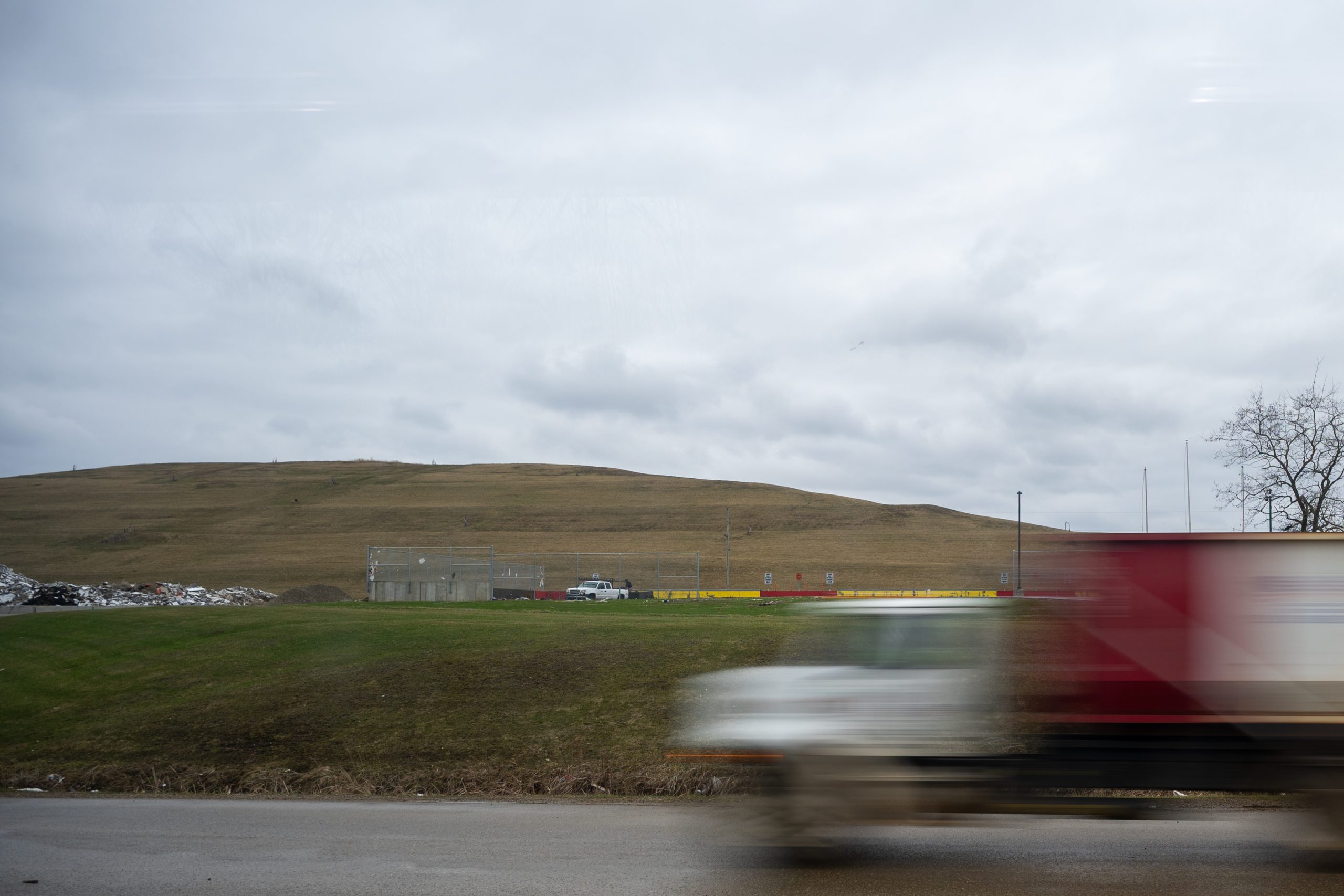
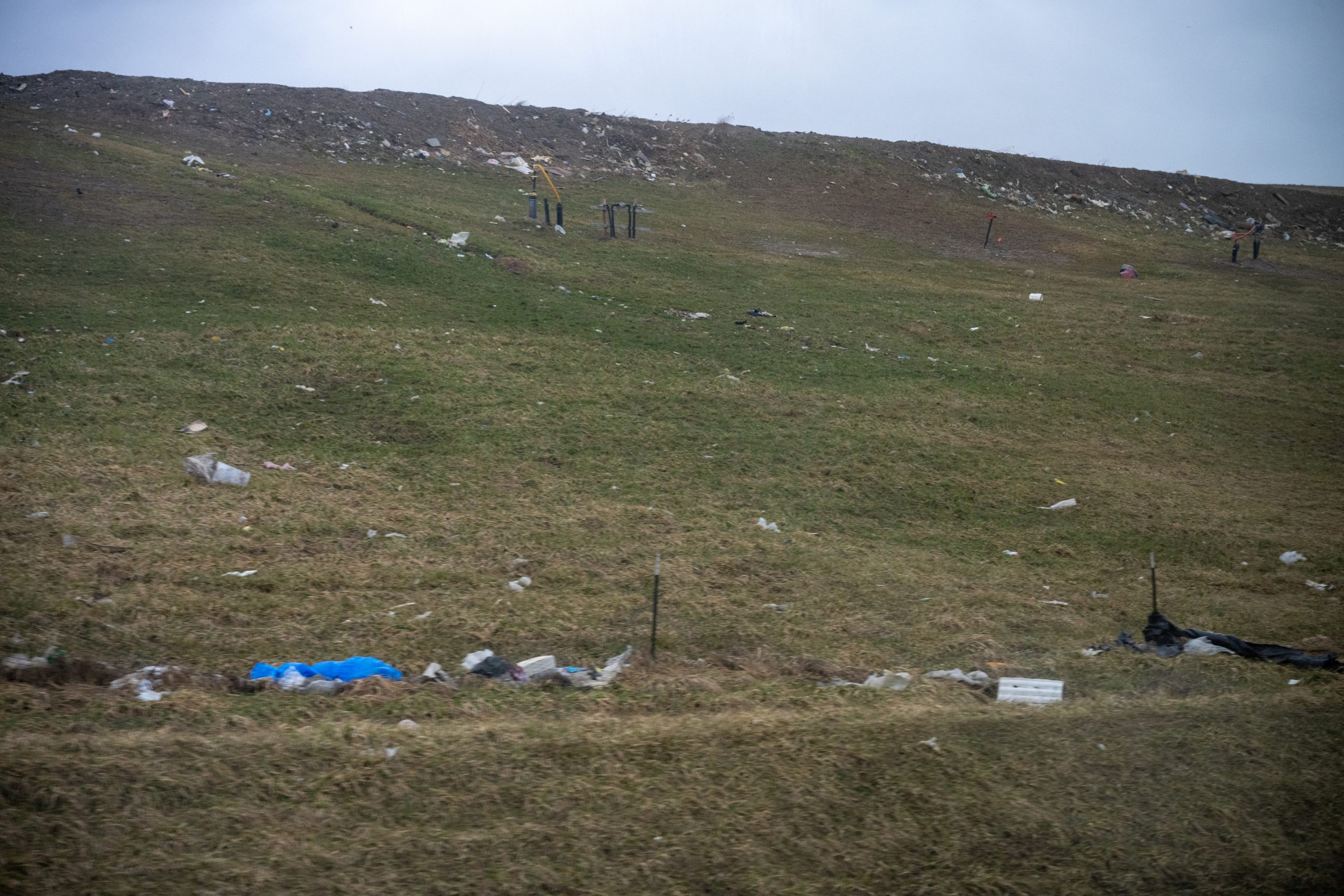
Next, our group was off to the South Kent Recycling & Waste Facility. Here is where you’ll find the county’s main landfill, as well as the Waste to Energy facility’s monofill.
“It’s not just a big hole in the ground, it is cell by cell,” said Micah Herrboldt, Waste Reduction Educator for the Kent County DPW. “Those blocks allow for a systematic way of putting the trash into the landfill, and then making sure that it has stability so that it doesn’t fall apart, and it will be able to stay there over a long period of time.”
Most of the time, when you and I drive past a landfill, all we can see are the “closed” cells covered in dirt and grass, but the active cell is where trash is currently being dumped. Unfortunately for Kent County, this landfill is currently filling cell 47 out of 47.
Landfills are made up of layers consisting of synthetic vinyl, fabric, and minerals. As you move to the outer rings, you’ll find groundwater containment and trash fencing. The synthetic vinyl layer, placed beneath every sheet of trash, plays a vital role in preventing contamination. Leachate and methane are two complications that arise from landfill trash disposal.
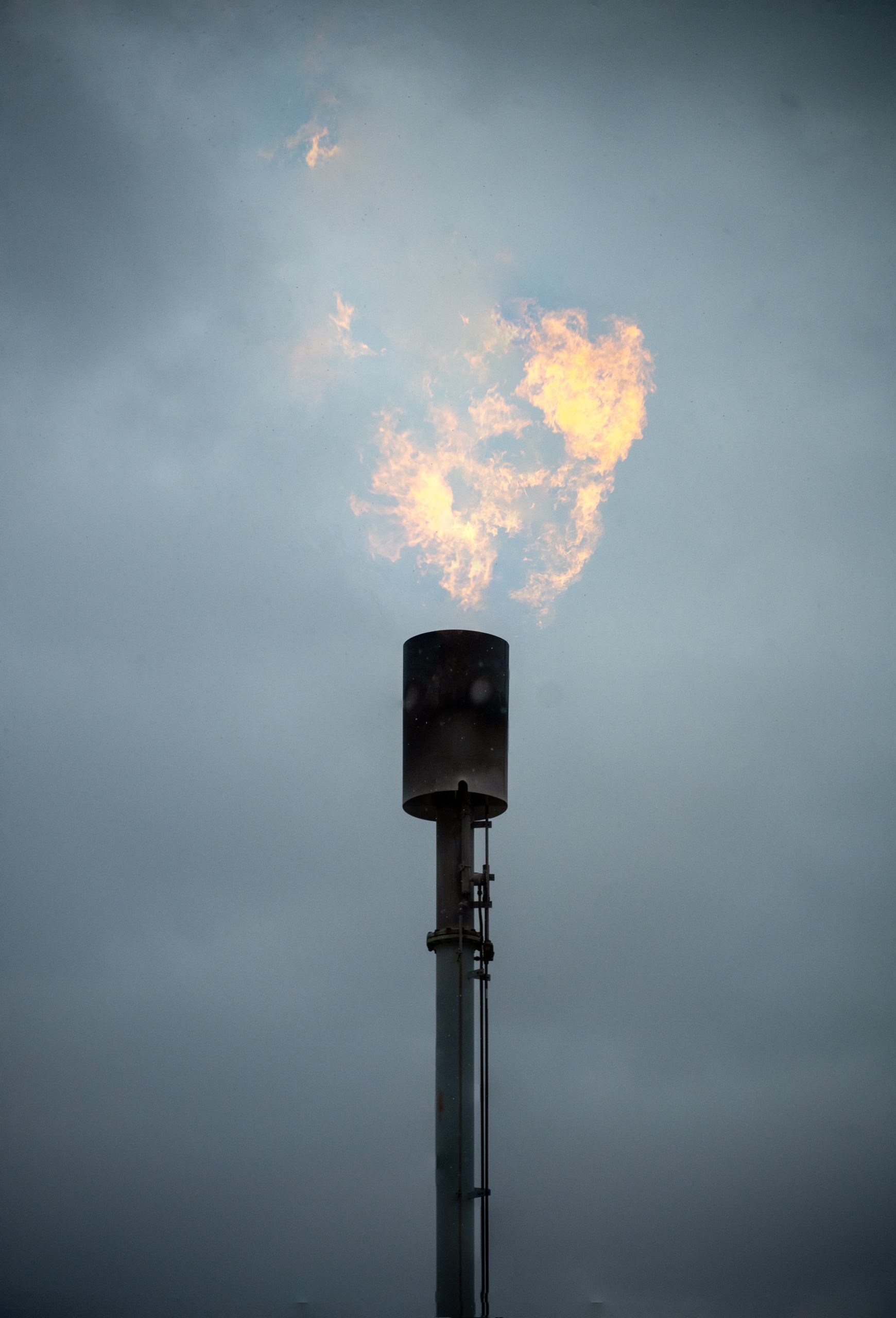
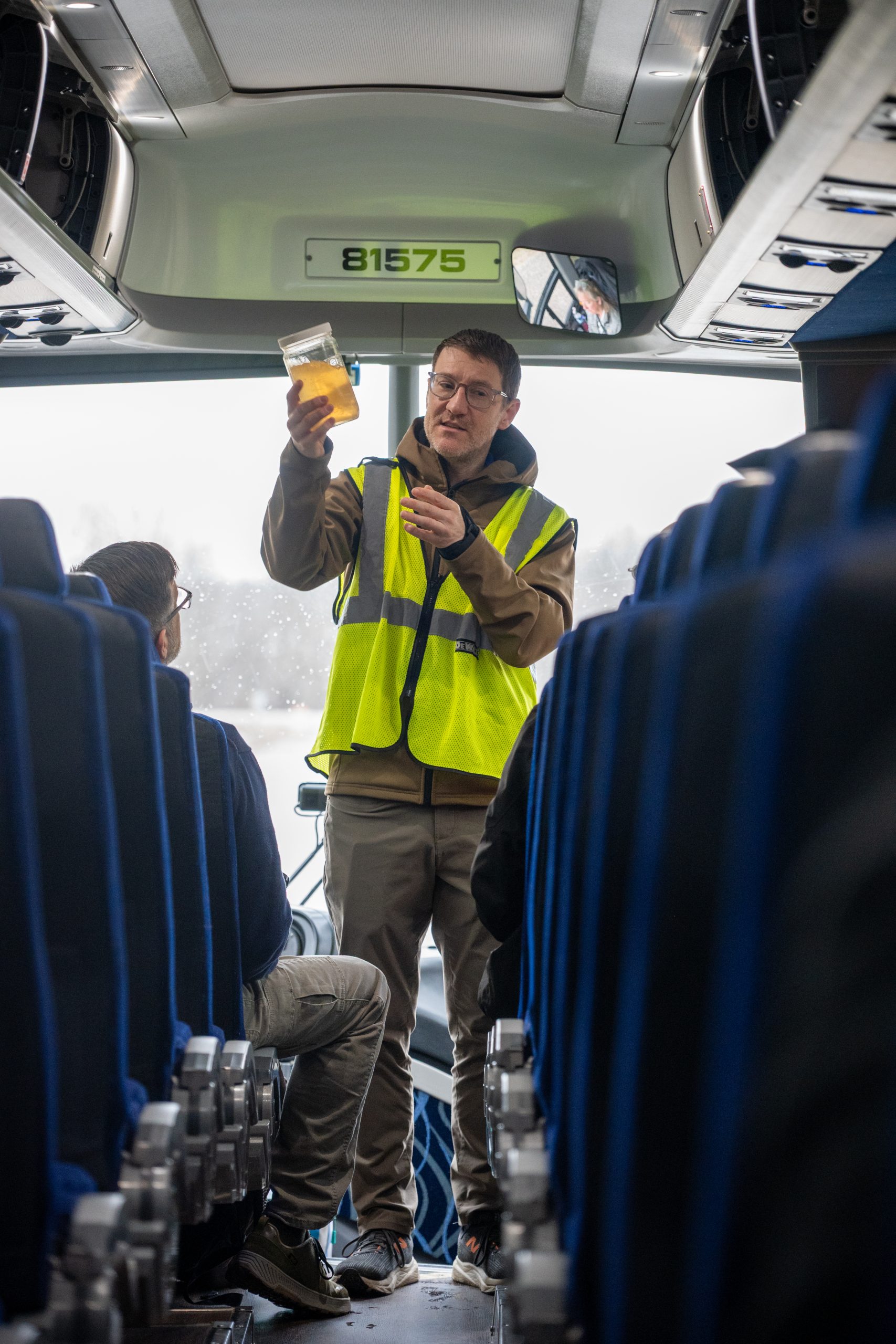
“Landfills have been shown to be super producers of methane,” Herrboldt said. “It’s a very dangerous way that more methane than can be handled goes into the environment. It is a very highly potent greenhouse gas.”
In order to circumvent this damage, the landfill uses a giant flame, burning off the methane and instead letting off carbon dioxide.
Herrboldt then explained how leachate forms, “the non-permeable layer of that vinyl, what that does is it captures all the juice that’s in the trash. So all the water, all the liquids, that are formed after things start breaking down and decompose, goes to the bottom in the form of leachate. We have to make sure that it doesn’t just sit in the landfill because as it builds up there’s more opportunity for it to leak out and then get into the groundwater or the soil.”
This build-up of toxic chemicals accumulates in one area, where harmful PFAS chemicals can become huge issues.
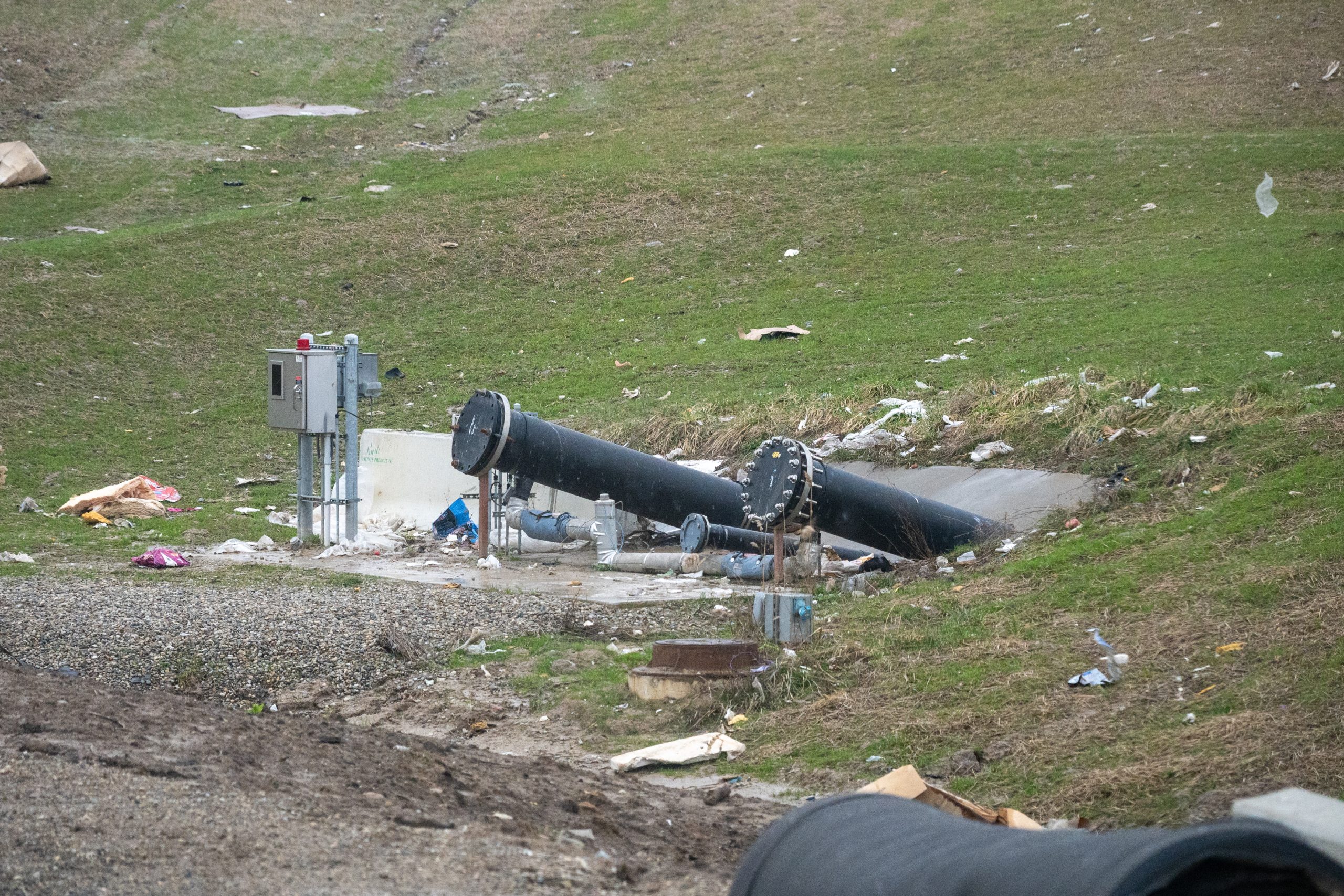
“Those cement manhole covers are the wells that are capturing the leachate, then we’re able to direct it to a water treatment facility so that all the nasty stuff can get pulled out before the water is then reintroduced into the environment,” Herrboldt added.
Michigan is one of 18 states that does not allow landfill disposal of yard waste, so for Kent County residents, “Wormies” may be your best bet. Wormies is a local composting operation that primarily takes vegetable food scraps and turns them into usable compost, providing an alternative to landfills.
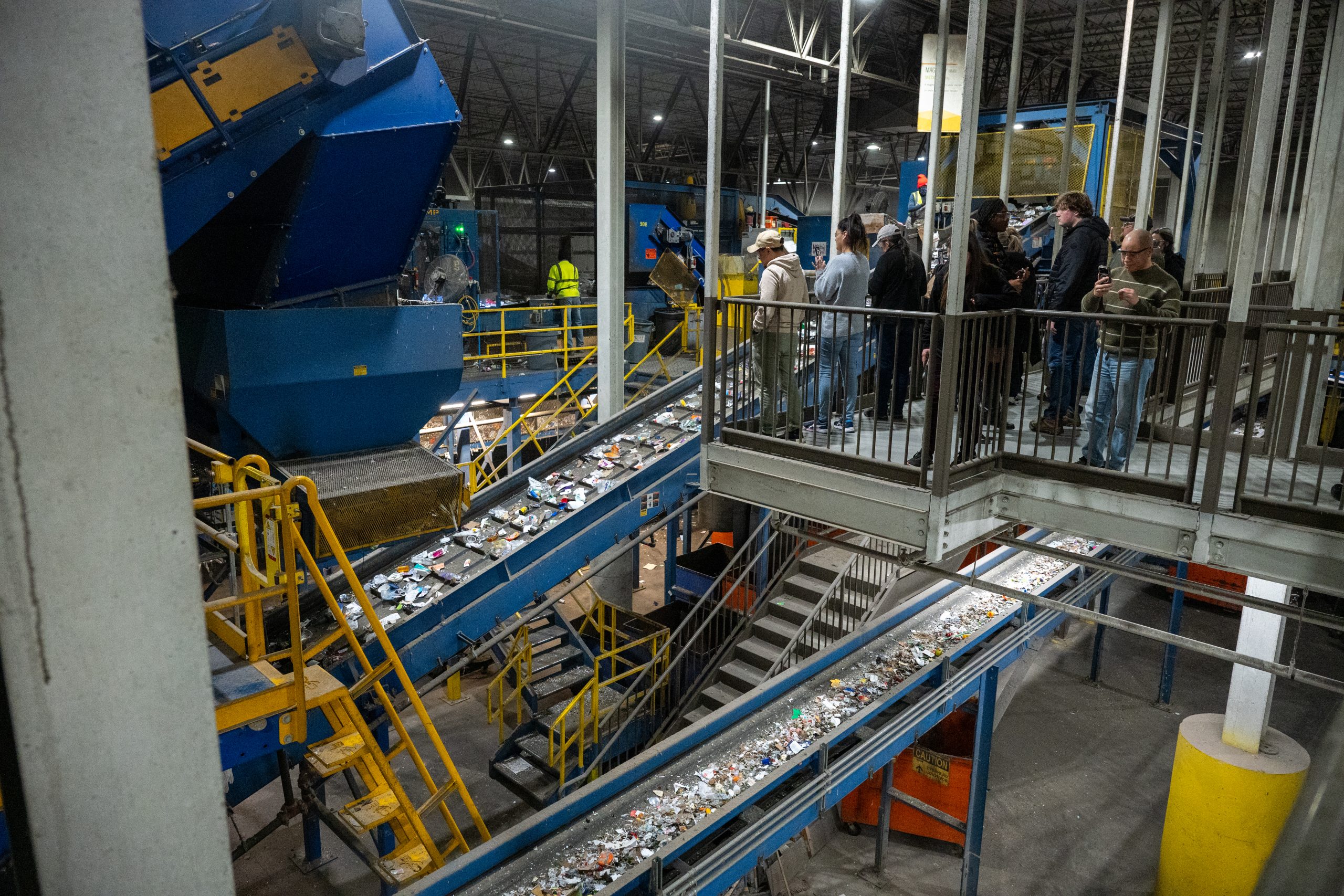
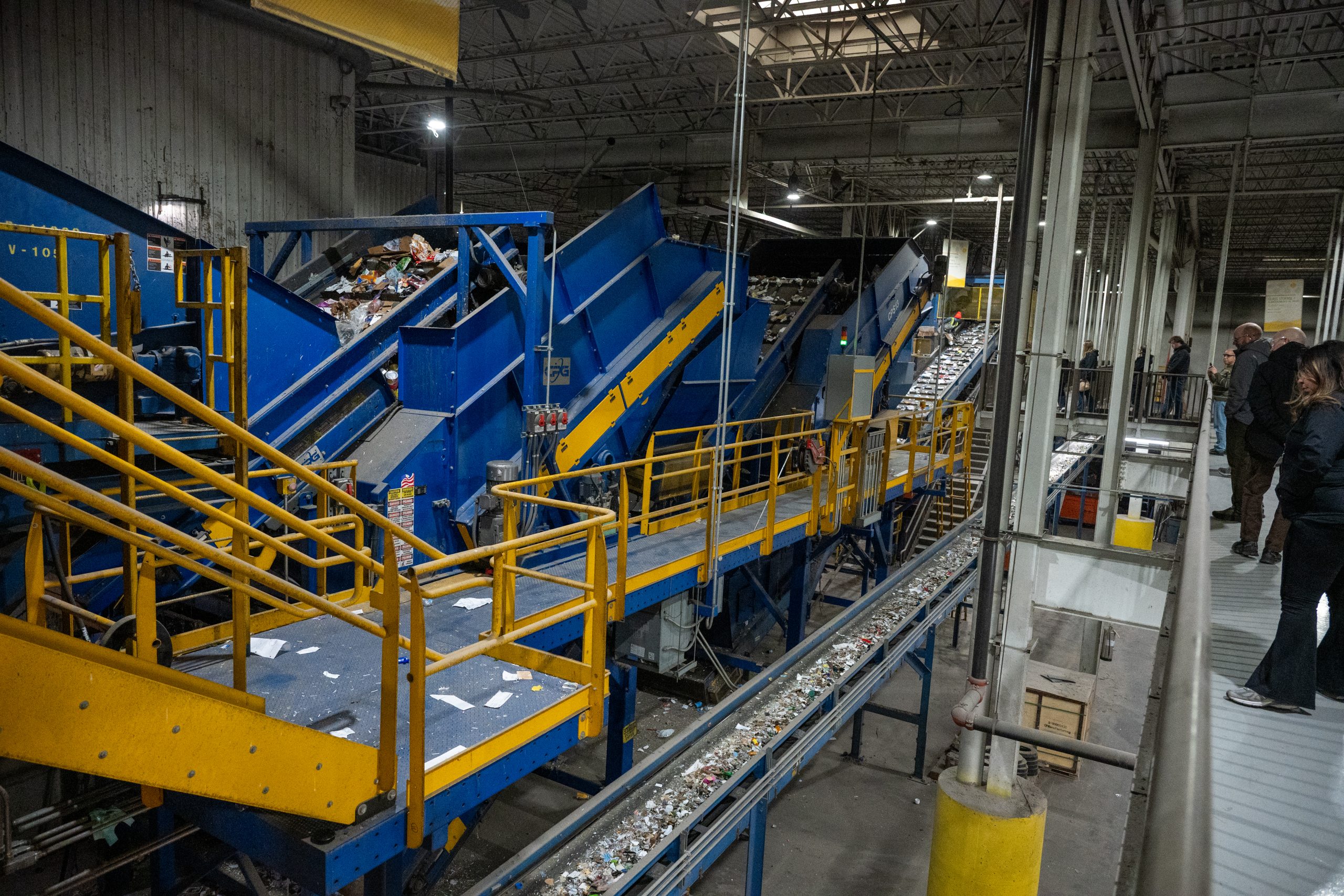
Our final stop on the garbage tour brought us to the Kent County Recycling & Education Center, where recyclable materials are broken down and sorted for repurposing.
“Refuse, reuse, reduce, those are the top three,” said Herrboldt. “Meaning that those are the best options, and it’s important for me to point out as a waste reduction educator, that those top three really don’t have anything to do with anything that we saw today. Except for the fact that if you do them, you don’t have to do any of the things you saw today.”
Basically, if you are able to make decisions or lifestyle changes that allow you to do more refusing, meaning that you’re not purchasing as much or not purchasing single-use items, then you never get to the steps of waste disposal.
Items like scrap metals, electronics, and batteries should never go in your recycling. If you find yourself needing to dispose of any of these items, more information is available here.
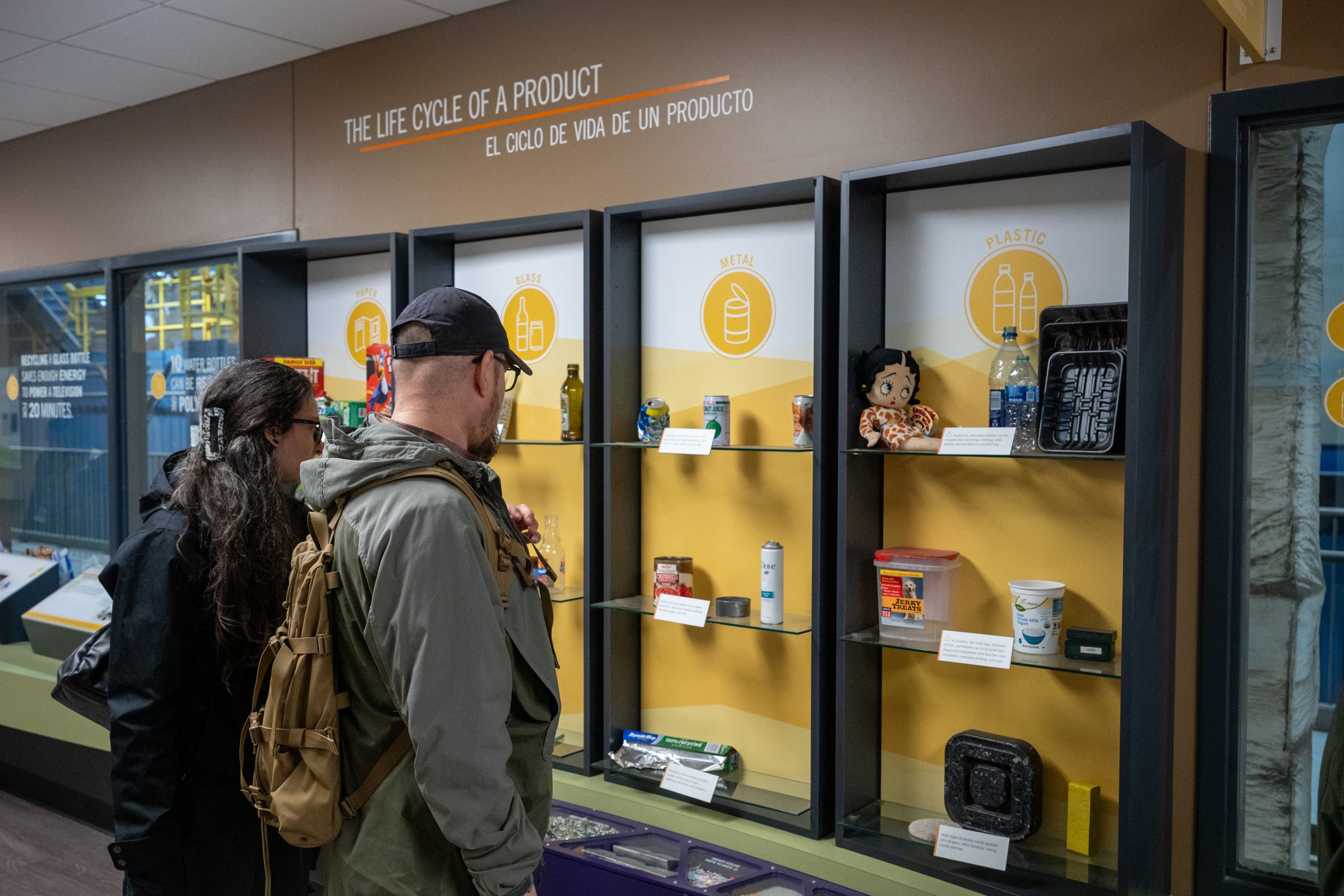
“So what can we accept here? Paper, plastic, glass, and metal. So paper is anything that’s really fiber material, whether that’s newsprint or paperboard, school and office paper, magazines, junk mail, all that stuff. (Paper) is highly recyclable, it’s a very circular material,” Herrboldt said.
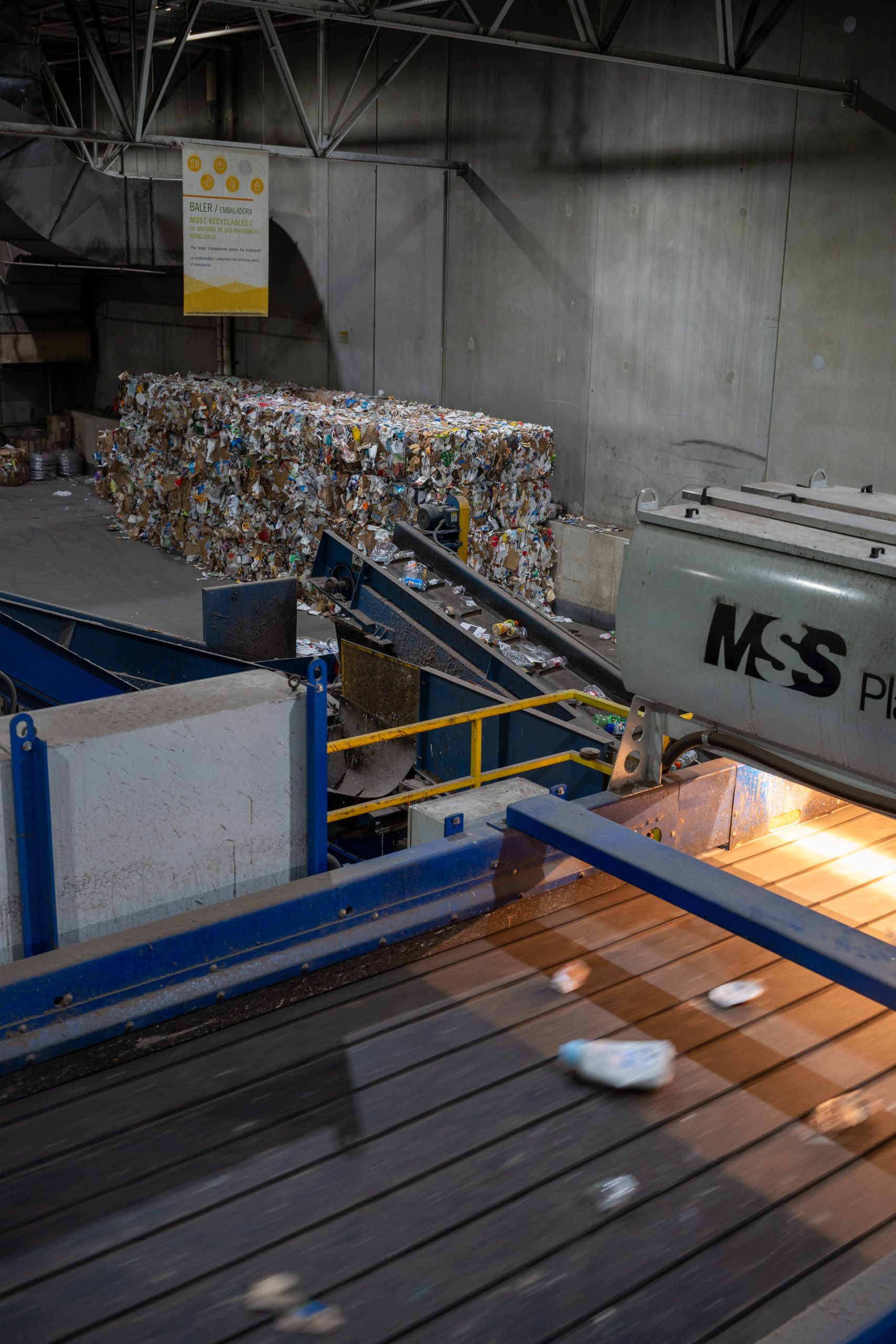
About 75% of the materials that come into this facility are paper or cardboard. When it comes to glass, they’re looking for bottles and jars, and for metal, only cans and aluminum foil.
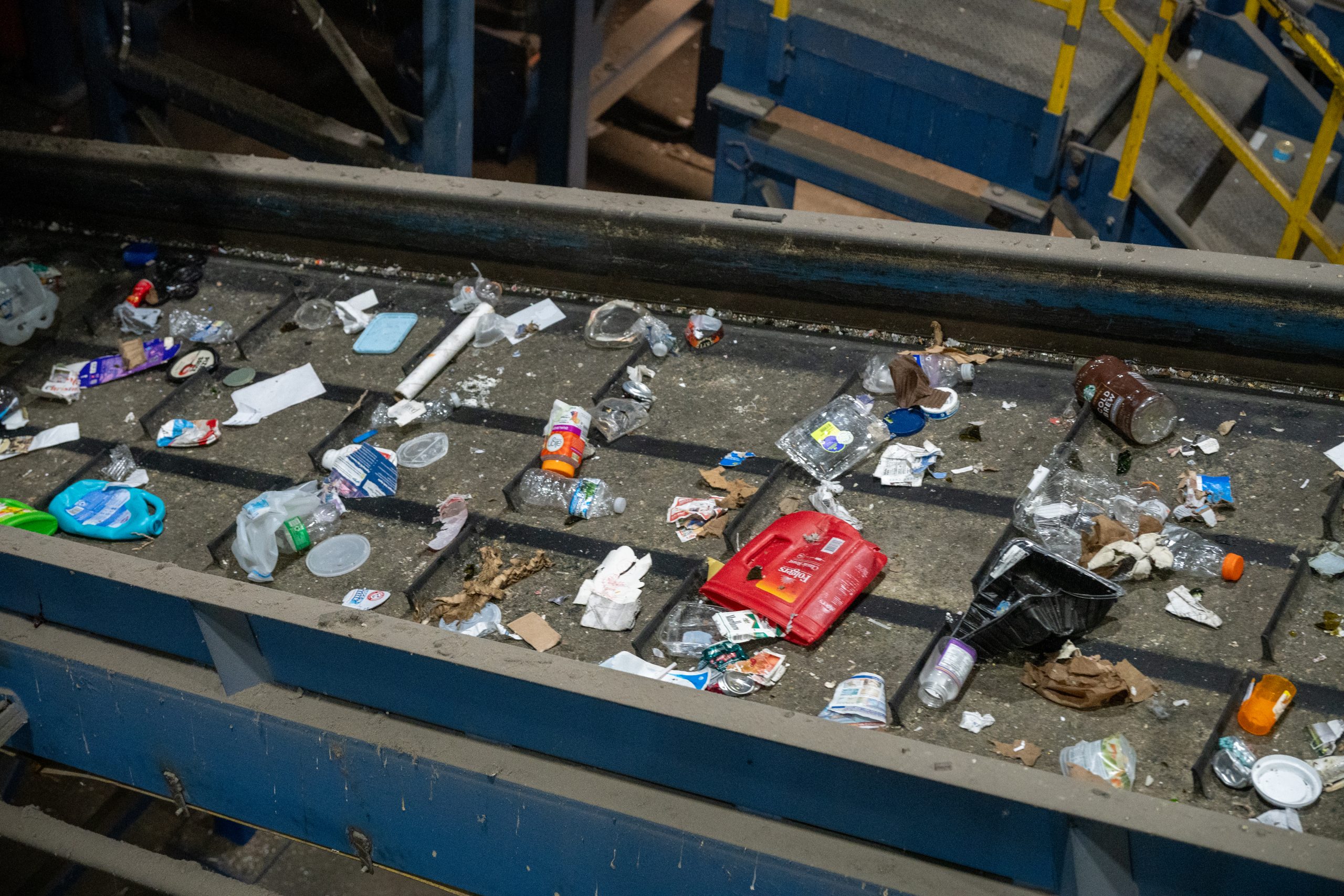
The process at the recycling plant begins similarly to the waste-to-energy facility, trash is unloaded onto the tipping floor and loaded into a hopper.
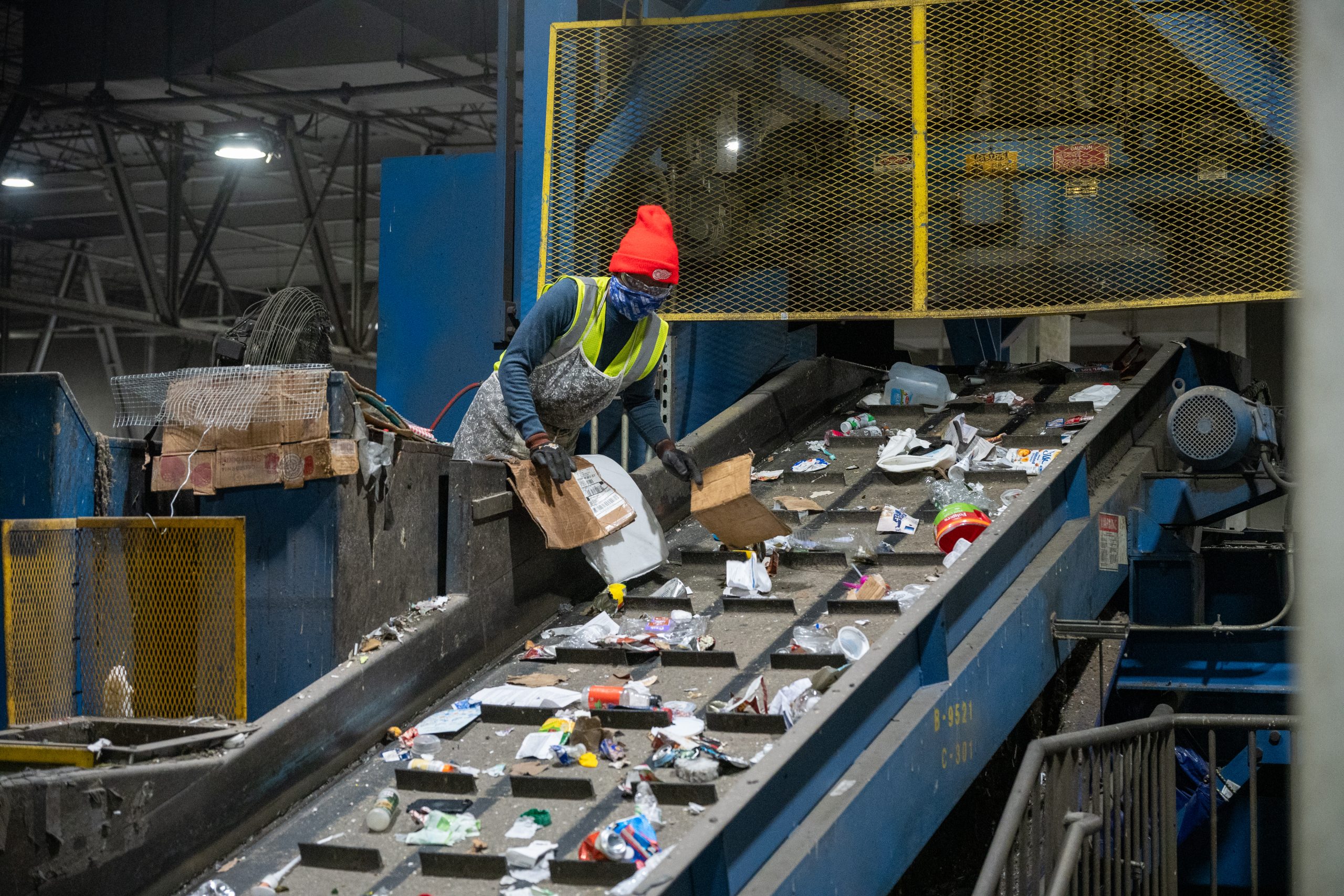
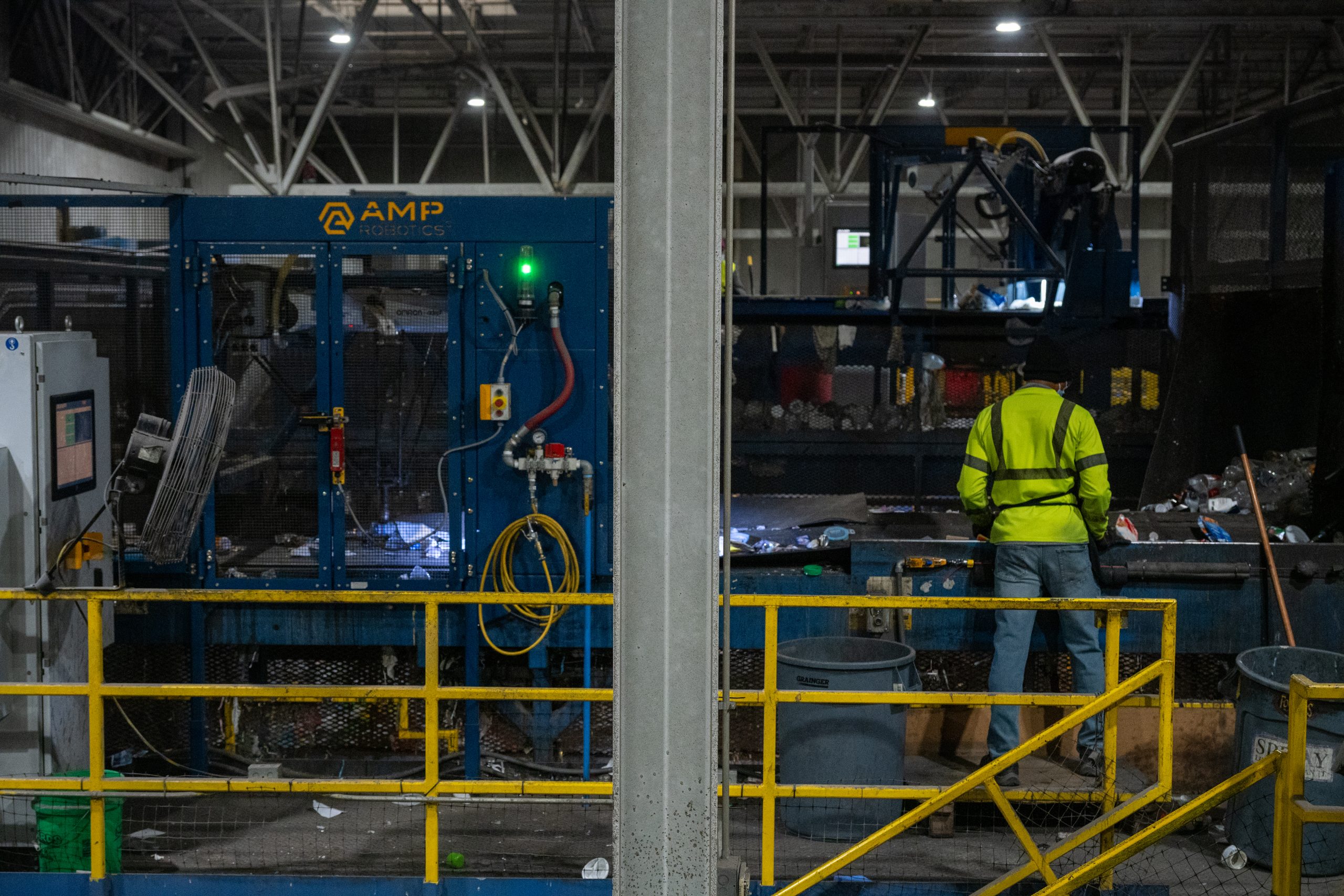
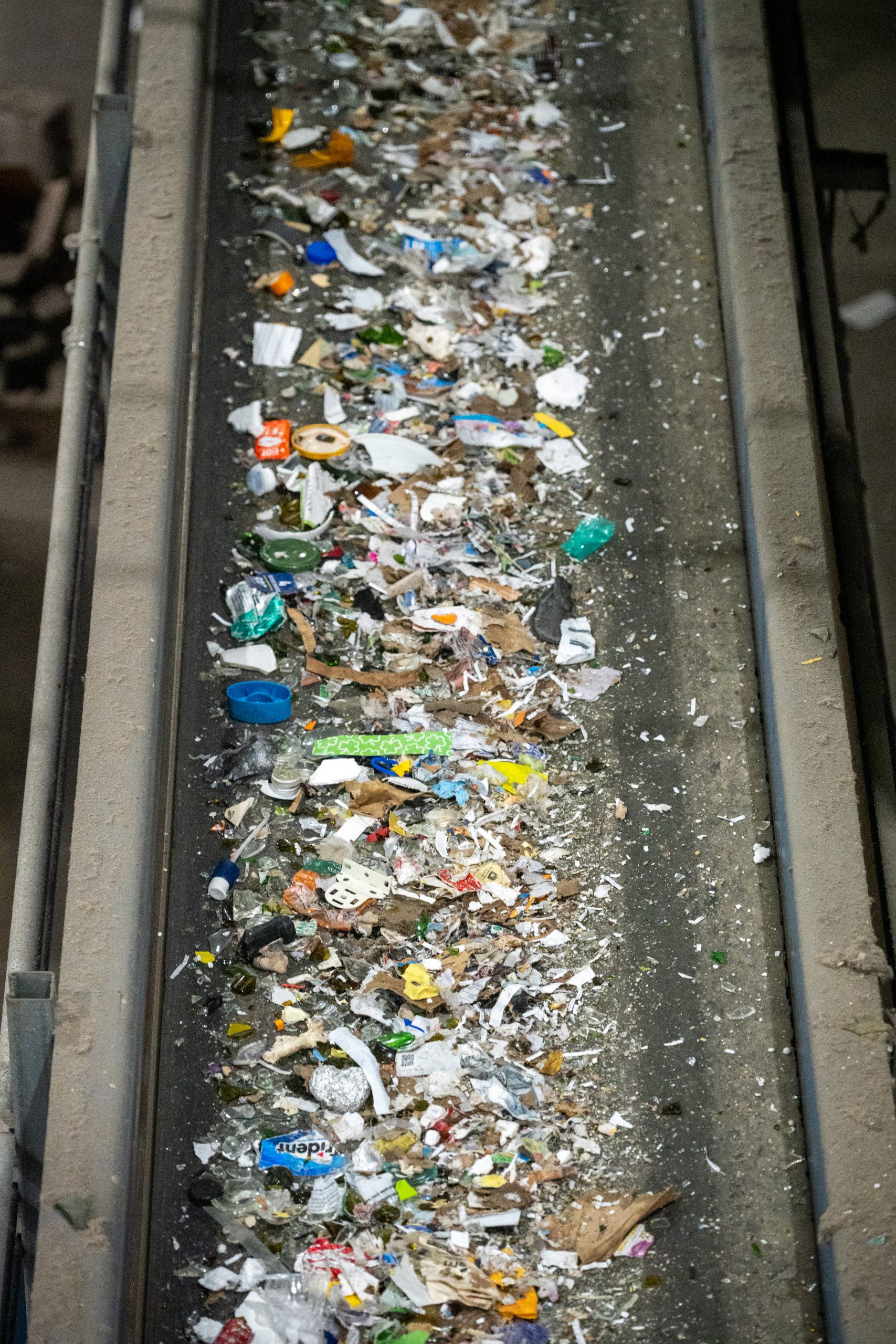
From there, a litany of machines sort out the paper, glass, plastic, and metal through ingenious mechanical operations. Light paper objects are manipulated by air to direct them on another path. Magnets are used to collect ferrous metals, while non-ferrous metals like cans are collected using an eddy current. The eddy current works by sending out an electric signal and conducting with the aluminum to “pop” off the edge of the conveyor belt into a separate area.
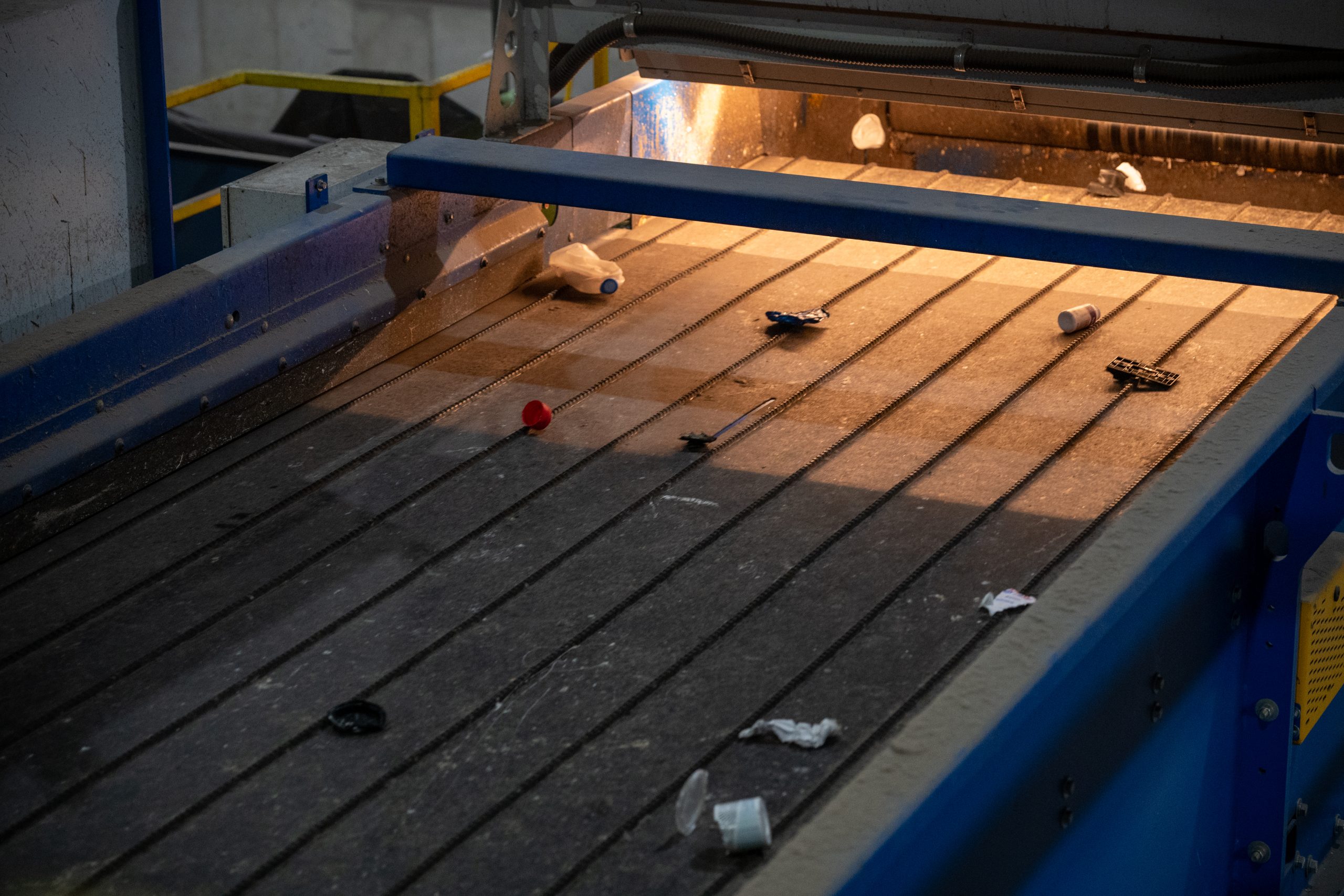
Plastic, however, is a far more complicated material in the recycling process. This facility has implemented three AI-powered sorting devices for clear type 2 plastic, colored type 2 plastic, and one machine that sorts all types 3, 4, 5, 6, and 7 plastics. Examples of these materials are jugs (clear type 2), and detergent bottles (colored type 2). Types 3-7 include cellophane food wrap, shopping bags, and materials like acrylic and fiberglass.
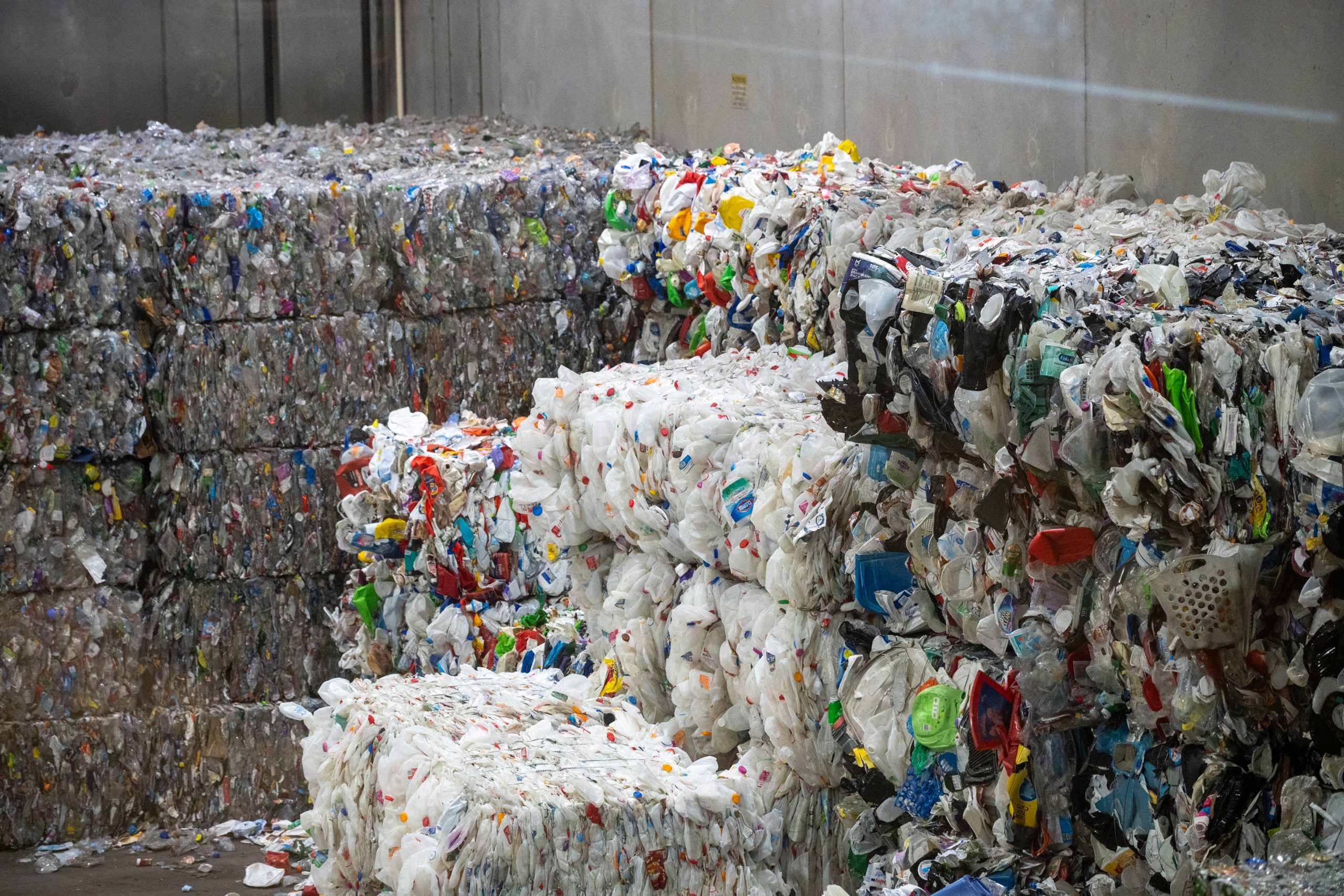
“So, this whole facility is meant to get (waste) ready to bail, and that’s what some of you were seeing outside this window,” Herrboldt explained. “The bales are our product. That’s what we’re trying to make, so if we sell it to a company, then they can make their product.”
Every single year, these facilities take in over one hundred thousand tons of our trash and work to repurpose the waste into energy or new materials. But as Herrboldt emphasized during the tour, the most effective waste solutions happen long before anything reaches a landfill, incinerator, or recycling line. Refusing unnecessary items, reducing single-use products, and reusing what we already have can dramatically reduce the amount of waste that facilities like these must handle. Initiatives like GRCC’s “Race to Zero Waste” aim to encourage those habits across campus, but their success ultimately depends on the everyday choices students and staff make. The next time you throw something away on campus or at home, it’s worth asking a simple question: did this item ever have to become trash in the first place?