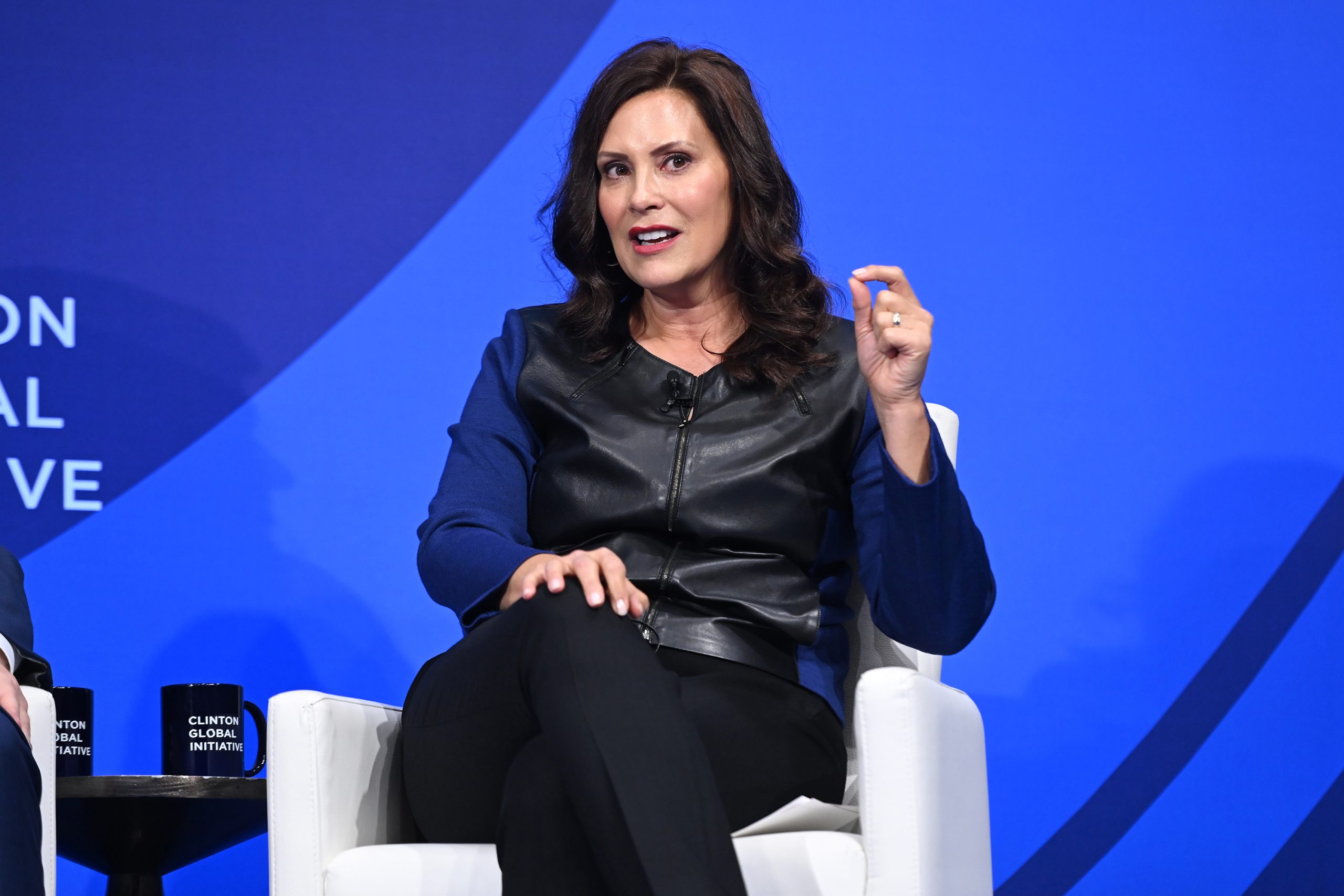
Gov. Gretchen Whitmer gave her seventh annual State of the State address on Wednesday, Feb. 26 during which she named the two biggest struggles the state is facing as “economic uncertainty” and “political division.” In her 60-minute address, the governor laid out her plan to help combat economic tension, calling for a more affordable Michigan, more jobs in the state and more “results” from the government.
When discussing the most costly items in most Michiganders’ budgets, Whitmer drew attention to the ongoing housing crisis. Namely, the lack of affordable and available housing throughout the state and the effects that has on young people.
“We both know that every young person wants to protect and provide for themselves and their family,” Whitmer said. “And that starts with a place to call your own.”
The housing crisis is disproportionately affecting young people, especially single young men. Whitmer shared that they account for only 8% of home buyers, while single young women make up about 20% of the market. Likewise, according to Whitmer, the median age of homebuyers has hit an all-time high at 56 years old.
To help remedy the statewide shortage of about 140,000 homes, the governor shared that the Michigan State Housing Development Authority would be investing $2 billion to build, buy, or fix nearly 11,000 homes throughout the state, following two years of record-setting housing development.
“The way forward is clear, we’ve got to build baby build,” Whitmer said. “Both Texas and Minnesota built more housing and drove costs down.”
She also discussed how incoming tariffs from President Donald Trump could impact Michigan residents. According to Whitmer, high tariffs have the potential to slow down construction, harm small businesses and lead to layoffs in the auto industry as well as costing families an additional $1,200 at the store and the gas station.
In other news, as the state continues toward its goal of having 60% of the adult population earn a skill certificate or college degree by 2030, Whitmer recapped recent advances in higher education over the last year. More than 200,000 Michiganders over the age of 25 have signed up for the Reconnect program and 240,000 more recent high school graduates are participating in the CC Guarantee. However, she once again identified that young men are disproportionately not participating in these initiatives, citing a two-to-one ratio of women to men participating in Reconnect.
“I know it’s hard to get ahead right now. But I promise you, no matter how hard life might get, there is always a way out and a way up,” Whitmer said while encouraging young men to get involved.
She announced she would soon sign an “executive directive that will make an effort to reach more young men and boost their enrollment in higher education.”
Additionally, in education, Whitmer spoke about two issues plaguing kids primarily in K-12: phones and vapes. She plans to tackle both of these issues with new legislation, announcing plans to “pass bipartisan legislation to limit the use of phones in class” and suggested that the state may begin to tax vapes at a similar rate to taxes on cigarettes, which are taxed at 32% of their wholesale rate.
As she enters her last full year as governor, Whitmer looks forward to wrapping up her campaign promise to “fix the damn roads” and urges everyone to work on a long-term solution for the infamous Michigan potholes.
“To my friends in the GOP, a long-term fix means new, fair sources of revenue. We can’t cut our way to better roads by slashing public safety, health, or schools” Whitmer said. “To my fellow Democrats, cuts will need to be a part of the solution… To the business community, we cannot put this on the backs of the middle class. For all of us to be a part of the solution we must compromise.”
At the top of the hour, Whitmer listed numerous accomplishments across the state in the last year that she was proud of, such as the reopening of the Michigan Central Station in Detroit and the city seeing a population increase for the first time in 67 years, the states economic surplus and the anticipated opening of the Gordie Howe International Bridge later this year.
Bryan Posthumus, who delivered the Republican response following the governor’s address, painted a more pessimistic picture of Michigan, saying, “Our state isn’t in a great place right now. Frankly, it hasn’t been for a while.”
Currently serving as the House of Representatives Majority Floor Leader, Posthumus laid out the Republican’s incoming agenda, with the overarching goals of improving infrastructure, public safety and education.
Whitmer, however, assured Michigan residents that “the state of our state is strong” when closing out her speech.
“Being a Michigander is about offering someone a hand when they trip and fall, holding the door open, trying to be a little better every day,” Whitmer said.