By Marie-Ange Betz
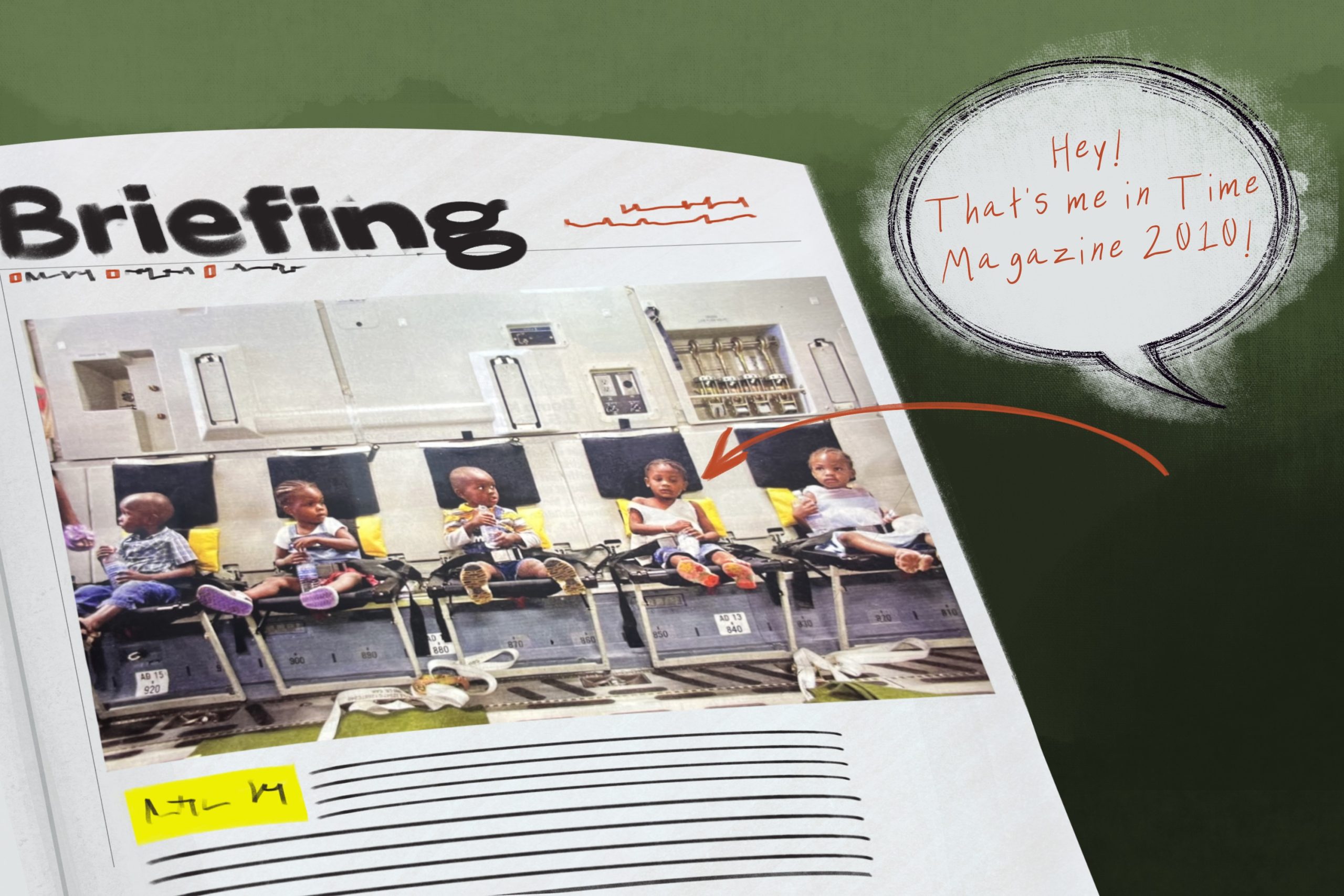
On January 12, 2010, at 4:53 p.m., the largest earthquake of that time struck Port-au-Prince, Haiti. Every major news channel—CNN, Fox News, CBS and others—covered the disaster, sharing updates for adoptive families and tracking when we would land in America. About a week and a half later, I finally left Haiti and boarded a U.S. Army cargo plane. On that very plane was a journalist from Time Magazine. He photographed five children, including me, seated in the aircraft, waiting to meet our adoptive families in America. Below the picture, the caption read, “There are few children more valuable than the youth of Haiti…”
My name is Marie-Ange Betz. I was born and raised in Port-au-Prince, Haiti, where I lived in an orphanage. As many know, orphanages are not always the cleanest environments, but for children, it’s still a home. I entered the system when I was just 1 year old. My birth mother experienced complications after my birth and left me in the care of my father, brother and sister.
My father, a street salesman in Haiti, struggled to care for a newborn along with two other children. As a result, he made the difficult decision to place my siblings with my grandparents, who were already familiar with raising children. I remember my adoptive mom sharing how heart-wrenching it was for my dad. She said, “I’ve never seen a grown man cry so hard, giving up his own child like your dad did.”
After the process of entering the orphanage, I remained there until I was 4 ½ years old. Sadly, my father was never able to see me again due to Haitian child protection laws. These laws focus on addressing issues such as family separation and child abandonment. Many children are placed in care institutions, not because they are orphans, but due to poverty. Most still have living family members. Organizations like UNICEF work alongside the Haitian government to address these challenges, encouraging family-based care instead of institutional care to keep families together.
By late 2009, I was adopted by a wonderful woman who is now my mother, Susan Betz. Before I arrived in Florida, my mom visited me one last time. Originally, I was expected to arrive in America by the third week of January. However, since the earthquake, my mom and many other families lost contact with the orphanage’s organization during this time, leaving the adoptive parents unable to confirm their children’s whereabouts or well-being.
On the plane, I have a couple of friends that I still know and talk to till this day, Lourdie, Celina and Gracie. Lourdie and I still hang out here and there, but Celina, Gracie and I haven’t seen each other in a really long time, only because they live in Florida, unlike Lourdie, who lives here in Grand Rapids.

As a fun little joke with one of my Haitian friends, we were playing around with Facebook and then decided to look up anyone with the same last name as mine. My middle name is “Aubin,” which is the last name in Haiti. We saw so many people with that last name, so we went in order, and the first person we clicked on was my brother. His background profile picture was of me as a little girl in a yellow polka dot dress. At first, I was super scared that an adult man had my picture as their profile picture. I then showed my mum and asked if this was really one of my family members. She didn’t want me talking to a grown man, so she decided to get one of her guy friends to talk to him to make sure he was legit. Later that day, we found out that he was my brother and that I had a sister.
I wish I could tell you the feeling I was going through, but remember, I was only 4. The only thing I really remember about this historical journey of my life was the smell after the earthquake. Every time I smell burnt rubber, it’s like a flashback to Haiti, as I don’t really like the smell. It reminds me that I’m in a better place now and will never have to deal with something like that.
Many people might ignore the Time article, thinking, “It’s just a magazine,” but to me, it represents so much more. It captured the reality of Haiti’s struggles and told the true story of what we were facing. The article highlighted how we were simply trying to reunite with our families during the chaos. While sharing this story was important and helped show the devastation in my homeland, it also reminds me of all that we lost—and how we’re still working to rebuild. Despite everything, I’m grateful that I was able to find my way to the right home and start a new life with my adoptive family.