Recently, I was on Instagram when I saw a viral reel of a woman attempting to reject a man who was insistent upon getting her number. The man continued to harass her even after she asked him to leave and repeated no numerous times. It was not until she firmly stated, “I’m a feminist,” that he backed off and responded, “Yeah, that’s a good no.”
There are multiple reasons why I personally felt angered by his disrespectful demands, but I was most moved by his vehement reaction to her proclaiming feminism. His response implied a distinct disgust and rejection, and more notably, it revealed his own ignorance and lack of understanding about the true meaning of feminism. Unfortunately, this random internet man is not alone.
Similar to a lot of people, this individual assumed that taking on the role as feminist means being pro one gender or equating to man or male hatred. This is certainly misleading, and it’s almost understandable that half of the population would reject the concept because of its negative connotation.
Even if we look at Google, the Oxford Languages definition reads, “The advocacy of women’s rights on the basis of equality of the sexes.” While this meaning is more friendly, it only encompasses whoever falls under the category of “woman,” rather than equality for all genders. Additionally, the use of “sex” is also controversial since sex and gender are not the same thing, yet often the two terms are used interchangeably.
If considering a Women and Gender Studies approach, sex or biological sex is defined by how a person is identified at birth and is typically based on genitalia or chromosomes. This can still be limiting since some people’s genitalia and chromosomes do not “fit” together. For the sake of the rest of the argument, that is all I will say about the topic of sex.
Furthermore, the definition of gender is more accurately described as a socially learned construct, and is often enforced by culture. This can look like how to be a “proper” girl or boy.
So what does the term “feminist” mean then?
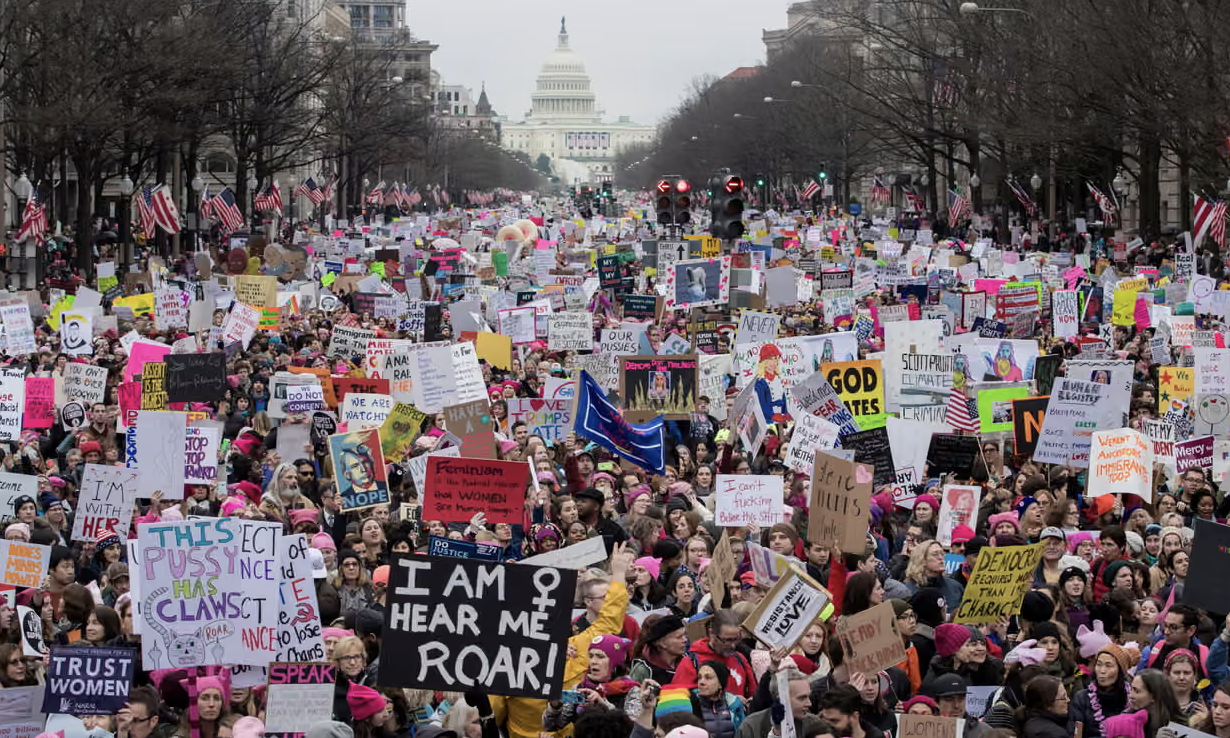
Feminism or feminist theory merely challenges androcentric perspectives and strives to explain and expose social injustice. Androcentrism positions masculine understandings of the world as superior and thus gives privilege to those who support such views. As a result, it is often women who are at the core of the feminist movement, since they are a group subject to inequality.
Additionally, feminism calls attention to topics like gender and sexuality, which are not personal or biological but politicized by culture and social contexts. Historical background is also important to consider. The first feminist movement worked to promote equality and independence for women, as well as the fight for suffrage.
So when did this change happen? Why is feminism now seen as a position taken up by angry man-hating women?
An answer could be media distortion and the increasingly volatile political atmosphere which blames women for the ever-growing “male loneliness epidemic.” Rather than encourage personal introspection, men of strong influence are convincing young men to aim their frustration at women. This disrespectful behavior is not doing the feminist movement any favors and only causes more anger directed at women who are already fatigued with masculine abuses of power.
Perhaps, though, there has not been a change, and those who desire to uphold “traditional” ways of living feel more comfortable sharing their opinions. Another sad truth could be that people believe the feminist movement to be over. Rather than a continuous fight, people might think of the first movement as the only and final movement.
I think for the most part, though, the confusion lies in the lack of understanding. A few weeks ago, my friend introduced me to the idea of “political lesbianism.” This is the practice of choosing to reject heterosexual relations, regardless of sexuality, as a means to fight the patriarchy. This theory took hold in the 1970s and aims to dismantle compulsory heterosexuality.
While this may be seen as an extreme form of feminism, it’s important to understand that this does not encompass all forms of the theory. It is on a spectrum. At the end of the day, whether you are in support of or reject the theory, feminism is not gendered and does not aim to target or hate men.
Feminist theory is the fight for equality for all genders.