By Gabriel Solis
The upcoming Michigan gubernatorial election is fast approaching. Primaries will be held on Aug. 4, 2026, with the general election to follow on Nov. 3. Below is a summary of the candidates in the running, including their policies, personal and political histories, and in some cases, controversies.
Democratic Candidates
Jocelyn Benson
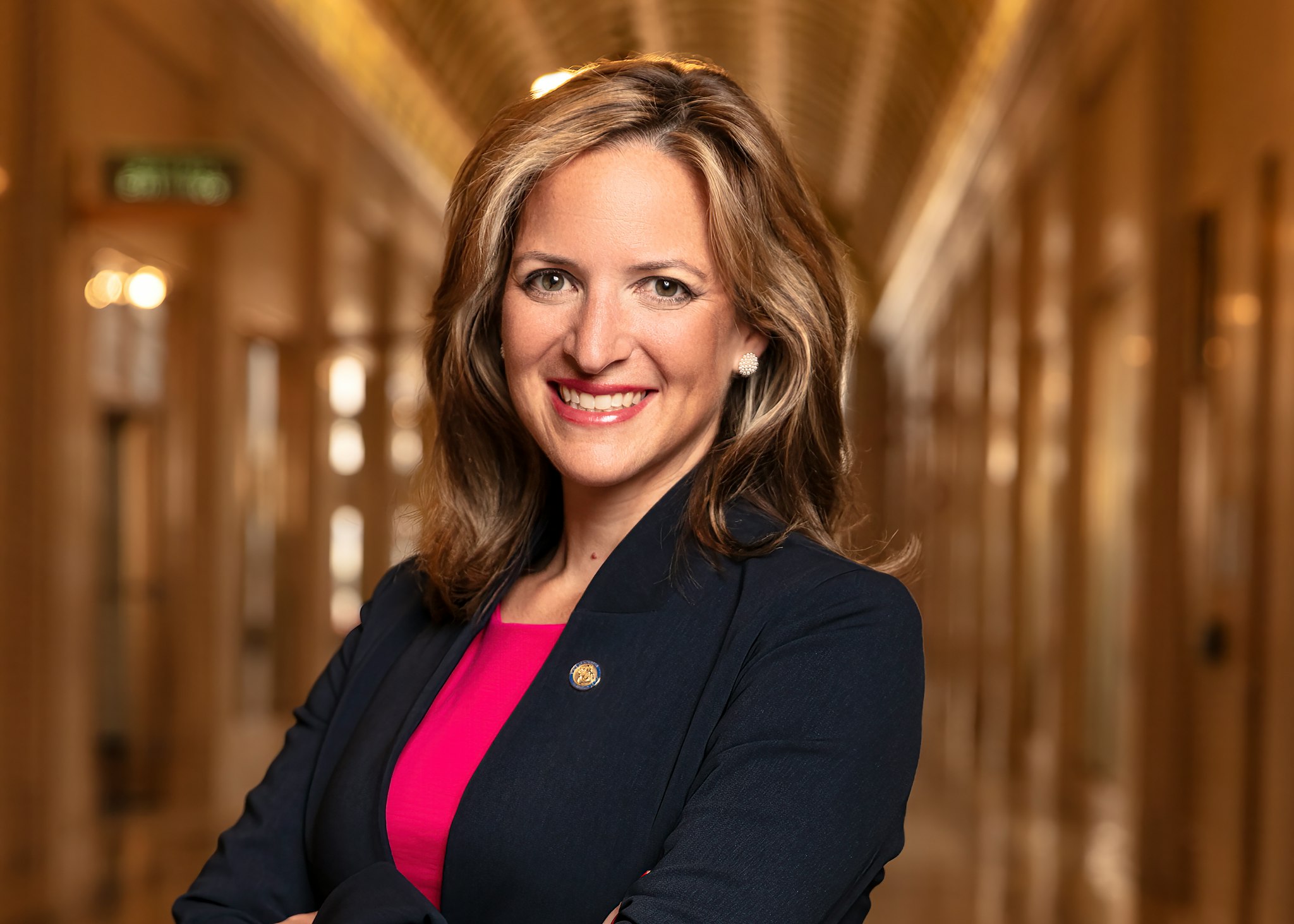
Jocelyn Benson is the current Michigan Secretary of State under Governor Gretchen Whitmer, a position she has held since 2019. Prior to her election to that office, she served as an associate professor and later the dean of Wayne State University Law School. She is also the author of two books: “State Secretaries of State: Guardians of the Democratic Process” and “The Purposeful Warrior: Standing Up For What’s Right When The Stakes Are High.”
Benson’s campaign has focused largely on lowering the cost of living, improving the public K-12 education system, and expanding access to health care. She has historically opposed the actions of the Trump administration, including criticism of the 2025 tariffs and of the deployment of the military against protesters.
Notably, Benson’s husband, Ryan Friedrichs, is a vice president of New York real estate firm Related Companies, the parent company of the group financing the construction of the controversial “The Barn” AI data center in Saline Township. The CEO of Related Companies, billionaire Stephen M. Ross, is a major donor to Benson’s campaign. Benson herself served as the CEO of a non-profit organization funded by Ross between her educational career and her tenure as Secretary of State. Friedrichs has stepped back from any projects involving the state of Michigan in the wake of Benson’s candidacy, but has not indicated that he would leave his position should she be elected.
Chris Swanson

Chris Swanson is the current sheriff of Genesee County and is running for governor as a Democrat. Per his campaign’s website, he studied at Mott Community College and the University of Michigan, and holds bachelor’s and master’s degrees in Public Administration. He first came into the spotlight in 2020, when he drew national attention for laying down his riot gear and marching alongside demonstrators protesting police brutality in the wake of the murder of George Floyd.
Similar to Benson, Swanson’s campaign is focused on education improvements, infrastructure, and decreasing the state cost of living, though with more emphasis on public safety and law enforcement reform than his Democratic opponent. He opposes private prisons, and does not support cooperation between law enforcement and Immigration and Customs Enforcement (ICE). He has said that he would support the construction of data centers in Michigan under the condition that they have support from local communities.
Swanson is widely viewed as an outsider to the Lansing political establishment, and a major struggle of his campaign will be to scrape together the resources to secure enough votes to win the Democratic primary in August.
Republican Candidates
John James
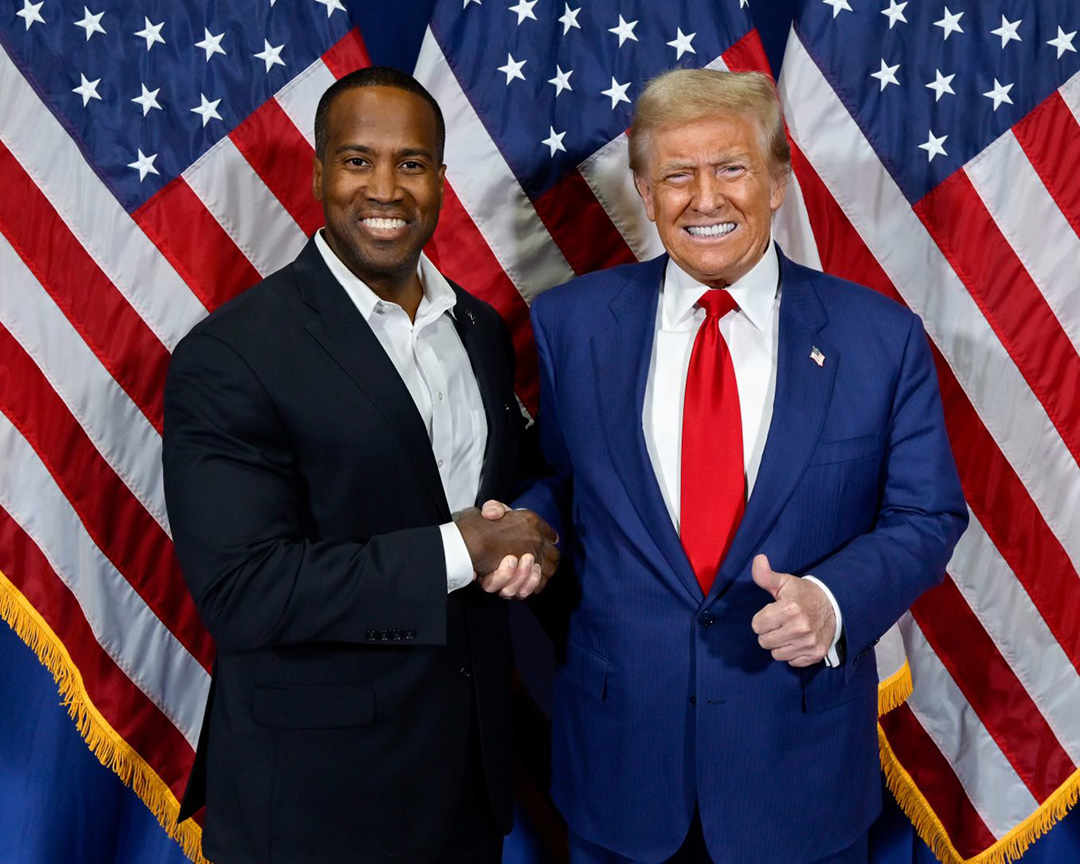
John James is a Congressman representing Michigan’s 10th district in the House of Representatives. James is a graduate of the United States Military Academy, and served eight years in the U.S. Army, including multiple tours of duty as a helicopter pilot during Operation Iraqi Freedom. He also holds master’s degrees in supply chain management and business from Penn State University and the University of Michigan, respectively.
James’s website describes him as “a proud ally of President Donald Trump.” His gubernatorial campaign has focused on restoring education standards, reforming the Michigan Economic Development Corporation (MEDC), and strengthening local businesses. He, too, has championed local control over the construction of data centers in Michigan, noting concerns about their impact on natural resources and on the economy. He has also pledged to restore election security, criticizing Jocelyn Benson’s role in overseeing an election that she is also running in and citing reports that 15 non-citizens voted in Michigan in 2024 under Benson. The Michigan State Department has stated that those cases are isolated and that there is no evidence of widespread voter fraud in the millions of other votes cast. James’s comments on this issue are the latest in a history of questioning the security of state elections, including those in which he was a candidate.
James’s campaign has stayed largely away from social issues. In the past, he has criticized abortion and compared it to “genocide,” but he now says that it is a settled issue in Michigan and notes that it is enshrined in the Michigan state constitution. Historically, his stance on issues like immigration and LGBTQ rights has been largely in line with that of the Trump administration. His website states that as governor, he would “audit wasteful DEI programs,” “rebuild trust in government,” and “make Michigan great again.”
Mike Cox
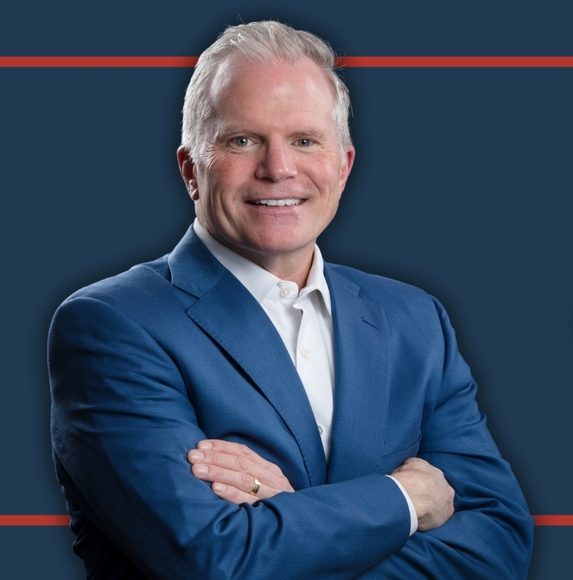
Mike Cox is the former Attorney General of Michigan, serving in that position from 2003 to 2011. He served as a U.S. Marine from 1980 to 1983, after which he attended the University of Michigan, graduating from the University of Michigan Law School in 1989. Following his graduation, he worked as a prosecutor in Oakland County and later Wayne County before being elected Attorney General. As Attorney General, Cox was involved in the formation of the state Child Support Unit, the restructuring of the state Child and Public Protection Unit, the drafting of the Medicaid Whistleblower Protection Act, and the creation of the state Office of Special Investigations.
After his tenure in state government, Cox opened a private law firm, and notably represented several students who had experienced sexual abuse at the hands of the now infamous University of Michigan sports physician Dr. Robert Anderson.
Cox’s campaign is focused on pushing back against what he describes as the overreach of the Whitmer administration. He supports the elimination of the state income tax, as well as the elimination of the state property tax for homeowners and farmers, with tax exemptions for senior citizens. He is in favor of restoring the Michigan Right to Work law, ending tax exemptions for corporations, participating in the Trump administration’s school-choice tax program, and eliminating what he describes as waste in state government. His website promises a crackdown on illegal immigrants, the “dismantling (of) the DEI bureaucracy,” to put workers above “woke elites,” to turn Michigan into a place “where Florida and Texas look to us for ideas,” and to “make Michigan great again.”
Cox’s political career has survived numerous scandals. He potentially attended a rumored party in the early 2000s at the residence of then-Detroit mayor Kwame Kilpatrick where an exotic dancer was assaulted, and was possibly involved in covering up an investigation into the party. He has also publicly admitted to infidelity.
Perry Johnson

Perry Johnson is a businessman and author. He has owned numerous firms and small corporations, and is the author of books including the political-economic “Two Cents to Save America.”
Johnson began his political career in 2021, when he announced his first bid for the Republican nomination for Michigan governor. He was later disqualified after it was found that approximately 9,400 of the 15,000 signatures required for inclusion on the 2022 gubernatorial ballot were fraudulent and had been illegally harvested.
In 2023, Johnson began a campaign to secure the Republican Party nomination for president. His presidential campaign platform included support for state abortion restrictions, cutting discretionary spending, opposition to new environmental regulations, absolute parental control over children’s education, the categorization of gender affirming care for minors as child abuse, and the elimination of the FBI. However, he did not qualify for either primary debate, polled poorly, and struggled to come up with the resources to run a successful campaign. As a result, he dropped out later that year and endorsed Donald Trump.
Johnson’s website states that as governor, he would eliminate Michigan’s state income tax and streamline, audit, and cut what he describes as wasteful government spending. He has also stated that he is in support of President Trump’s tariffs.
Aric Nesbitt
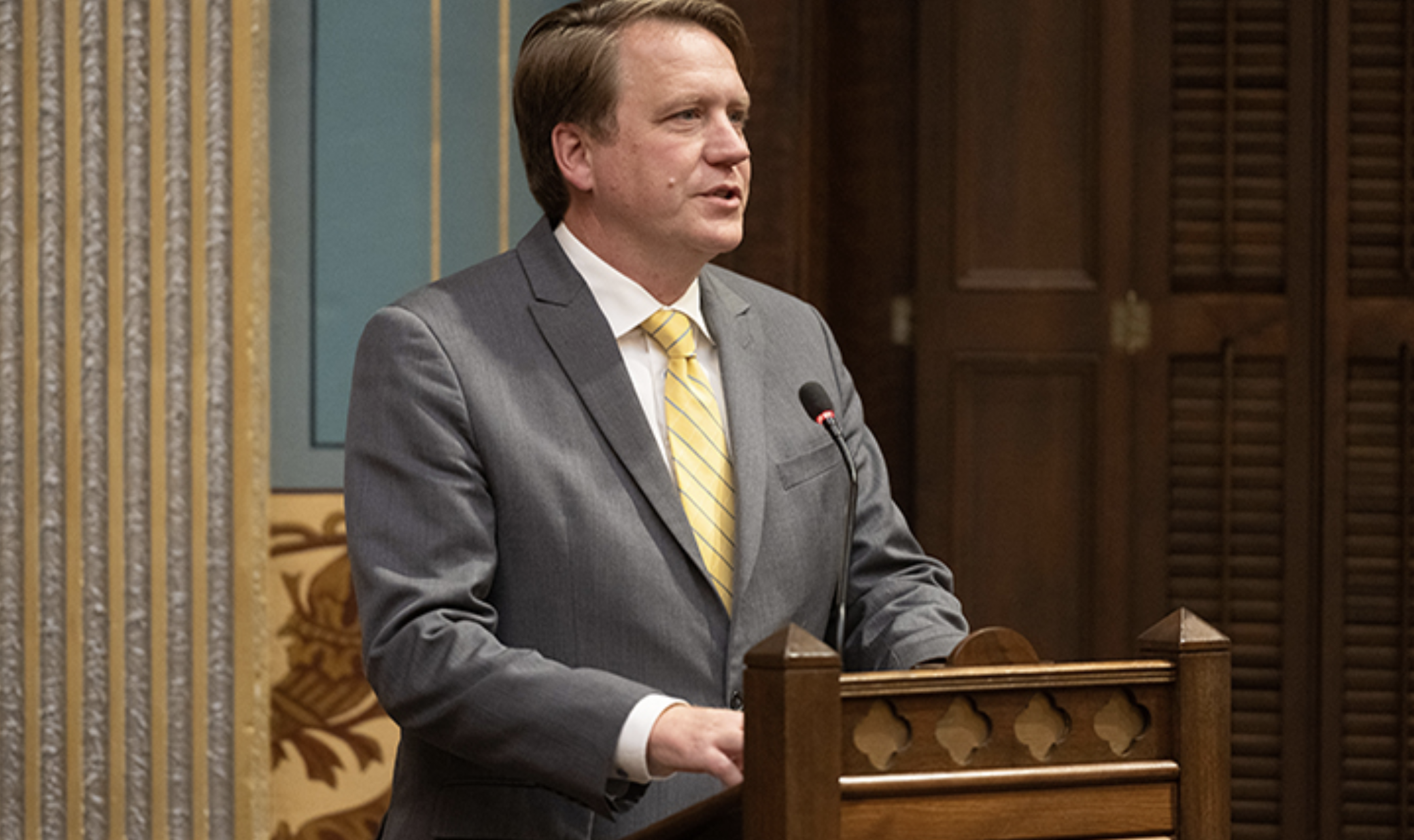
Aric Nesbitt is the current minority leader of the Michigan State Senate and represents Michigan’s 20th District. Prior to this, he represented Michigan’s 66th district in the State House of Representatives. He has also served as the Michigan Lottery Commissioner.
Nesbitt holds a Bachelor of Arts in economics from Hillsdale College and a Master’s degree in international business from the Norwegian School of Economics. His family operates Nesbitt Farms in Lawton, Michigan, which cultivates dairy and grapes.
Nesbitt’s website states that as governor, he would support “cutting taxes and red tape, backing the blue to lower crime, getting DEI out of our schools, and making sure our kids don’t have to leave our state to find opportunity.” He is in alignment with President Trump’s “America First” policies, having stated that he supports national tariffs on Canada and Mexico and that he would work with the Trump administration and ICE to deport illegal immigrants. As a state representative, he supported a bill that would have prohibited electronic polling machines from being connected to the internet during election day as a means of preventing voter fraud (the bill was vetoed by Governor Whitmer, who in her veto message called the issue “a deception” and “a non-existent problem because poll books are currently not connected to the internet (during) election day”. Nesbitt supports mandatory safe gun storage, but is against mandatory background checks for the purchase of firearms. He has historically been anti-abortion, and on social media has opposed allowing pride flags in public schools.