Editor’s Note: This story is part of a data center project that The Collegiate has been reporting on. Following the July 13 city council meeting in Dowagiac, Michigan, the coverage of which can be read here, The Collegiate returned to Dowagiac to better understand the residents’ experiences living near the Hyperscale Inc. data center. In a series of interviews, staff reporters talked to those who spoke up during the meeting, including community members who live on Louise Avenue, the street most affected by the noise, and those who live in the surrounding Dowagiac area. Read the following story from members within the community beyond Louise Avenue.
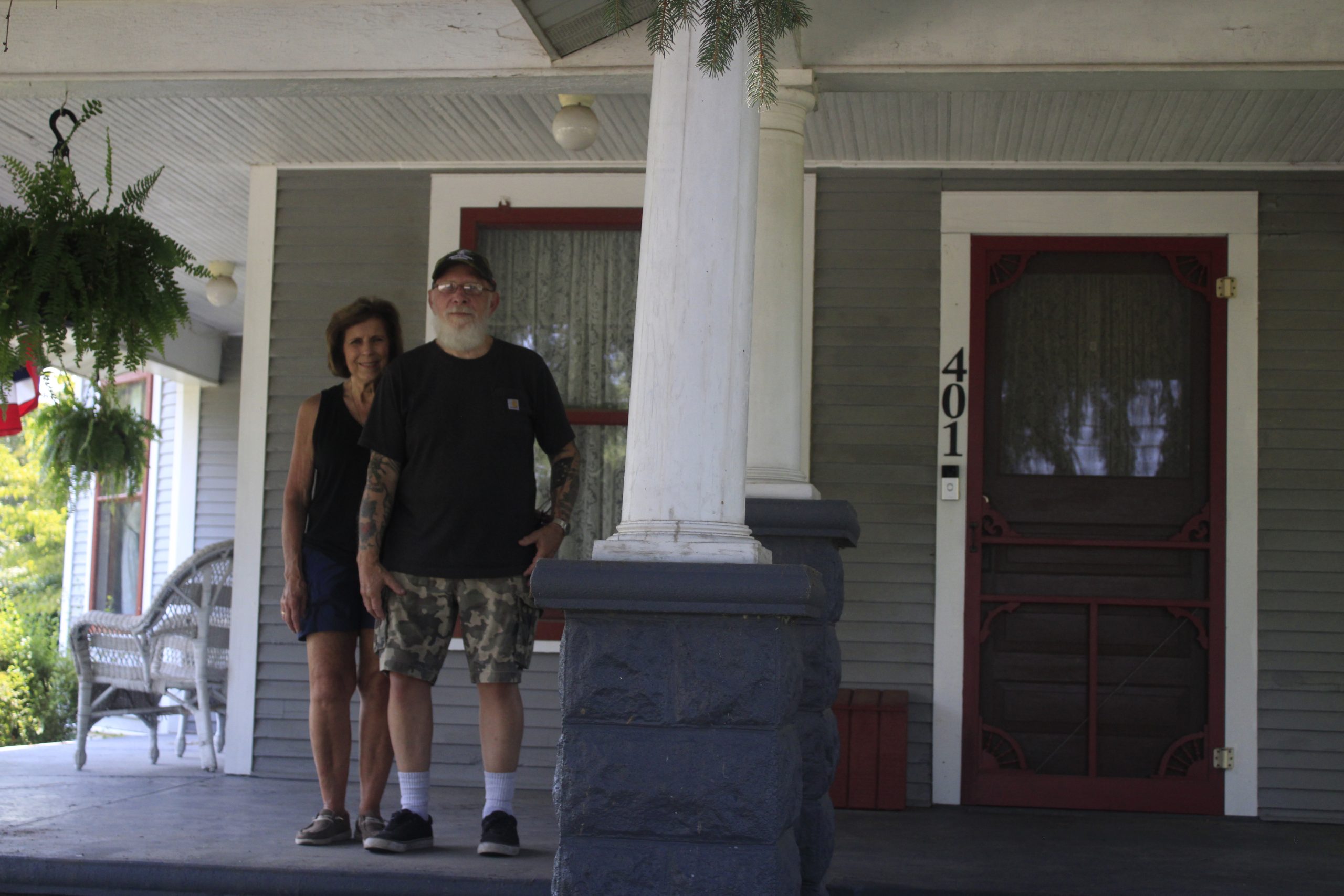
DOWAGIAC, Mich. – Gerald and Donna Dodd have called Louise Avenue home for the past 56 years, raising a family and creating countless memories. The family home, built in the early 1900s, sits on about an acre of land with backyard woods, a beautiful garden and greenhouse, and a lush front yard.
“We raised our kids here, our grandkids (here), all our memories are here,” said Gerald, 78.
Donna led The Collegiate staff down a stone path on a tour of her backyard garden filled with flowers, select fruits and vegetables, and a bit of the forest edge that they own along with a small greenhouse. The garden was carefully tended to, the flowers were specifically chosen, and the wooden areas were respected and cared for.
The home itself is timeless, having a stone and wood exterior, created long before any modern developments.
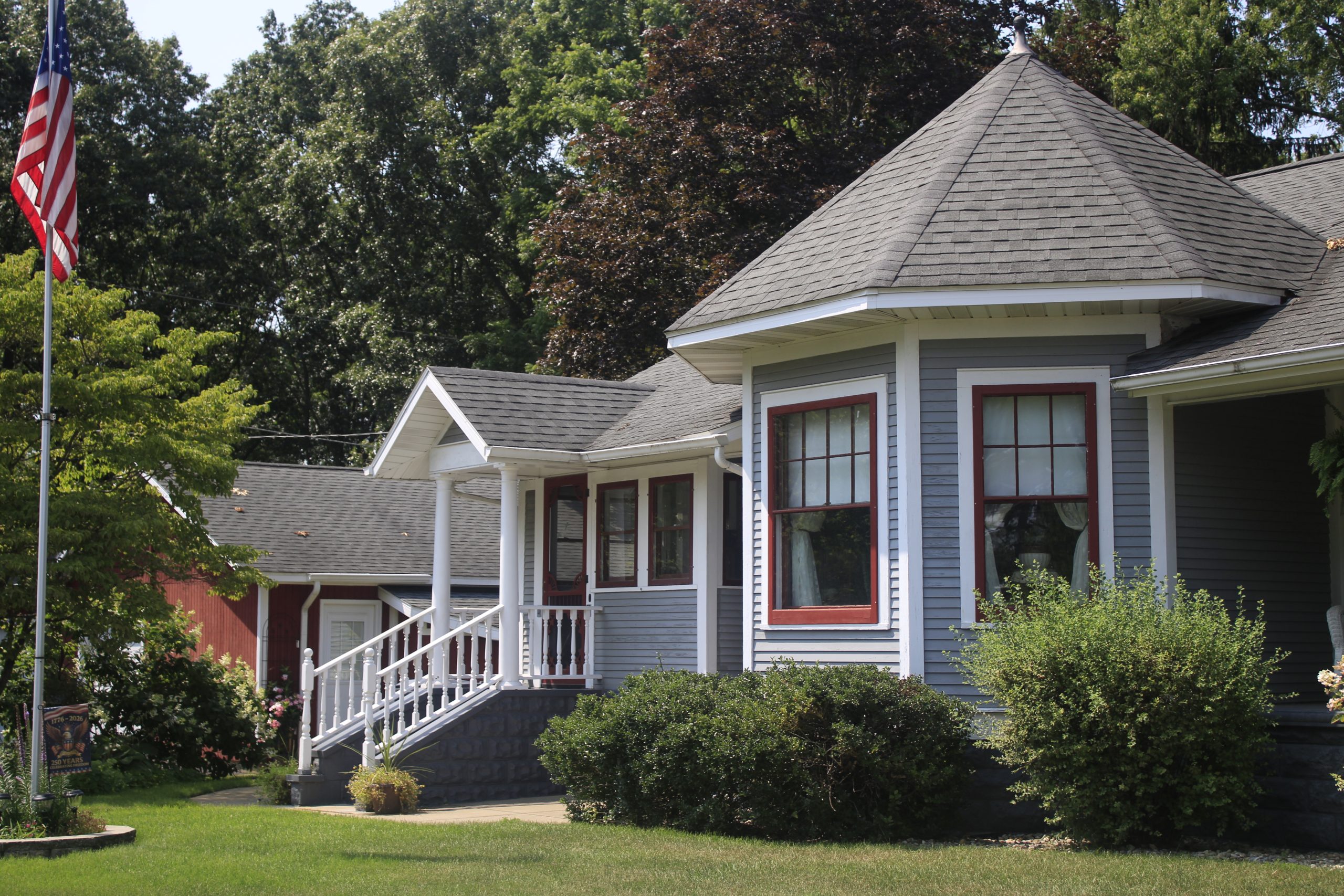
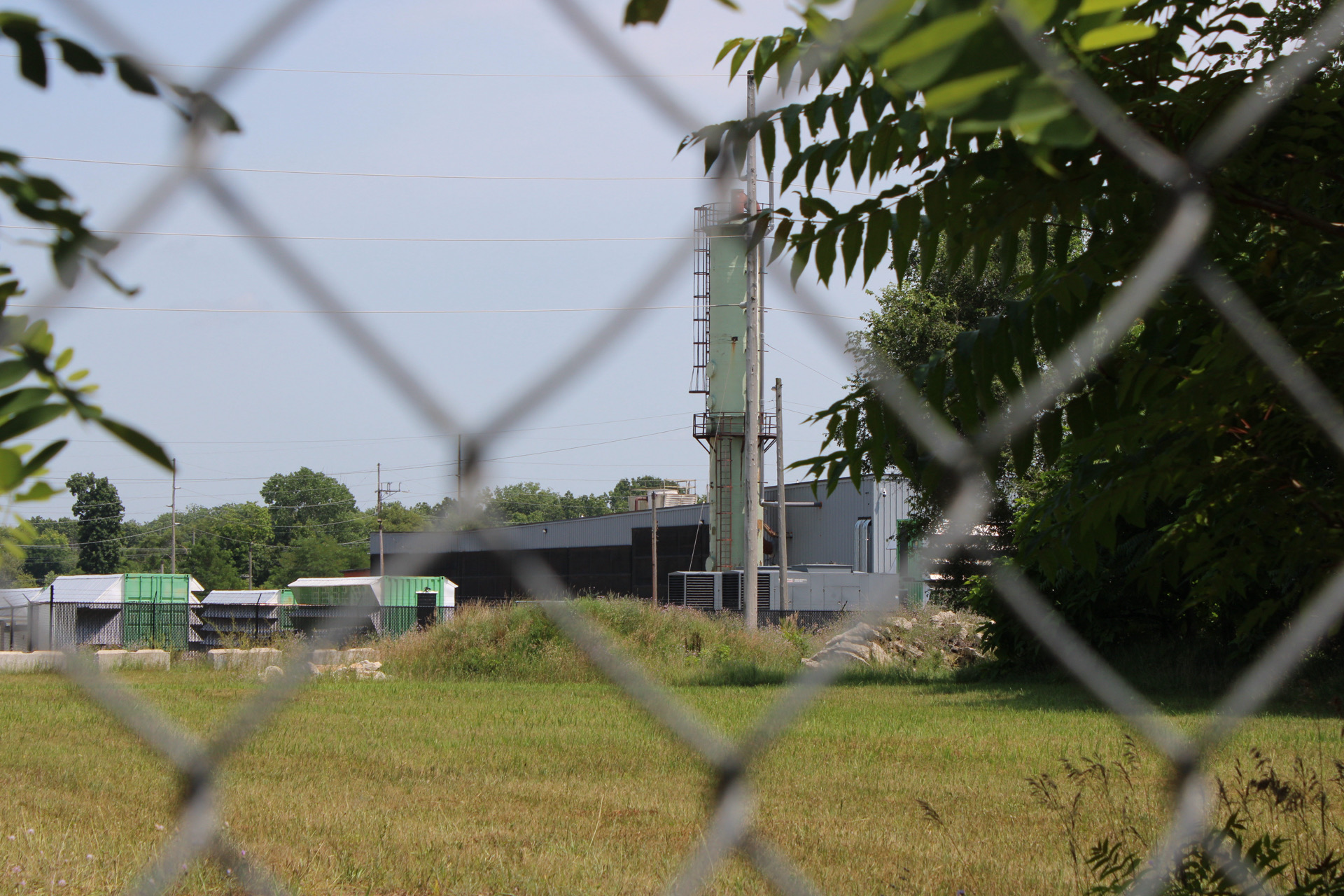
It would be an ideal home to live and grow old in if it weren’t for the unbearable noise from the data center property located 66 feet away.
The data center in question is a bitcoin mining facility owned by Hyperscale Inc.
When Hyperscale Inc. first moved into the building across from Dodd’s home five years ago, there was no communication with residents on Louise Avenue.
“It was probably two years before we discovered what it was all about,” Gerald said.
“Then we start seeing them move in these containers that we’ve never seen before, and I got to researching that and found out they were Bitcoin generators.”
The noise coming from the data center is, for those on Louise, the primary concern as it pushes away wildlife, harms residents, and impacts their properties.
Dowagiac noise ordinance dictates that businesses must remain under 65 decibels during the day and 55 decibels at night.
To most residents, the noise was a complete surprise, beginning abruptly without any warning.
“One night around May 2022, we were getting ready for bed. We usually left our windows open during summer nights. All of a sudden, this huge noise started,” said the Dodds’ neighbor, Valdes, who lives down a few houses down the street. “I thought they were having trouble at the plant.”
Since it started, the noise has remained constant 24/7, never breaking at any point throughout the day or night. Recently, the noise has been reduced for the further ends of the street due to a partial shutdown.
Currently, the noise has become more concentrated in the middle of the street following a partial shutdown, which is in preparation for the conversion and expansion from its current operations as a bitcoin mining operation to an AI data center. The bulk of the noise is coming from a large side vent facing Louise Avenue, adjacent to the Dodds’ residence.
According to Dowagiac Mayor Patrick Bakeman, the city is currently sending Hyperscale Inc. a citation to better enforce the ordinance.
Multiple residents, including the Dodds and John Valdes, are part of an active but pending civil lawsuit against Hyperscale Inc. in regard to the noise. One of said residents is Valdes, a neighbor to the Dodds, who has lived on Louise Ave. for 49 years.
For the past three months, from April to July, Valdes has been collecting decibel readings from the street using an industry-standard reader. While the readings varied each day, Valdes was able to get an average for each month. April measured 66 decibels for the day, 7 a.m. to 10 p.m., and 55 decibels for the night, 10 p.m. to 7 a.m. May measured an average of 65 decibels in the day, and 55 at night, right on the cusp of the noise ordinance. June measured the same as May. The all-time high for the three months was 67.3 decibels.
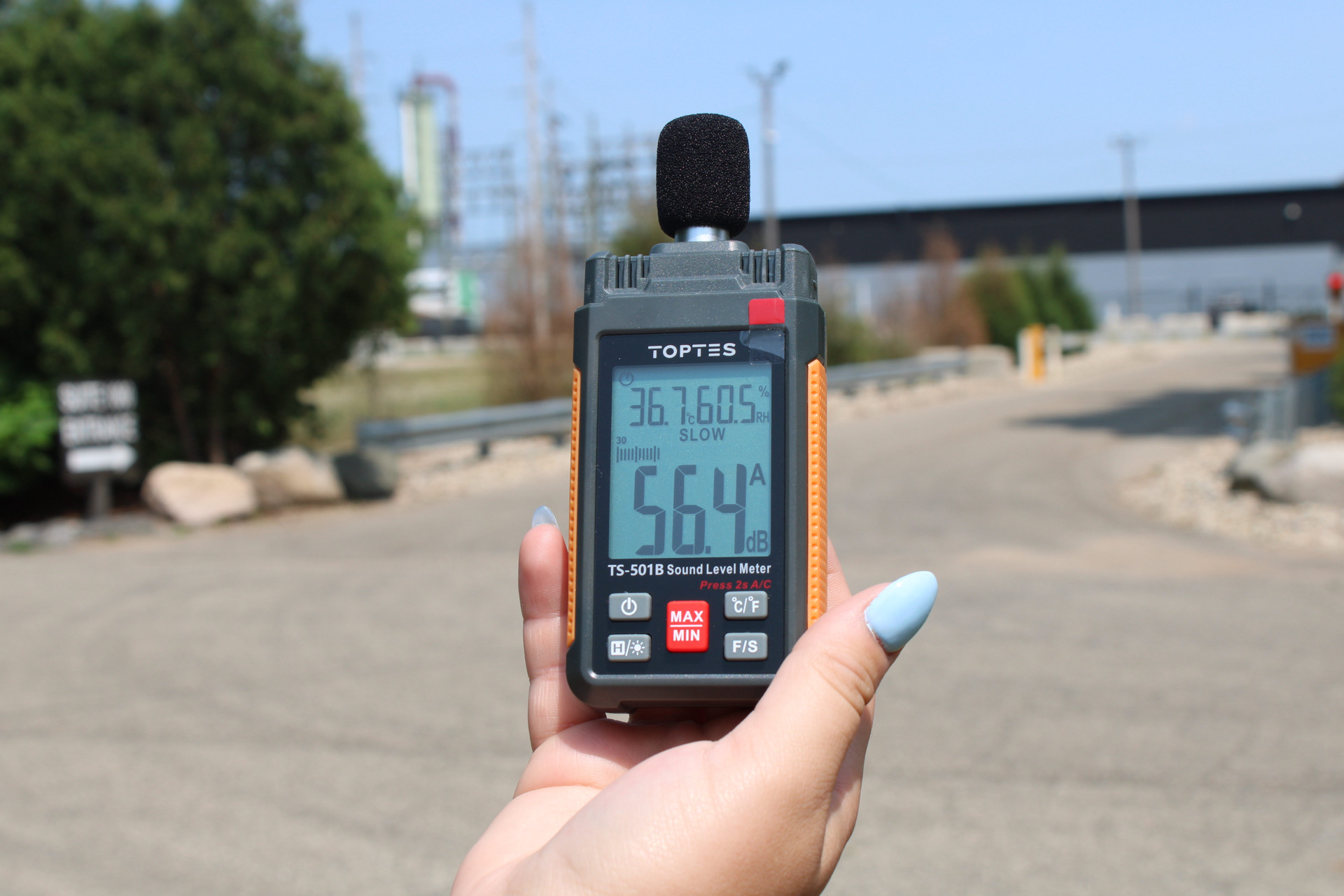
The Collegiate staff recorded decibel levels during the afternoon of July 15. Using an industry-standard reader. Reporters recorded averages between 55.3 and 62.6 decibels near Dodd’s home on Louise.
“This is continuous, all day, every day, 24/7. And its level. And somebody told me that there’s one level of sound a bit lower that we’re not really hearing, and it can bother your brain,” Valdes said.
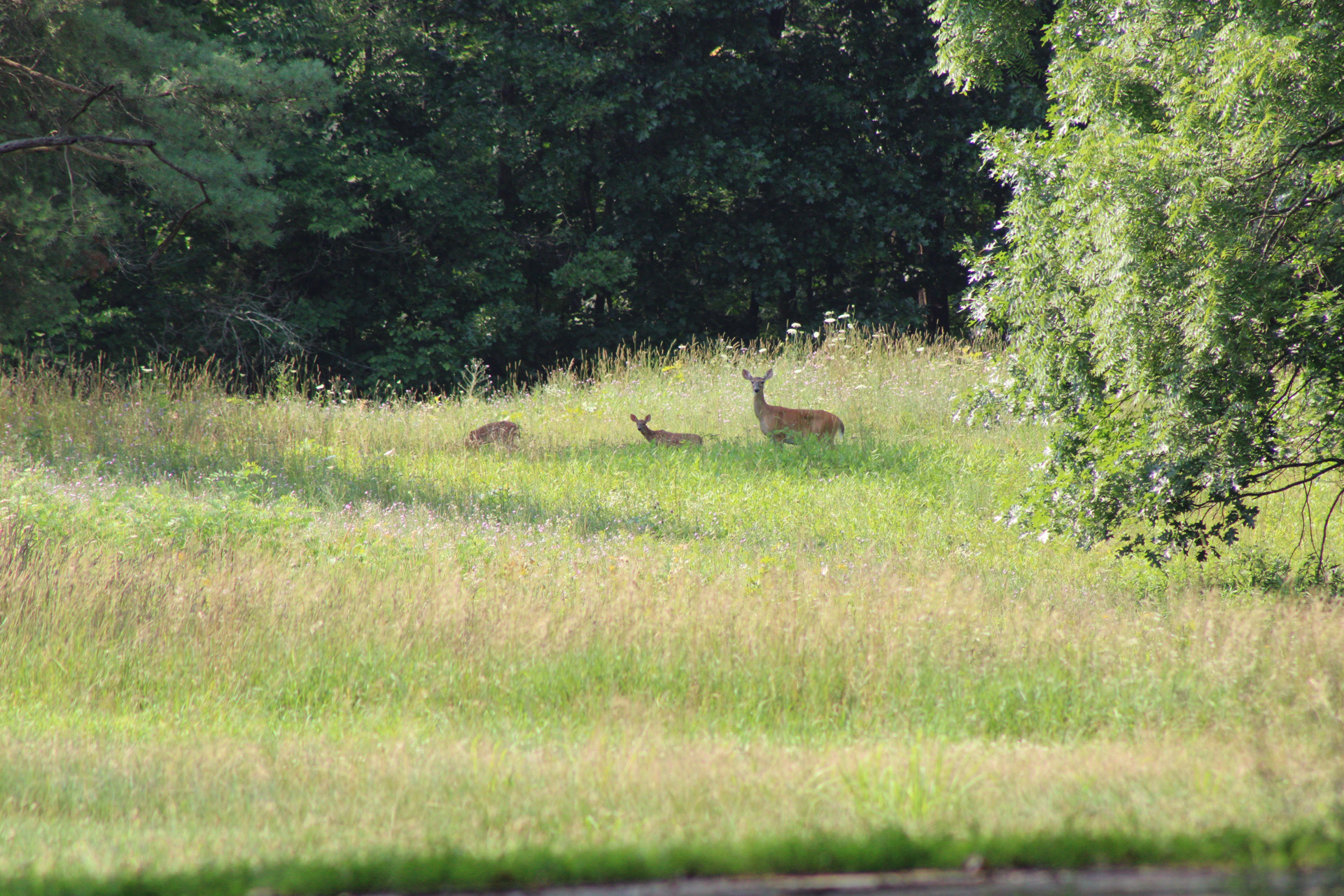
While noise increased, Louise Avenue had become noticeably quieter in a different way, and Valdes shared he watched as familiar wildlife gradually began to move away from the area.
“We used to have deer come from the woods, through our property and sometimes between our house and the other buildings. The motion light would come on at night,” Valdes said. “We don’t see deer anymore. We haven’t seen any wild turkeys. At one time, we had about 25 turkeys underneath the bird feeder. They would come over from the woods back there, but now there aren’t any turkeys around.”
What was once a bustling neighborhood of diverse wildlife has become eerily still.
“Hardly any butterflies. We don’t see them much anymore. We don’t get many bees either. At night, we used to see large moths and a whole bunch of lightning bugs,” Valdes reminisced. “We still see a few lightning bugs, but not very often.”
Where fireflies used to illuminate, is now lit up by headlights, as curious motorists – including many from outlying areas – drive by to witness the noise firsthand.
“Cars come down here, turn around and listen to the noise. That happens all day and all night. At 10 or 11 o’clock at night, people are still coming down here,” Valdes said. “Security vehicles come down here at all times of the day and night. They have orange flashing lights on top.”
On July 13, Dowagiac held a public hearing to discuss the data center, the impacts of the noise, and invited the CEO of Hyperscale Inc., Will Horne, to make a public statement and respond to the community members’ complaints and concerns.
Horne read from a pre-written statement and said that the noise residents are dealing with is comparable to his own situation living near a highway in Seattle, and that he sympathizes with residents.
He continued by claiming that the noise will be dealt with within 3 months, but highlighted that the noise levels at the data center remained the same even when the data center was shut off recently.
Horne himself didn’t share details of the shutdown, but claimed that he personally tested the noise level by recording the decibel readings on an app, comparing it to past tests.
“You said that the noise was bad on a highway,” Gerald Dodd rebutted at the meeting. “If you live in what we live in, Mr. (John) Stewart (Hyperscale Inc. marketing director) knows; he was there, he heard it, it’s terrible. It’s not like the highway. I grew up in the automotive business, turning brake drums behind big diesel trucks, and that singing noise coming off of those drums is closer to what you would experience.”
Gerald Dodd continued, explaining, “We have property in the back that’s all woods. We can’t go back there and enjoy it. The animals have not come up into the yard, except for squirrels and birds. My wife does gardening. We have no butterflies or bees. They’re just a fraction of what used to be there.”
The Collegiate contacted Hyperscale Inc. for comment. We later received a response from Hyperscale Inc. marketing director John Stewart via Email.
When asked about the timeframe for the current noise being removed, Stewart stated: “During the meeting, CEO Will Horne was referring to the timeline for transitioning our operations and shutting down our cryptocurrency mining equipment, the main source of sound from our facility.”
Stuart stated that the current noise is only a part of the problem.
“Even with everything off, we still measured meaningful sound (nearly 50 decibels on the residential side and 66 on the industrial side), which told us the sound in this area comes from more than one source, and ours is only one of them,” Stewart said.
Stewart expressed that he believes the new operation should be quieter and the company is committed to making it that way.
While Gerald Dodd isn’t against AI, he does believe that Hyperscale Inc. should be held accountable and fix the problems they create, despite how people perceive them as a company. He also had concerns about some who spoke up during the city council meetings, who seemed too focused on receiving attention rather than keeping the focus on the issue of the data center itself.
“All we can do is wait and see. I’ll be willing to give them a chance, but jumping on them and calling them names, I thought that was just an embarrassment,” Dodd said. “I know people are hyped up about it, but people need to calm down and start thinking like adults.”
Gerald Dodd expressed that he believes the best way to fight the situation is to focus on what can be proven. According to him, taking this approach would result in a much more realistic outcome, namely, changes to local ordinances and company restrictions.
During that same meeting, Horne stated that Hyperscale Inc. is willing to purchase any land from residents on Louise at a “fair price” should they want to sell. Horne reasoned that it would be a way for residents to “not feel trapped by the data center operations.”
While some are considering the offer, Gerald and Donna do not want to move.
“I’m not moving anywhere unless they make me,” Gerald said.
Residents on Louise are no strangers to pollution. Before Hyperscale, Sunstrand polluted the nearby Pine Lake. As a result, testing wells had to be set up around the lake to monitor its condition.
“Our fear was that if (Hyperscale) ended up not having a closed-loop system of some sort over here where they could recycle the water, they’d be pulling it from those wells behind our house. All these houses have wells back in the swamp to test the water,” Dodd said. “And if they start doing that, they’re just going to recycle those chemicals that have gotten in the sediment, and we don’t want that to happen again.”
Horne stated that Hyperscale is planning on having a closed-loop system, using chemical coolant rather than water.
Collegiate editors Grace Holmes, Ari Browley, Karalynn Davis, and Alexandria Webb contributed to this report.