By Kyle Jackson
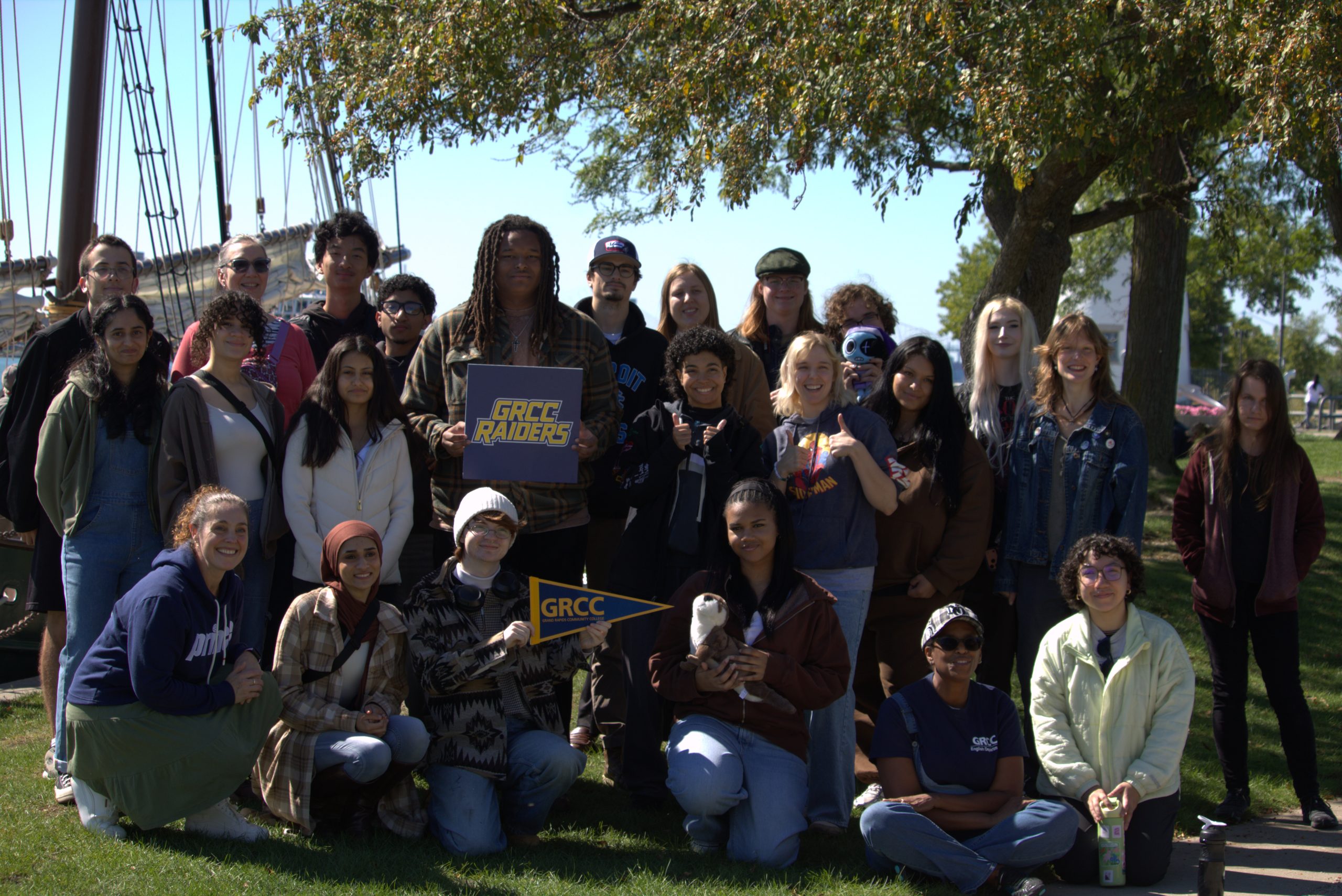
On Saturday, Sept. 26, The Collegiate was invited to join the Grand Rapids Community College English Department on a trip to Detroit to take part in the University of Michigan’s Detroit River Schooner Program.
The program itself, run by U-M’s College of Literature, Science, and the Arts (LSA), has literature and science students board the tall ship Alliance, a schooner that has been a part of this program for the past seven years.
While on board the ship, students can experience hands-on lectures regarding the Detroit River’s history, its wildlife, its water quality and microbial life, and the science behind the ships and barges that pass through it.
This trip was spearheaded by Lynn Prince, Professor of English at GRCC since 2004, and co-run by another Professor of English at GRCC since 2001.
“As long as there’s grant money provided for the transfer to (the) Bridges program, I think this is (an) established field trip,” Prince said. “It’s successful, I think students and faculty alike both enjoy it. So I think it’ll still keep going. I would like to see it continue. It’s a wonderful opportunity, especially for students who can’t travel abroad or don’t have the means to go and do these different activities.”
Prince explained how the most important part of this trip, and future iterations of this trip, is focused on the students and what they take away from it, having a student survey at the end of the trip to find what could be done to improve the experience.
“…as a college, we need to plan for it. So, … if it’s not this specific event, how do we keep events like this so students can get outside of our little bubbles?,” Muhammad said in agreement with Prince. “ And it’s not even… that far. We come back, and now we’re thinking about …what does this look like here?”
Muhammad was once a resident of Detroit, moving from the city 25 years ago to start at GRCC. For her, this trip was more than just a field trip, it was revisiting her home with a fresh perspective.
“… (I) was born and raised in Detroit and never had this experience on the river, so it was good. I’m glad I could support students,” Muhamed stated after the trip.
The day started at the Ford Field House at GRCC, where students boarded a charter bus to make the long trip to Detroit. Despite it only being a little more than two hours away, the bus was slightly delayed due to traffic.
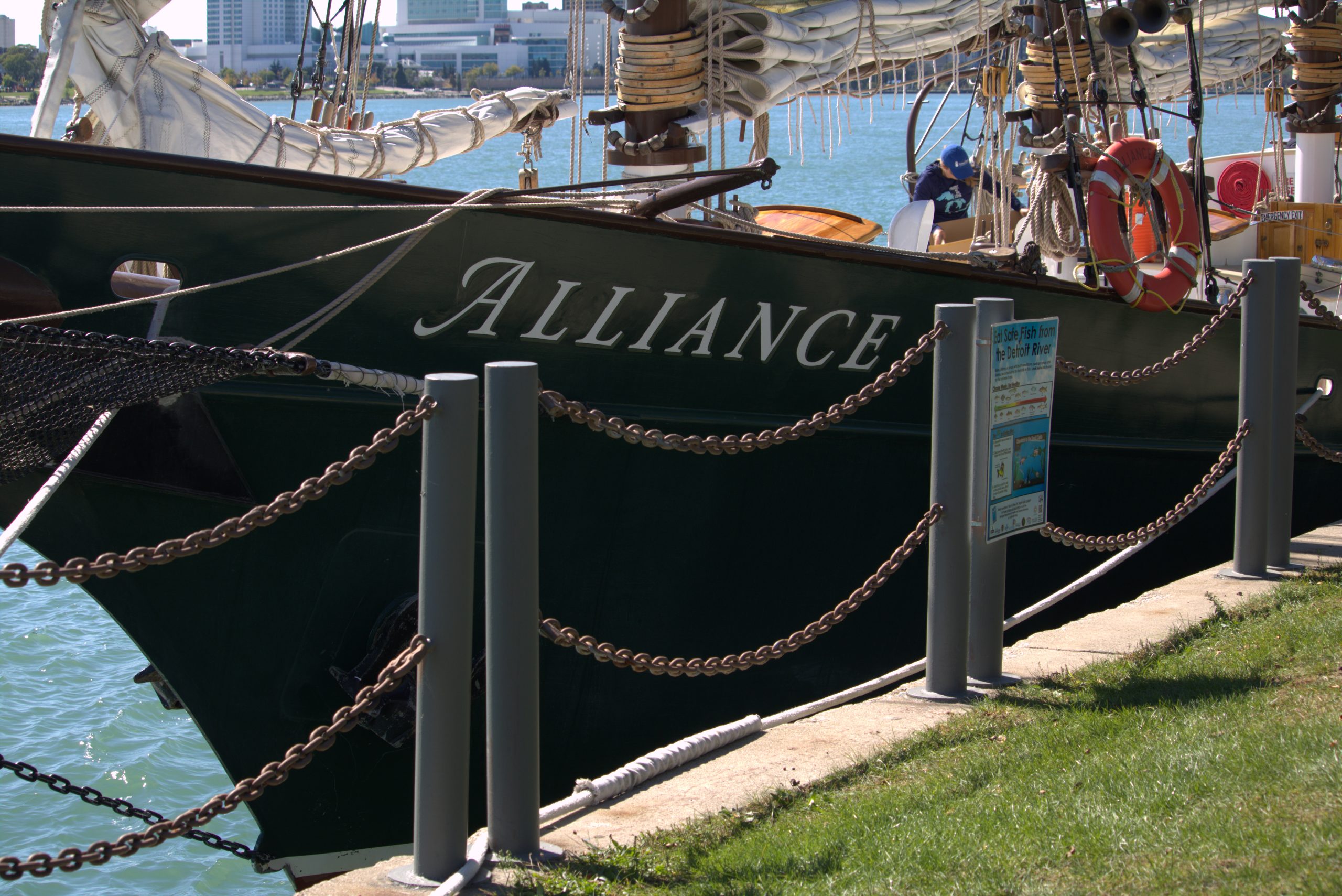
Shortly after arriving in Detroit, the group was quickly introduced to the crew and guest presenters. After a quick safety warning and being split into groups, the students boarded the ship.
Kyle Jackson/ The Collegiate Kyle Jackson | The Collegiate Live
The ship’s crew first started the voyage by having students test the clarity of the water using a special disk that was lowered into the river via a rope, followed by collecting a water sample and testing the temperature of the water along with the air temperature and air speed.
The findings for each group were averaged out and recorded as scientific data for further research into the quality of the river.
After recording the initial data, the crew had the students hoist the sails of the ship, guiding them with voice commands as each group pulled ropes on either side of the ship.
Afterwards, the students were sent into different areas of the ship for the guest educator’s lectures.
The first lecture was on lake stewardship and African-American culture surrounding the river, presented by PhD student and guest educator Marquise Griffin.
“I study a joint PhD in English education, and I focused on place-based education and how it can connect specifically Black students and communities to nature, to improve educational outcomes, to create more immersive, culturally relevant curricula,” Griffin explained.
Griffin spoke on how influential the Detroit River is to the city and how it has played major roles in Black culture and history.
Griffin explained that during the time of the Underground Railroad, the Detroit River was named Midnight to hide the fact that escaped slaves were being rowed across it to Canada and freedom.
Griffin also explained how during the fur trade, enslaved people were often the ones forced to hunt the animals for luxury fur clothing. As a result, animal fur is a fashion staple for the Black community in Detroit as a symbol of progress and a way to honor their ancestors.
Griffin continued by explaining how people in river or lake cities have a responsibility to be good stewards for their respective body of water.
The next station was on the wildlife of the river, presented by Michelle Bradley, another guest speaker from LSA.
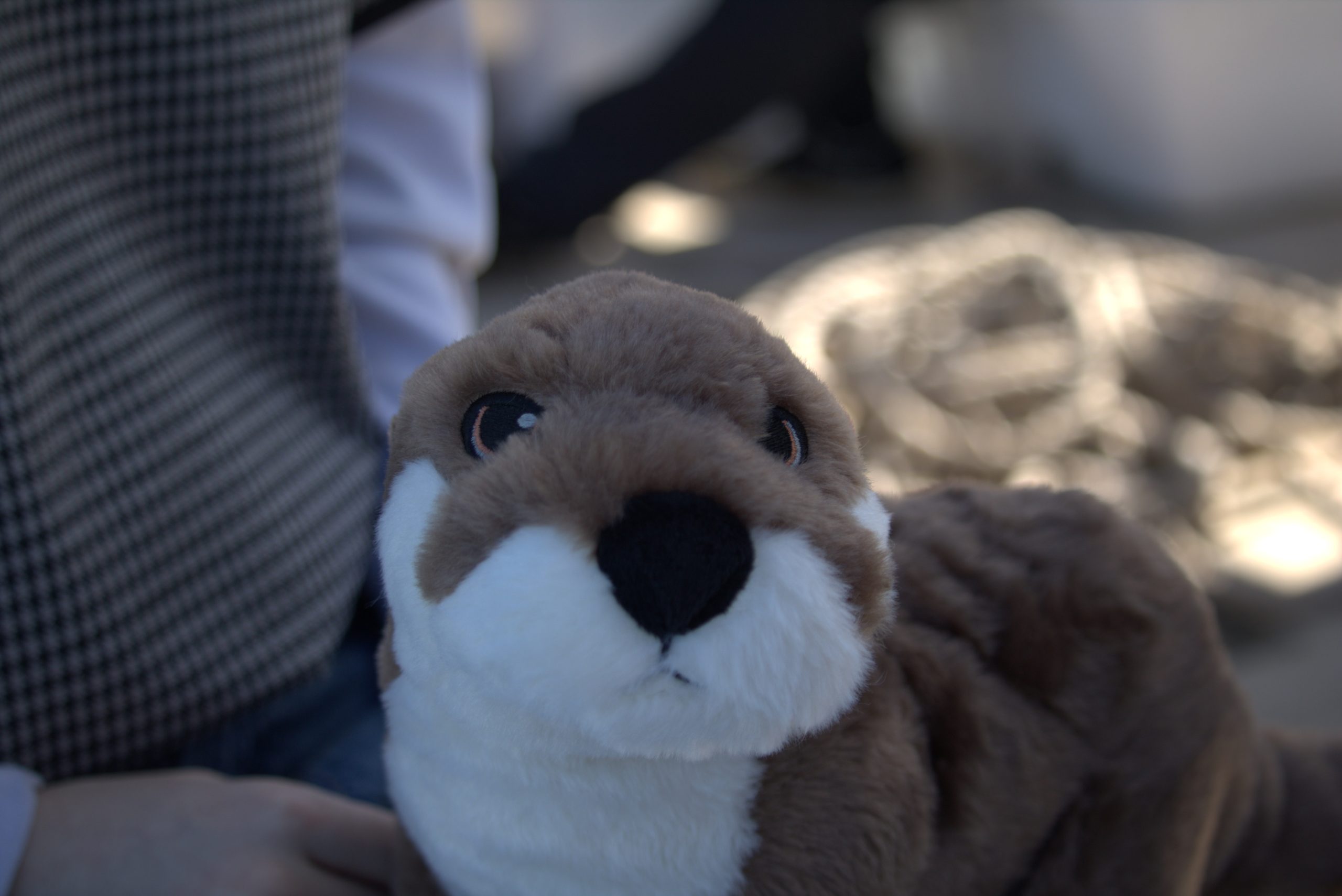
Bradley focused on how humans have harmed the river, destroyed habitats, and disrupted food chains over the years. The main forms of harm come in the form of hunting beavers and otters and overfishing.
Kyle Jackson/ The Collegiate Kyle Jackson | The Collegiate Live
As settlers came into Detroit, the fur trade with European powers became a major part of Detroit’s economy, and large amounts of wildlife quickly began to disappear.
“One of the resources they were looking for had to do with a fashion trend that was going on over here for several hundred years, and they had run out of the natural resources that they used to make it. This was… Hats,” Bradley said.
Bradley explained that major strides have recently been made to restore the life the Detroit River once had, with the return of beavers, certain fish, and large birds like Osprey due to human intervention.
“So with human intervention, those guys (Osprey) are doing much better, and they’re back here on the Detroit River.”
The next station was a demonstration of microbial life that took place within the ship itself, presented by another guest speaker.
The station had students take one to two drops of the water sample that was collected earlier and place it into a petri dish, flattening the droplets in order to show the microbial life underneath a microscope.
In almost every drop used, there was some form of life, such as plankton, algae, and other items like microplastics. Every drop contained microplastics.
The next station demonstrated the science behind how barge ships and schooners work in terms of floating and how they are able to hold hundreds of thousands of pounds of cargo.
The speaker, using a bucket of water and two different ship models, explained how ships are able to stay upright with some form of counterweight in the form of a keel or by flooding the bottom part of the hull. The latter is a major reason for invasive species being present in the Great Lakes and Detroit River.
The final station covered the ancient history of the Detroit River, its influence on how the city was formed, and the natives that resided in the area. This station was presented by Daniel Harrison, a professor from Wayne State.
Harrison spoke on the importance of trade on the River and how what was left behind tells a story of communication.
“So this was a place where trade was facilitated, so a lot of stuff flowed through here, but a lot of it stuck around,” Harrison said. “So if you do a dig around in here, don’t be surprised by things that you can find and have their origins in other places where you can say, oh, this style of hat, normally we find that out in upstate New York. So people are talking with each other.”
Harrison spoke on how crucial the Detroit River was, and still is, to major business and trade and invitations.
“… People like to say, well, you know, Henry Ford invented Detroit. No, Detroit invented Henry Ford,” Harrison said. “Henry Ford couldn’t have done what he did if he didn’t know that he could come to Detroit and he could find people who would be bringing iron ore. Iron ore and coal that he needs to come up here to make steel. Where he can find skilled labor who would come up from the East Coast and stop here to make his steel.”
Harrison also highlighted the impact that settlers had on the indigenous community, initially with the French trading with them and then the British pushing them out. The indigenous people retaliated multiple times, attempting to burn down the city.
“And eventually, a lot of tribes got tired of being pushed around. And so Detroit was kind of like ground zero of a Confederation of many nations, actually about at least, you know, 10 or 12, under a great war chief, a great hero named (Obwandiyag),” Harrison said. “He was an Odawa or Ottawa chief. We know him as Pontiac, and Pontiac said, “The British are not good partners, they’re not good friends, they’re not good allies. They’re good for nothing.”
Harrison described how Pontiac staged a large-scale rebellion against the city, lasting several months, using weapons and supplies that were traded to them by the British who were currently occupying the city.
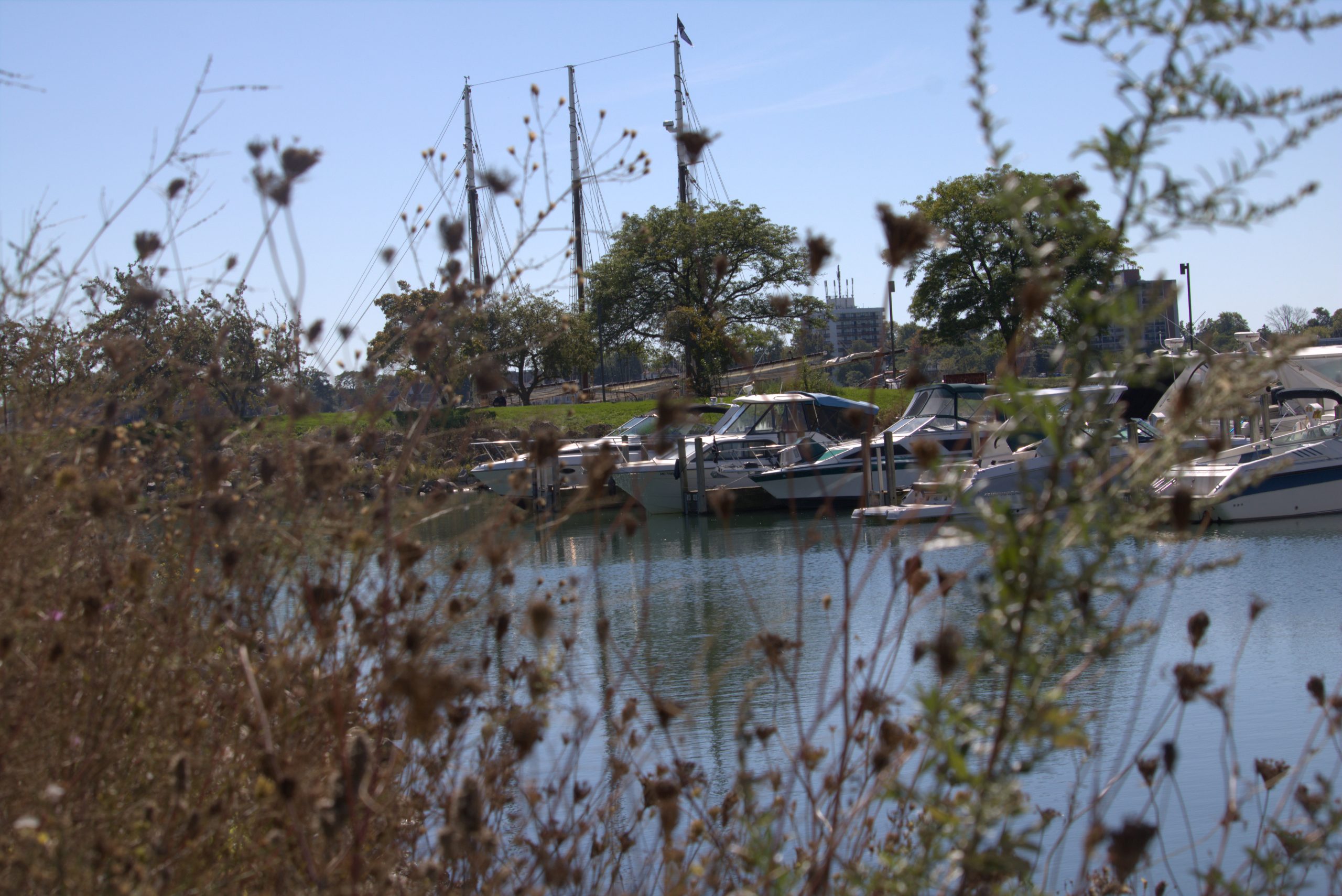
After the three-hour trip, the ship docked, and students reboarded the bus home.
Kyle Jackson/ The Collegiate Kyle Jackson | The Collegiate Live
“This was tons of fun. A little bit out of my comfort zone,” said Estefania Castelo-Urbina, 25, an Intro to Environmental Studies and Sustainability major at GRCC, after the trip. “I’m a returning student, and I feel my first time around going to college, I didn’t really get (very) involved with student events. So it was definitely exciting to get involved. And I’ve never been sailing before.”
Mariah Vasquez, 18, is a Biology major at GRCC and also had a positive reception of the trip.
“I’m really glad I got to get out of Grand Rapids and (go on a) boat. It was really cool. The water was super pretty. It was calming. Uh, took me away from my work, like I’m not doing something with school or just work in general,” said Vasquez after the trip.
Prince and Muhammad both also had a positive reception toward the event, both feeling better educated about the natural side of cities.
“There was social issues, civic issues, and there was science. I mean, this was the best science class I ever had. It was not boring at all,” Muhammad said.