By Litany Gaines
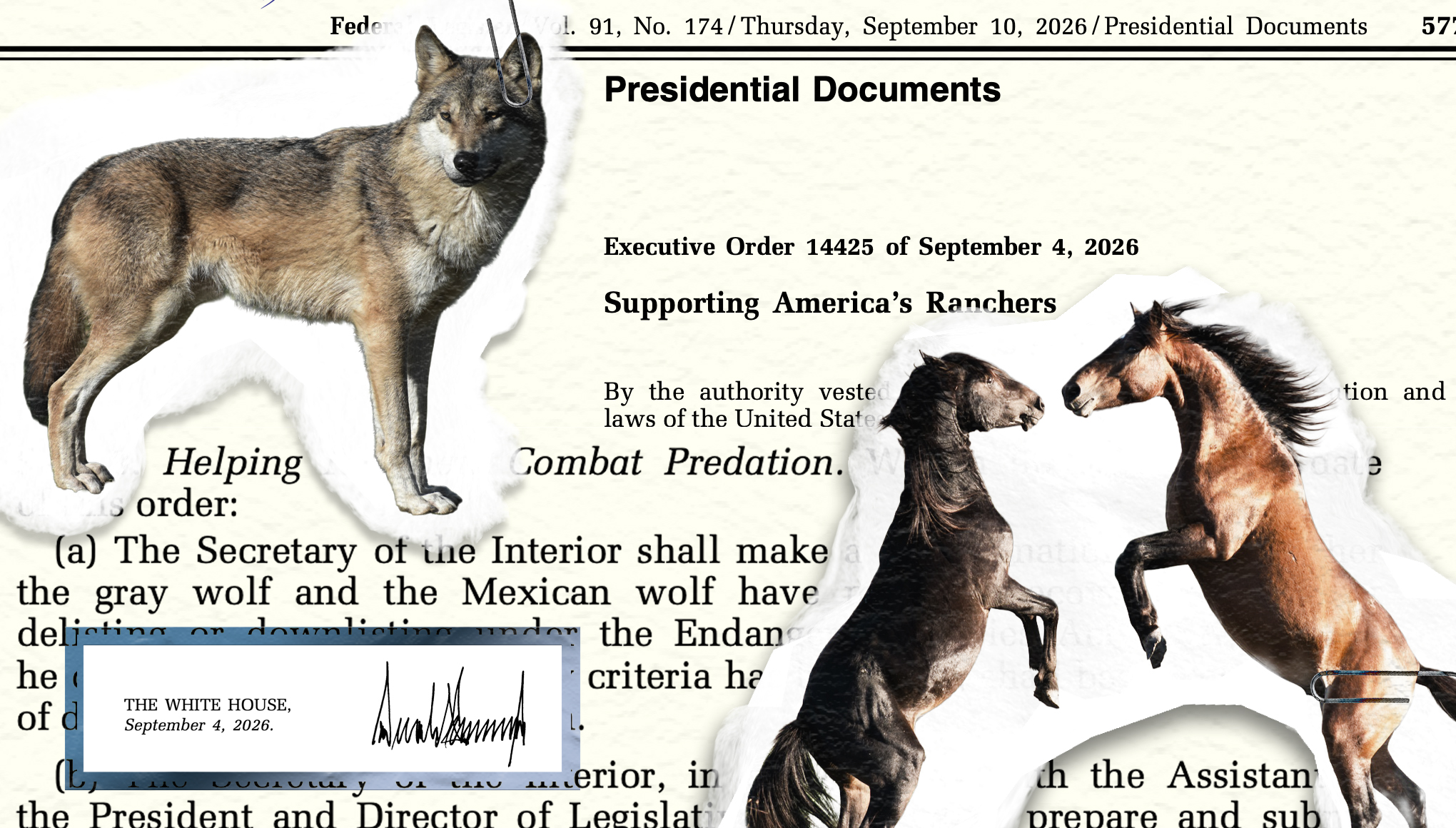
On Sept. 4, 2026, President Donald Trump signed an executive order to consider delisting or downlisting gray wolves and Mexican gray wolves from the Endangered Species Act (ESA). A possible addition to the growing list of environmental rollbacks from the Trump administration. The Trump administration claims in the executive order that the change would support ranchers and help them protect their livestock.
The order reversing protections of gray and Mexican wolves came out shortly before a memo shared by the Center of Biological Diversity. The memo called for a reinterpretation of the definition of “take” when it comes to species protected by the ESA. This call for reinterpretation came along with the finalization of a new rule in 2026, in which they rescinded the regulatory term of the word “harm” under the ESA.
Ahead of the order threatening gray and Mexican wolf protections, an investigation performed by The New York Times was published on Aug. 20, detailing a loophole, revealing that the Bureau of Land Management has been selling wild horses through it, despite the sale of wild horses being illegal. Through the loophole, many of the horses are being sold to slaughter through a third party.
The recent environmental rollbacks and changes have left Grand Rapids Community College students upset, although most don’t seem to be surprised about the changes.
Political science major Kalyn Richards, 20, said, “It’s a system set up to just harm people, and for wealth and to get more money, and that’s what they’re doing. They don’t care that it’s causing harm. They care that they’re able to make more money.”
With the current administration, the changes were not shocking to Richards.
“That’s something the Trump administration would do,” Richards said. “… I feel like Trump is going to use that kind of loophole with the definitions, the legal definition of things, and changing them to fit the way that he needs them to fit in order to make more profit.”
Another GRCC student, an English major Lena Specter, 19, upon hearing about the changes and whether it was justified, said, “Absolutely, the f*** not. No.”
“I think that it’s kind of all-encompassing when you start to tear down one side of a pillar. Then eventually, every single pillar will come down,” Specter said.
Specter added that the reversals open doors for more environmental destruction.
“It gets really difficult because you can’t pick and choose certain aspects and be like, ‘yeah, it’s okay to remove protections here because now we have things saying it’s ok to drill and build roads in national parks,’ which are protected lands for reasons,” Specter said. “…So ultimately, it’s just a gateway for a whole bunch of negative bullsh*t that is not gonna help prolong the life of Earth or life on Earth.”
With the recent rollbacks and reversals, students believe that there is only more to come, and that protections for both animals and the ecosystem will continue to change only to harm the environment.