By Mackenzie Davis
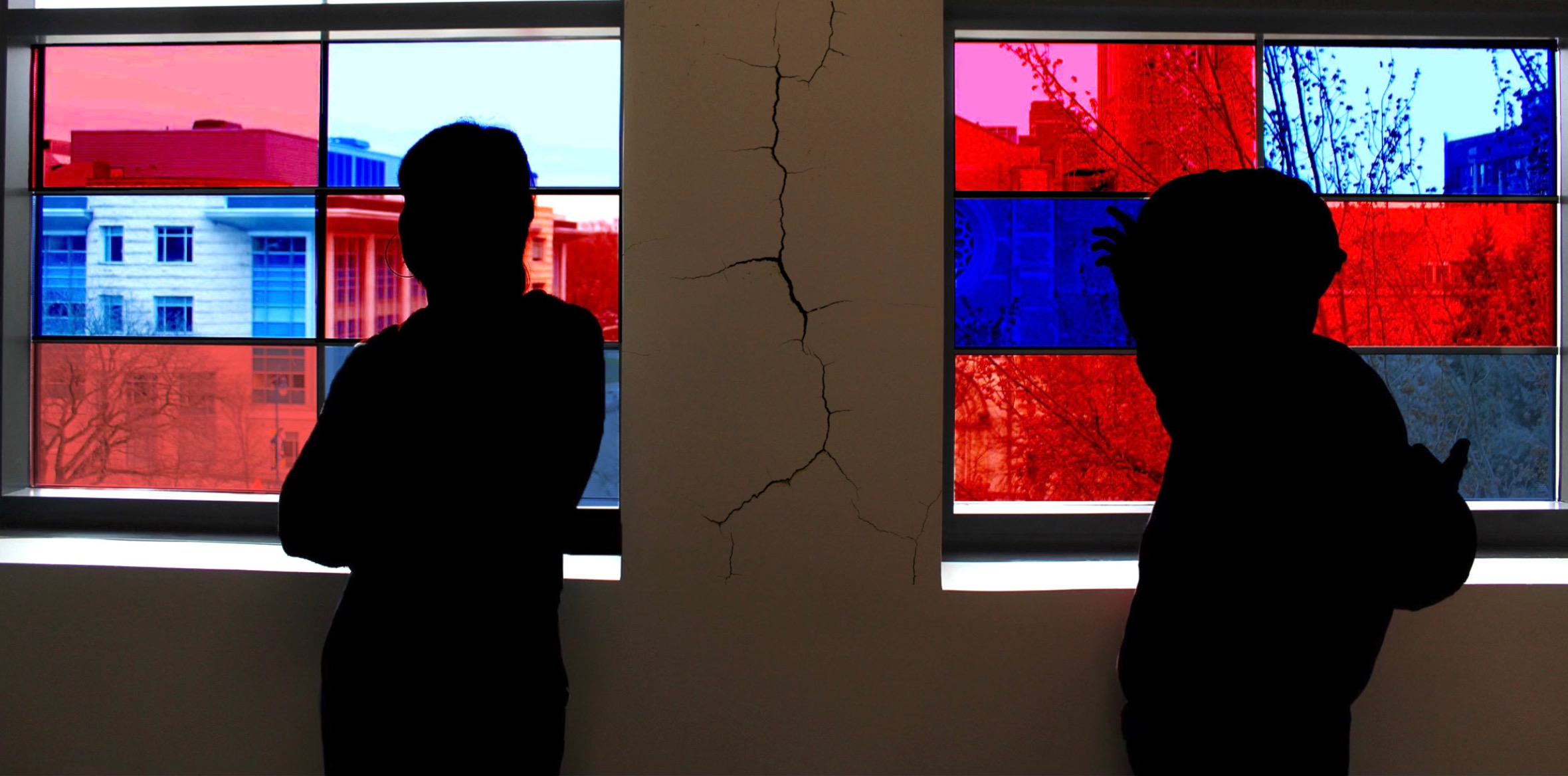
With the 2024 election season rounding out in January and numerous changes happening around the country, people now, more than ever, are forced to adjust to a life where identity is discussed in politics, friendships are ending due to differentiating beliefs and an overall declining ability to find community. Students at Grand Rapids Community College have experienced firsthand the tolls of an increasingly political country, but some seem to think these are changes for the better.
Freshman JaVeon Johnson, of Grand Rapids, acknowledges the changing political world and its impacts on making relationships.
“I am an African American male and if a person dehumanized me in a way, I would separate myself from them because they could not understand where I come from. If they took the effort to learn and are ideologically different from me on other points, then I am perfectly fine,” Johnson said. “As time went on, we became more of a political country…I think we are becoming more of a conscious country. It is one part negative and one part positive because we are becoming more conscious of people’s identities and people’s values and there is more of a conversation of who a person is. Unless you know who they are, whether it’s sexuality, race, gender, it’s become a part of politics. Who you are is now political.”
Student Karalynn Davis made a similar point about having friends with different beliefs.
“More recently, during the election, I voted for Kamala Harris,” Davis said. “A lot of my friends back home voted for Trump …I’m not cutting them off because of their political beliefs, I genuinely don’t understand how some people’s priorities lie. I don’t cut people off because of their politics, I cut people off if they value money over human lives.”
In January of 2025, the National Opinion Research Center for the University of Chicago posted research on the topic of differentiating political views and if, as a whole, Americans are really as segregated as it seems. The general consensus of this study seemed to be that there are generally five ways of political thinking for the American people and an overall common view of “…a deep and growing distrust of the government, the media, and their fellow citizens.” Tom Rosenstiel, Senior Fellow, Public Affairs & Media Research, wrote.
Mother of GRCC student, Deb Spoors, who drives her child to class twice a week, has a different view on the growing distrust of peers.
“I think we have chosen sides, and I think that it’s really unfortunate that that has happened because it tends to isolate people from each other. I think it is different then it was 50 years ago, everybody struggled but they struggled more together and now people point fingers and they look at political identity more as picking sides,” Spoors said. “…so making decisions based on one political view really robs people of getting to know the full spectrum of people they are talking to. It’s only one small piece of their identity and there is much more to be gained from knowing people who don’t agree with you. I think one thing that has changed is people are now willing to hurt each other because they don’t believe the same way. That’s a scary thing.”
As the country falls into this polarizing era separating friends and connections, how do students continue to keep their mental health in check and the constant information online at bay?
“We are surrounded by information all the time. Our generation is more used to blocking out the information and just choosing to remain ignorant because I feel like there is such an oversaturation of information out there and you don’t really have to look for it anymore,” Davis said. “I feel like we get burnt out really easily and our generation as a whole really struggles with mental issues.”
In an article released by the New York Post in 2023 titled ‘Antisocial behavior’: Why Generation Z struggles to make and keep friendships, reporter Shona Hendley wrote about a study done by an associate sociology professor at Dartmouth College, Janice McCabe.
“The study, which was conducted via a series of interviews over several years to track friendships of college students, found that the pandemic had negatively affected the ability of the participants to both sustain friendships and make new ones,” Hendley wrote.
Johnson shared his thoughts on the importance of community in today’s world.
“I think we definitely need places where we can talk and have places where we can go beyond home, school and work and we need to basically get out more. But obviously, most people are introverted, even I,” Johnson said.
When asked how he thought students could find community, Johnson replied, “I would say try to find a space, probably? It’s really hard cause I don’t have many friends that I really go out with, so I don’t really know. I would just say find a place and then people will come? But beyond that I don’t really know.”
Spoors shared her opinions on the younger generation’s ability to find community.
“I think coming out of the pandemic with so many kids having to do school online we stole from them a very important segment of their life where socialization would have been the primary thing they were thinking about but they couldn’t do it at that critical development place in their life,” Spoors said. “And I think they are now coming to a place where they don’t have friends as much and don’t really understand how to make a community around them.”
For students at GRCC who can relate to this lack of community Davis feels that there are ways students can engage and find their people.
“I think that community is found where you look for it. I think that I say this always, there are resources and there is a community,” Davis said. “If you go out and look for it, you will find people.”
Sondra Davis, support professional for GRCCs Success Center, shares her advice on finding a place at the college.
“I would say go to student events… especially if you can join up with one where there are like-minded students. Get involved with things on campus. Just look for all the things on Raider Connect, and there’s going to be other students also looking for connections. Be open to talking to other students,” she said. “There’s so many ways to get involved and meet other students and socialize and practice socializing. Get a job on campus, student employees are able to talk to students as they come in and you can build some confidence there too.”
Evodie Djunga, current president of the Black Africana Student Union and former president of the Campus Activities Board, agrees that community is found by the effort students put in to find it.
“Here on campus, there is a lot going on. If you don’t communicate with people, you will find nothing. You have to go out there and find out what campus has to offer you,” Djunga said. “It is hard to reach out to people and people don’t make it easy these days because they are too busy on their phones and with their lives. So, it’s a lot. I joined the Campus Activities Board, I became the president there and that’s how I found a community.”