By Marc Stoufer III
On March 31, YouTuber Eddy Burback released a video titled “I hate my phone so I got rid of it,” where he locked his iPhone in a safe for a month and replaced its functions with a landline, digital camera and notepad, among other things. The most common theme of the comment section was that many wished they could do the same.
“I think this is the final push I need to give up my phone for a while,” stated one commenter.
“(Smartphones have) ruined our lives,” stated another. “It’s hard to rip yourself away from it. I need to make more of an effort to do so.”
One commenter stated, “It feels like we as a collective are realizing maybe we shouldn’t spend half our day just scrolling and instead try something new.”
This shift in public opinion, thinking of phones as a hindrance to happiness rather than a helper, isn’t limited to the video’s comments- a 2025 study found that 80% of Americans under 30 are worried about how much they use their phone.
A large part of this change is because phones themselves have changed.
When the first cell phone was introduced in 1973, its only functionality was to make calls. In contrast, modern cell phones have become the epicenter of a connected life – shopping, social media, email, music, games, maps, photos, messages, movies and shows, along with a seemingly endless library of available apps and everything ever put on the internet.
Also, it can make calls.
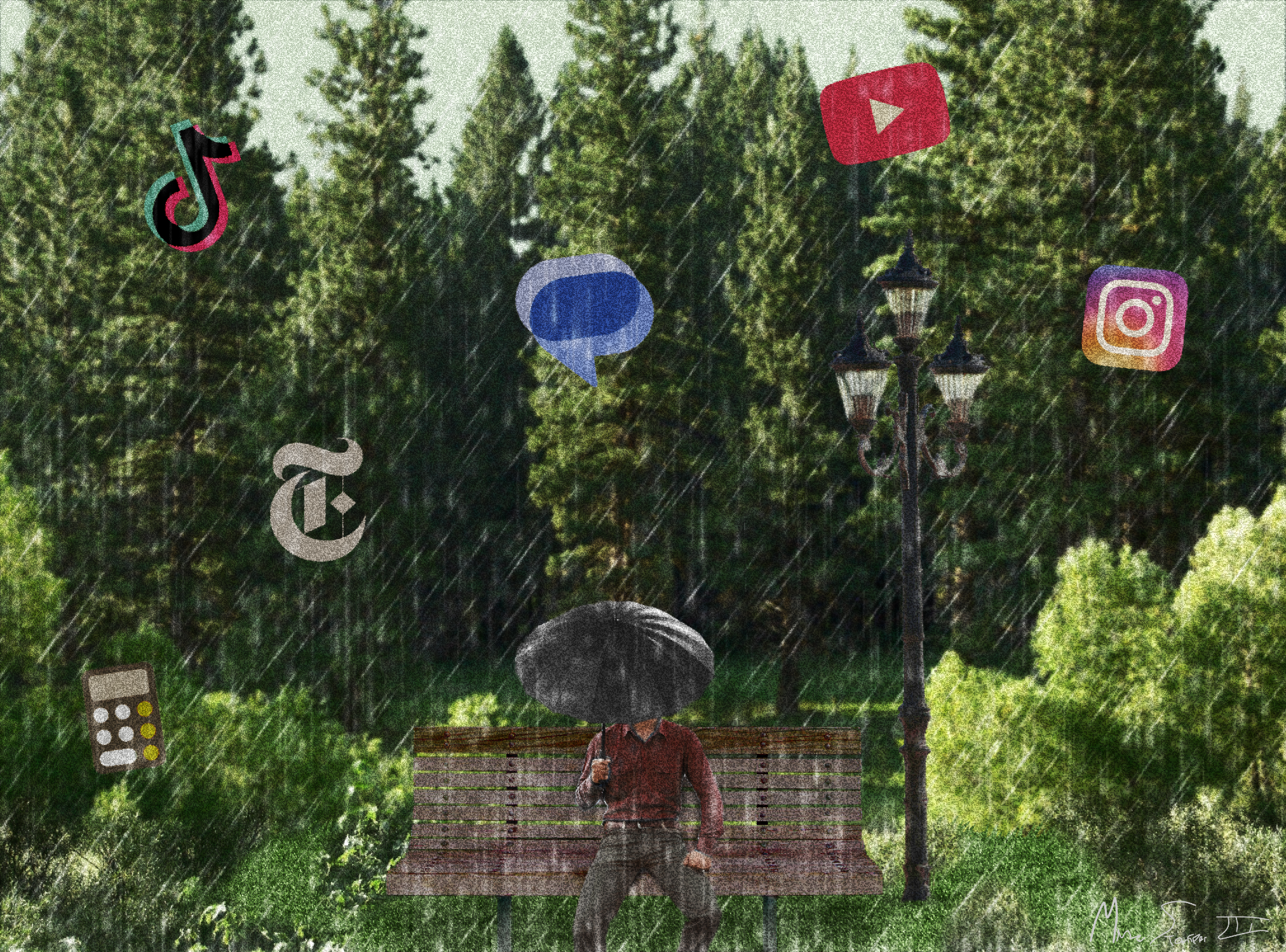
As cell phones have given people access to everything, many realized the opposite also became true – everything now had access to them. The world, with all its stressors, political tensions, deadlines and depressing news, was permanently attached to their hand, begging for their time, focus and money.
Part of this article was even written on a phone.
Contemporary consumers don’t want to unplug to isolate themselves from their loved ones, they want to unchain themselves from all the extraneous features that get in the way.
However, those features are increasingly intertwined with the vital functions of a phone. Scrolling endlessly on TikTok may be a waste of time, but ordering an Uber to navigate a new city likely isn’t. Abandoning the cell phone, though, means losing both.
“(Technology is) so embedded in our lives, we’re setting ourselves up for failure if we say we’re going to go phone-free for a week,” said screen time consultant Emily Cherkin in an interview with BBC.
The million (or 3,500, if the new tarrifs go through) dollar question, then, is how to unplug. (Short of putting a down payment on an off-the-grid cabin in New Hampshire.)
“A surprisingly high percentage (of college students) are aware of the challenges… and are trying to find ways to negotiate modern life without being sucked down into spending all their time on their phone,” said David Billings, adjunct instructor of Technology and Humanities class at Grand Rapids Community College.
“I don’t see too big of an issue with what I’m doing now,” said 18-year-old Daniel Williams. “I have music on in the background to help me focus, because I have ADHD.”
Elementary education major Sophie Henkel, 24, said she uses her phone around two and a half hours a day, which is “a little embarrassing… that’s a lot of time to be using your phone.”
For 19-year-old Hannah Roberts, spending between eight and nine hours a day on her phone is too much.
“I try (to reduce it), but life gets to you,” she said.
Despite that, people try to limit screen time anyway.
As physical media makes a comeback, some people are replacing the functionality of their smartphones with a variety of other devices and a “dumb phone” with only basic functionality, like sending messages and setting alarms.
Others invest in what journalist Sophia Epstein calls “digital mindfulness,” focusing not on avoiding technology and more on using it intentionally.
Williams, an avid gamer, said that he’ll sometimes “feel very irritable after I’ve lost a couple rounds… so I put my phone up and go do something else,” which helps him re-center.
“If I notice I’m spending too much time on certain apps, I will offload them off my phone, so that way I have less instinct to go and tap them. And then, when I do, they’re not there,” Roberts said.
Henkel said she uses a setting on her phone to limit how much time she spends on social media apps.
“It definitely helps me do my homework more often,” she said with a laugh. “Having that timer kind of clicks my brain into ‘oh, it’s time to do something else now.’”
Billings, who has been in his position since 2017, suggests three steps for digital mindfulness to GRCC students: grayscaling the screen, removing nonessential apps from the home screen and turning off all notifications not caused by humans, like in texts or emails.
Students in his Technology and Humanities class participate in a “technology experiment” of their choice where some elect to temporarily go without a phone or a certain app.
According to Billings, many students who participated in these experiments reported that they had more time for “meaningful activity.”
“I’d probably change a little bit to spend less time on my phone and do more things actually going to meet people and socializing than on my phone,” Williams said.
When Roberts goes outside to spend time away from her phone, she said she consistently felt “happier (and) more positive.”
Billings also points out that students with a healthier relationship with their phone are likely to have improved mental health.
After spending hours scrolling through TikTok, Roberts said she felt “lazy (and) kinda drained, almost. Like I’ve been sitting for too long.”
Henkel described seeing a wave of children more frequently using tablets and computers at younger ages.
“It’s a little bit concerning how reliant they are on technology, and not using their imagination and playing, like how kids should be,” she said.
Close to 210 million Americans are addicted to social media, which can lead to “mood swings, disrupted sleep, neglected responsibilities, desire for validation and a lack of hobbies.” Reducing social media use by just 15 minutes a day has been proven to increase immune function by 15%, improve sleep quality by 50% and reduce symptoms of depression by 30%.
Participants in studies conducted by researcher Kostadin Kushlev showed measurably less daily stress when limiting how often they used their phone to check their email and increased attention spans when turning notifications off.
In a world as interconnected and online as this, there’s no single answer to avoid the eternal pull of the cell phone. The quest to find one, however, marks a shift in how the public conscious views technology and its intersection with daily life.
“It’s not necessarily the case that everyone who reflects on (technology) needs to completely disconnect, or even revise what they’re doing,” Billings said. “I think it is good that I see so many students critically reflecting on their relationship to technology… And I think that’s what I see as important.”