By Jasper Little
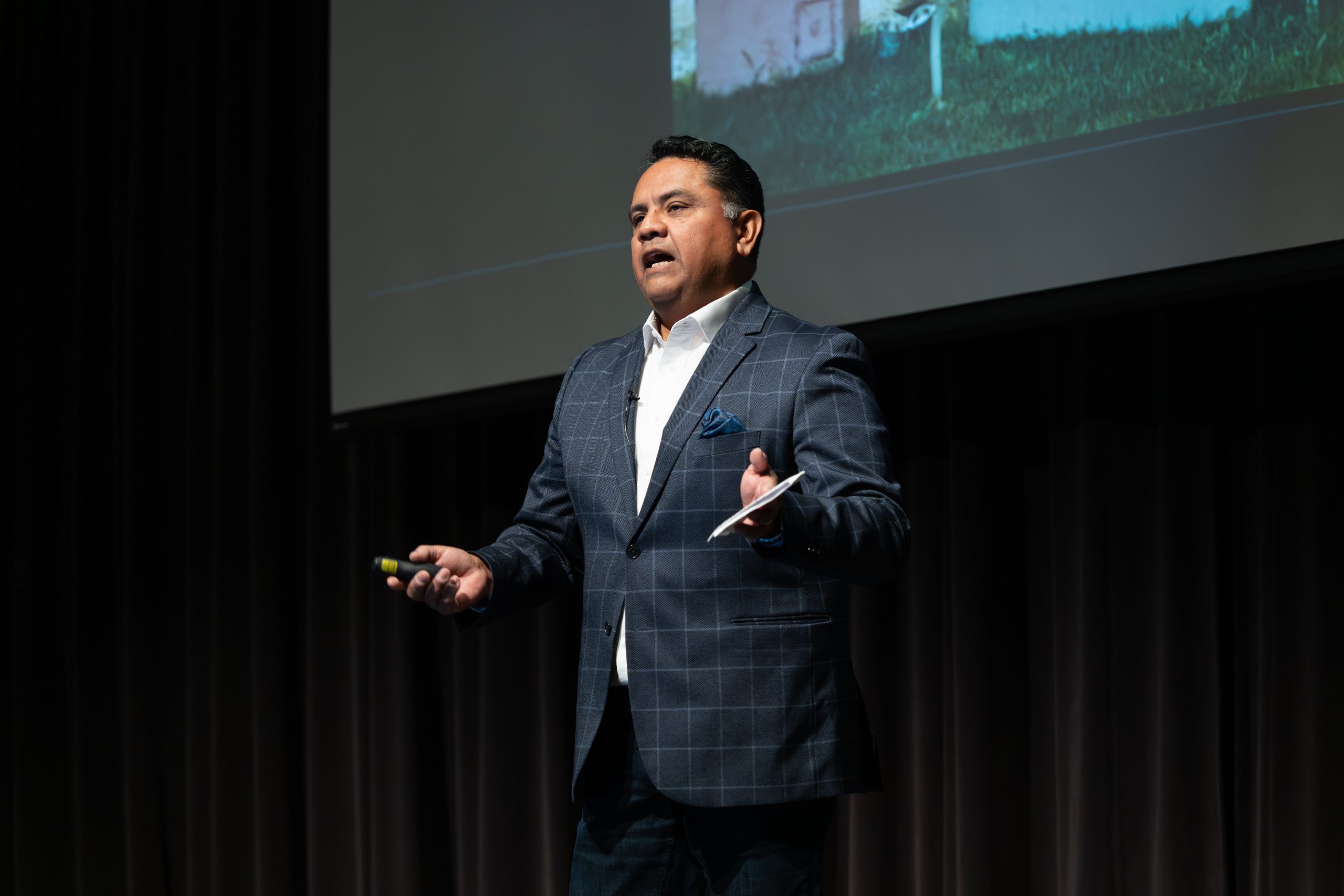
On Oct. 23, Grand Rapids Community College continued the 31st Diversity Lecture Series, this time welcoming Carlos Sanchez to the stage.
The pre-event kicked off at 11 a.m., with complimentary brunch being served in the Winser-Bottrall Applied Technology Center. People mingled as students and faculty alike filled their plates with classic breakfast items like eggs, sausage, potatoes. As 11:30 a.m. approached, Jamillya Hardley, Director of the Woodrick Center of Inclusion and Multicultural Affairs, encouraged guests to make their way to the auditorium for the lecture. There, Hardley took the stage to discuss campus initiatives and the theme of the lecture series, “Cultivating a Culture of Care”.
“Cultivating a culture for care calls for us to reflect on what it truly means to care. Care for ourselves, care for one another, care for our communities we’re a part of.” Hardley said, “At this time our nation and our world is navigating division and uncertainty, the commitment to care is essential – probably more than ever.”
Hardley went on to acknowledge October’s upcoming cultural celebrations, such as Hispanic Heritage Month, Indigenous People’s Day, and Filipino-American History Month.
Alyssa Gamez, Associate Director of the Woodrick Center of Inclusion and Multicultural Affairs, and Gabe Brown, Brother-to-Brother Coordinator, were next up to the mic to discuss the Woodrick Center’s peer programs and initiatives. They openly invited student feedback and encouraged those able to donate to visit their website.
Shortly after, Joel Reyes Hernandez, ALAS Program Coordinator, stepped up to introduce the guest of honor. “Born in Mexico City, Carlos Sanchez is the Executive Director of Casa Latina At Davenport University,” he said, “Before joining Davenport, he spent 10 years at Ferris State University where he developed two initiatives. LEADeres, a professional development and leadership program, and Emprende, an entrepreneurship program in Spanish…”
As a former Trustee of GRCC, Sanchez admitted he was impressed with the care and leadership he had witnessed on the part of the institution’s faculty and students, before recounting his own experiences at the school. Recalling an instance where he ended up taking unnecessary courses as a result of avoiding the conversation with his advisers, Sanchez segues into the value of “Embracing Uncomfortable”.
“Uncomfortable comes from being frustrated at something, right? So you don’t have the job that you wanted, or the partner that you want, you’re living in a place you don’t want … If you don’t take stock of the situation, one just keeps doing things automatically – that’s my theory.”
Sanchez acknowledged the benefits of practicing breathwork as a way to be more present and in-tune with one’s body, so they can more easily distinguish between their own inner voice versus those inevitable external stressors. He went on to detail a time when he regretfully ignored his own discomfort.
“My entire life was three big suitcases. I must have had the equivalent to $2,000 in the bank to my name – and I’m approaching my 30s. No college degree.” Sanchez recalled, “Instead of stopping and thinking: What’s going on here? I am very, very uncomfortable. I need to embrace this … Instead of doing that, I decided ‘Nope, I’ve got to move!’ I tried to not feel the pain, to not feel what I’m feeling. I tried to keep moving on, maybe work harder.”
However, rather than engaging in the pursuit of feeling good or being the most achieved, Sanchez suggests leaning into the more authentic, albeit negative experiences. He compared it to the hangover after a long night of partying, where the headache can be treated with painkillers and ignored or serve as a throbbing, palpable reminder about the importance of moderation.
“You remember how that feels, and that pushes you out of that (situation). But one has to (first) lean into that, rather than just put a lid on,” Sanchez said.
Sanchez also went on to caution people against comparing their own achievements against others’, as you never know what resources they may have access to. He commented on the culture of hyper-productivity that’s prized in 2025, and reminded the guests in attendance that the key to success isn’t necessarily on the other end of a 70-hour work week or at a job they hate. He also advised that if they feel like that’s their only option, it’s better to risk the discomfort and make a change sooner rather than later.
“I’d rather be uncomfortable at 20 than at 60,” read the slideshow behind Sanchez. He talked about the patterns many of us fall into as young adults, and how it can often feel like we are powerless to them until we are older and gifted with hindsight. In reality though, he suggests that discomfort is the thing that eventually motivates the change, and one doesn’t have to be later-in-life to be empowered by this. By willingly stepping into the uncomfortable as a young adult, one may just be setting themselves up for a more fulfilling experience later on.
“When I was younger – like you – I made a lot of mistakes, like a hamster in a wheel. But I look back now and I appreciate all those mistakes…” an audience member had commented during the Q&A portion of the lecture, “I feel like life sometimes can be a real teacher to us, if we accept that, ‘I can’t keep doing this’, you know?”
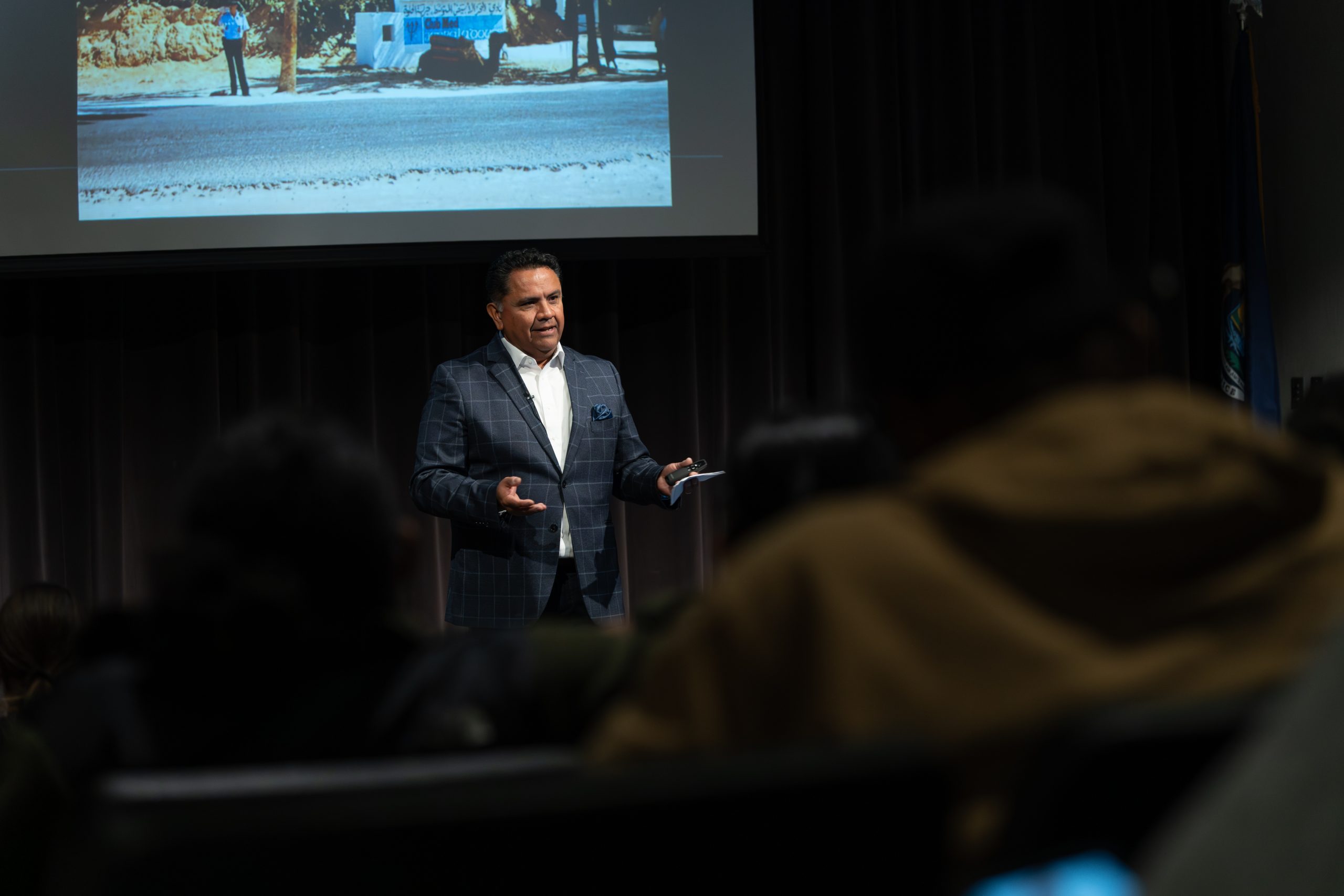
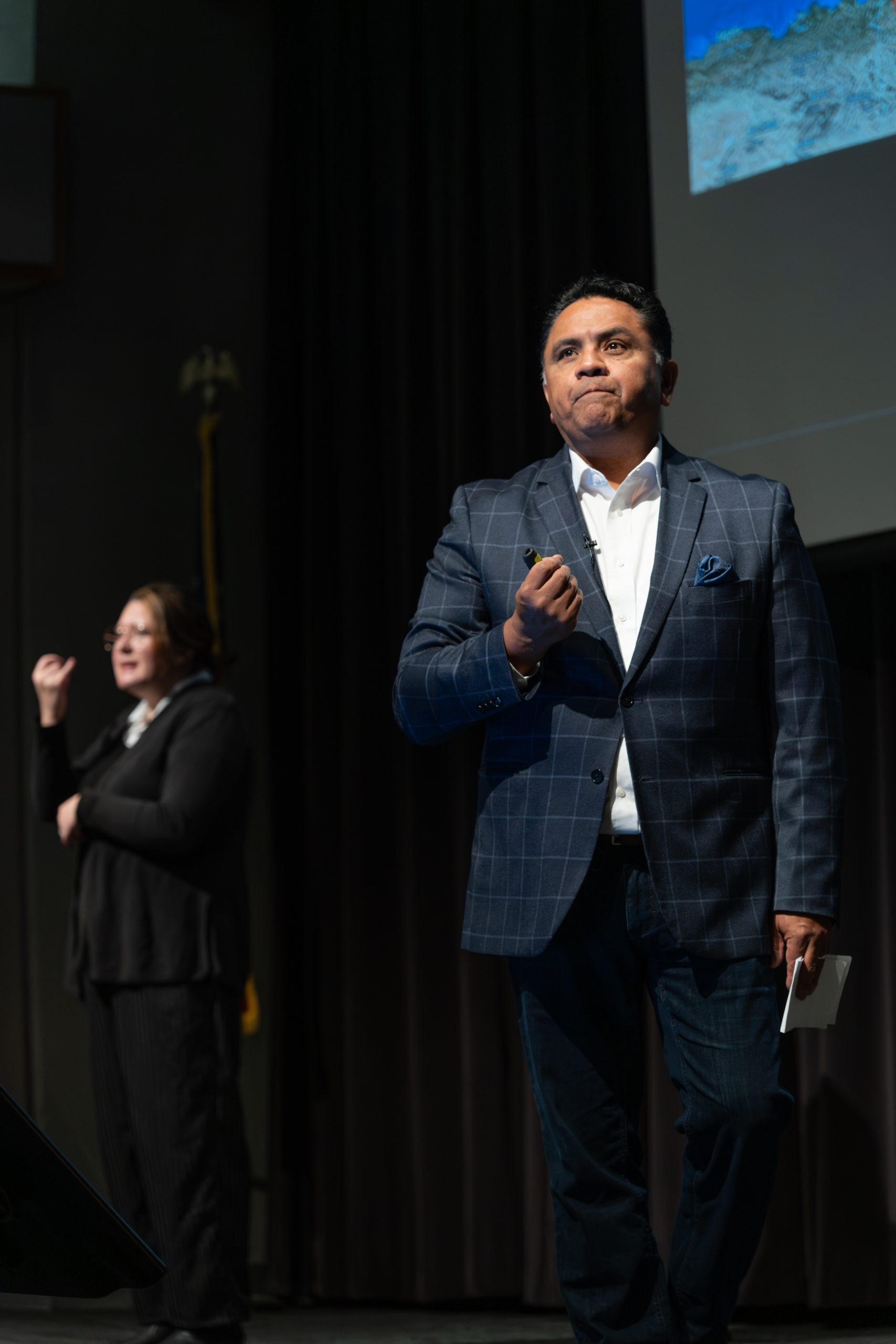
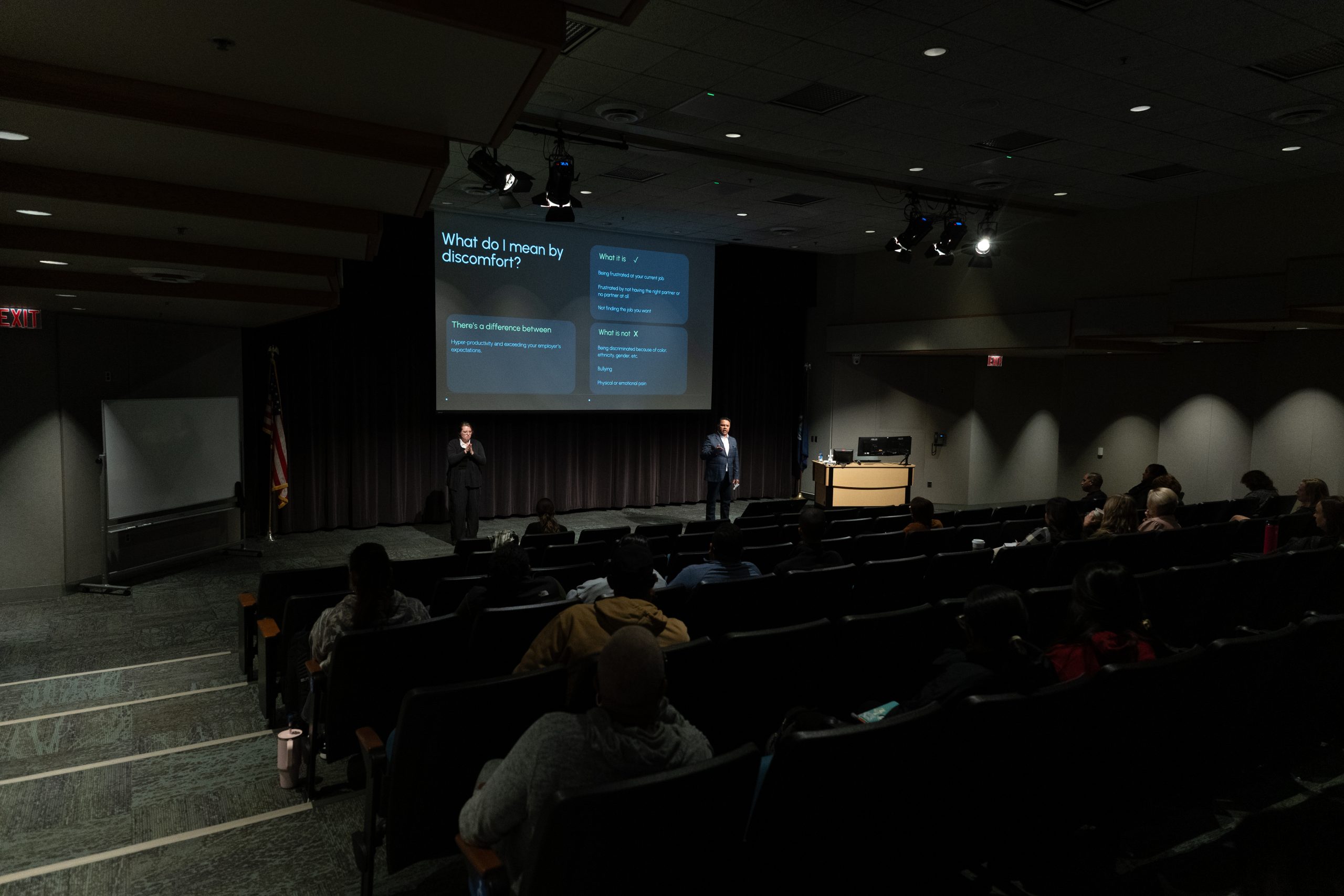
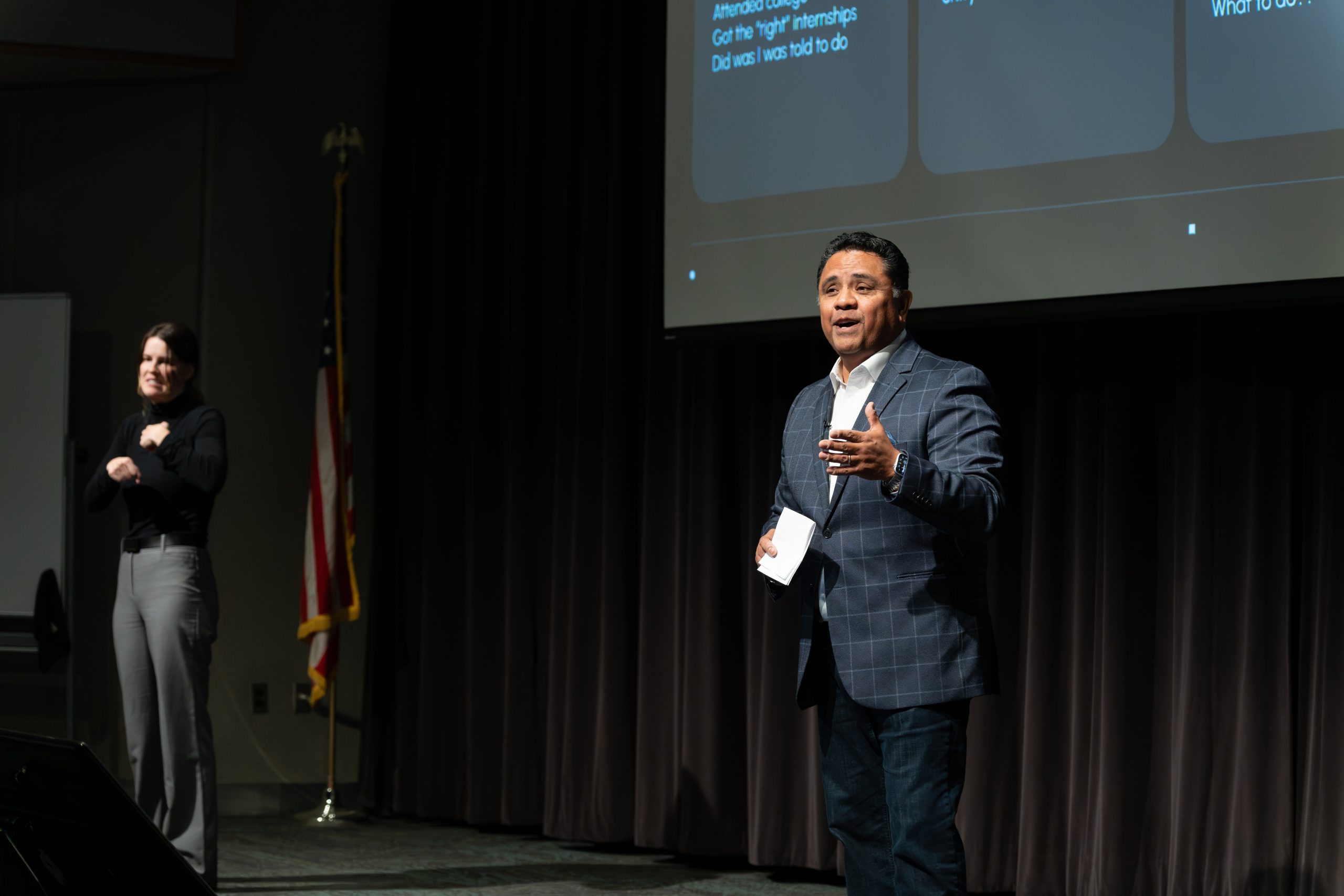
The second presentation in the 31st Diversity Lecture Series encouraged viewers in-person and at-home to shift their perspective on the uncomfortable and accept discomfort as a foundational part of growth. Sanchez’s sentiments aligned with the famous let-go-or-be-dragged mindset, with his belief being that (to a certain degree) one can either seek out something to shake them from their comfort zone, or life will do the shaking-up for them. Ultimately, the more we refine our bodily awareness and learn to identify discomfort, the more second nature adapting and responding appropriately becomes.