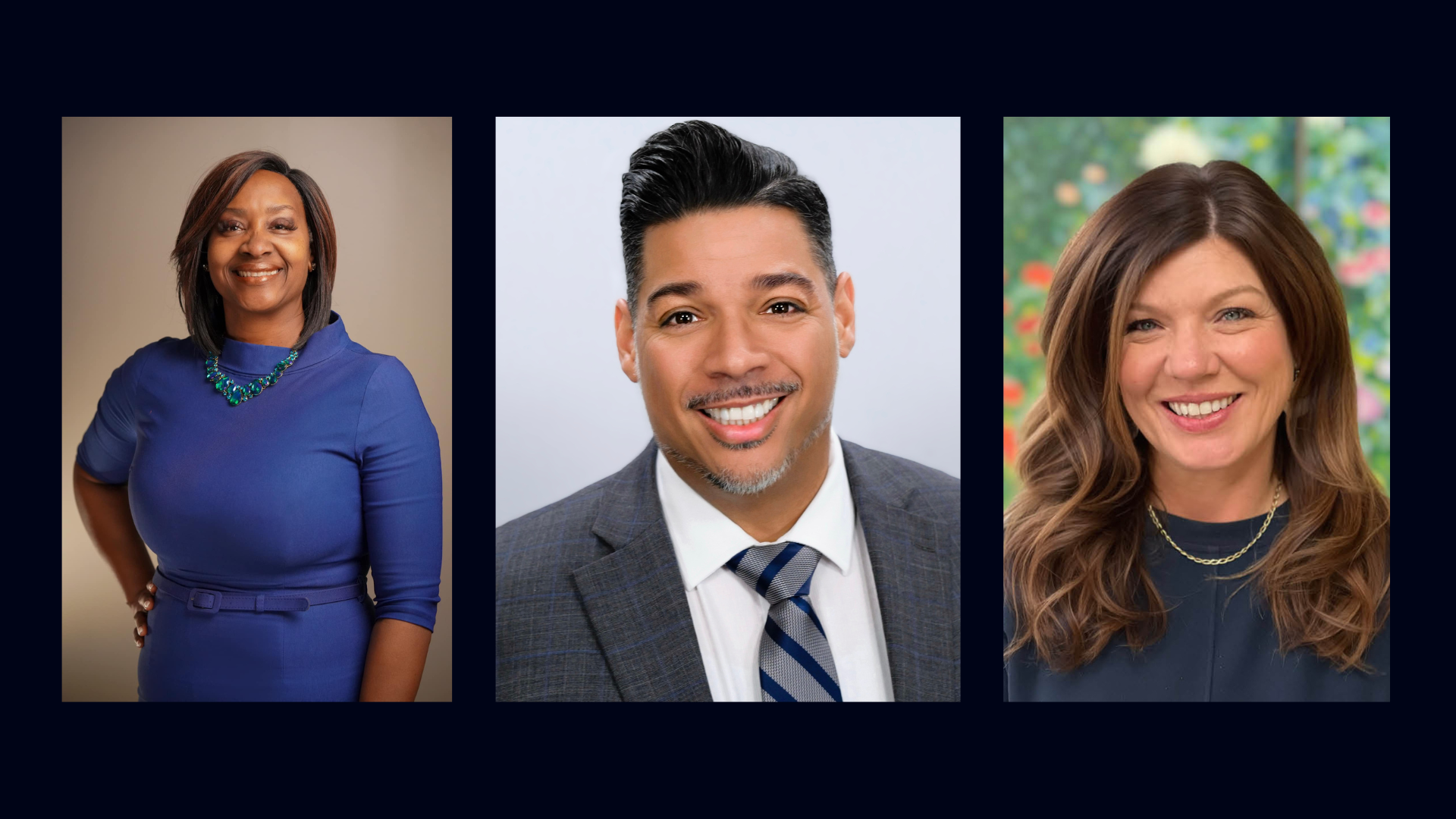
The Collegiate emailed a set of six questions to the three Grand Rapids Community College presidential finalists. Read on for responses from Jason Rivera, currently Vice Provost for Student Success and Dean of University College at Ball State University; Kathryn Rogalski, currently the Vice President of Academic Affairs and Workforce Development of Northeast Wisconsin Technical College; and Nerita Hughes, currently President of Bay de Noc Community College.
All of the candidates received the same questions and had the same amount of time to complete them.
The deadline to submit feedback for each of the candidates is Dec. 12 at noon.
- Why do you want to be president at Grand Rapids Community College? What would you bring to the table as president?
Jason Rivera:
“Grand Rapids Community College’s mission and values align deeply with my belief that community colleges are engines of mobility, hope, and transformation. GRCC’s commitment to meeting students where they are is an approach that has also defined my own career. For nearly three decades, I have been devoted to ensuring that all students, especially those historically underserved, have access to the support, relationships, and resources they need to thrive. Moreover, I have witnessed the transformative power of community colleges and understand the pivotal role they play in alleviating economic inequality, retooling workers for the 21st century, and providing unparalleled access to higher education to help families achieve the American dream. I would be honored to lead GRCC’s rich legacy as the first community college in Michigan and am fully prepared to advance its unwavering commitment to expanding opportunity, strengthening community partnerships, and transforming lives through education.
As president, I would bring my full self to the role. I am a first-generation Afro-Latino leader whose understanding of the world, and of leadership, was shaped by navigating spaces where I was often on the margins. I embrace that experience as a source of strength. My lived experiences inform my student-centered and relationship-rich leadership approach grounded in equity, collaboration, data-informed decision-making, and authentic community engagement. I have spent my career helping institutions remove structural barriers, expand pathways, and align programs with community and workforce needs. I also bring the ability to listen deeply and lead with humility. I believe in centering people over process and ensuring that every member of the college community feels valued, respected, and essential to the college’s mission.”
Kathryn Rogalski:
“I’m drawn to GRCC because its mission, preparing individuals to reach their goals and contribute to the community, reflects exactly why I have built my career in community colleges. GRCC has a strong history of responding to community needs and creating opportunities for students of all backgrounds, and I would be honored to help continue that work.
I bring a leadership approach rooted in collaboration, transparency, and student-centered decision-making. My experience in community colleges has focused on expanding access, improving programs, and strengthening supports so students can succeed in ways that align with their goals. I would work every day to uphold GRCC’s values.”
Nerita Hughes:
“I spoke to this during my campus presentation on Friday (Dec. 5):
My life’s work has centered on improving the lives of individuals by providing opportunities for rural, urban, and suburban communities through student-centered, equity-minded leadership within community colleges. Grand Rapids Community College (GRCC) aligns with my values and virtues – service, innovation, courage, and resilience. Having the opportunity to advance equity, expand access, and ensure every student – especially those historically underserved can thrive. To be part of the communities we serve and the long-term belief to instill and transform lives is why I have an interest.
What I would bring is decades of leadership experience and as a current sitting president, I have experience where I have elevated institutions from a local and region level to a statewide and national level. GRCC is known from a local, regional, state, and national level, and I would bring my experience as a leader to continue to elevate the work that is currently being done around workforce and student-centered work and enlarge it to the next level. That would mean increasing enrollment, retention, persistence, and completion. As an experienced Michigan Community College President, I would also bring the three C’s: confidence in making decisive and student-centered decisions grounded in the mission and data. Competency in navigating Michigan’s policy, funding, and community expectations. Finally, consistency in establishing reliable systems of communication and follow-through.”
- How will you ensure all student populations—including commuters, older students, working students, and marginalized groups—feel seen and supported?
Jason Rivera:
“The constant thread throughout my career has been dismantling the structural and cultural barriers that disproportionately affect our most vulnerable students. To ensure all student populations feel seen and supported, I will cultivate a campus culture where belonging is not something students have to search for, but something they encounter at every turn, from the classroom to advising to the student union. I am committed to building an environment where every student knows they matter, and where their identity, their story, and their journey are honored as integral to the fabric of the GRCC community.
My approach begins with listening and with understanding how all students experience the college. I believe in designing systems that adapt to students rather than asking students to adapt to the system. This requires investing in relationship-rich practices, flexible scheduling, hybrid and online learning options, clear pathways, and wraparound supports that allow all students, regardless of age, background, or circumstance, to fully participate and succeed. For students who too often feel unseen, I will champion inclusive practices, universal design, and culturally responsive support structures. I will ensure that diverse student voices inform our policies, practices, and priorities, and that every student population is represented in the conversations that shape their educational experience.
It is important to understand that I have cultivated the career trajectory I have because I believe I am called to dismantle the barriers, both structural and cultural, that intentionally and unintentionally impede students from achieving their aspirations. To do this work well, I strive to center students and ensure that they not only feel seen and supported but also have a seat at the table where decisions are being made.”
Kathryn Rogalski:
“GRCC’s commitment to diversity, inclusion, and responsiveness means every student should feel this college was built for them. I would focus on flexible scheduling, strong wraparound supports, and services designed for commuters and working adults. I also believe belonging matters, students should feel respected, welcomed, and represented in their learning environment.
Most importantly, I would create regular opportunities to listen to students directly and act on what they share.”
Nerita Hughes:
“The way you do that is to ensure their voices are heard – having regular listening sessions and hearing the concerns but also providing resources and co-curricular activities so even if you are not on-campus you feel that sense of belonging so looking at the current programs and elevate them even more like the Rise Up & Achieve – how do we make sure programs like these are available and shared more often to aid with these populations feeling a sense of belonging and feeling seen. Finding ways to have these programs and resources more visible around campus so students know how to access them.”
- Given GRCC’s recent challenges with presidential turnover, how do you envision your long-term commitment to this role? What factors would keep you invested in serving our students and community for many years?
Jason Rivera:
“There are many reasons I can see myself committing to GRCC for the long term. First, the students. The opportunity to partner with them as a steward of their aspirations is one of the greatest privileges of this work. Second, the people. In my conversations with the search committee and local leaders, what came through clearly is that GRCC is grounded in care, collaboration, and genuine love for students and community. Those qualities matter tremendously to me. Third, the region itself is vibrant, values-driven, and deeply invested in its community college.
The second part of your question regarding the factors that would keep me invested is an important one, and to answer it, I need to share why I am so passionate about this work. When I began college, I was housing insecure, and the campus became my home–literally. During my sophomore year, I became the target of discriminatory attacks. I wrestled with whether I should leave. While safety mattered, stability mattered even more. Fortunately, the new president of the institution, someone with whom I had formed a strong bond, used his leadership, visibility, and care to help me feel seen, valued, and supported. That experience changed my life. It showed me how a president can transform a student’s path simply by leveraging their position to remove barriers and affirm a student’s humanity. It is one of the core reasons I have devoted my career to higher education.
Years later, at a community college in the SUNY system, I began asking hard questions about why students who looked like me were not persisting. That experience launched two decades of inquiry into the factors that shape student success. My work at Montgomery College, one of the nation’s top community colleges, allowed me to merge my personal story, professional experience, and doctoral research to create the Achieving the Promise Academy, designed to help students reach their fullest potential.
Finally, I am also a father to an eight-year-old son. Having experienced instability in my own childhood, I am committed to creating stability for him. Where I serve must be a place we can call home for many years. I believe Grand Rapids, and GRCC, offer exactly that. This is not a step for me. It is a calling, and one I am prepared to embrace with long-term dedication.”
Kathryn Rogalski:
“Stability supports student success. If selected, I intend to serve GRCC for the long term. What keeps me committed is the college’s mission, its impact on West Michigan, and the opportunity to partner with faculty, staff, and students to strengthen the future. GRCC’s vision of inspiring students to shape the world is long-term work, and I would be invested in that work for many years.”
Nerita Hughes:
“I am looking at my years ahead of me and being settled within an area where I can fully engulf myself within the community. I am a transplant from Minnesota and really like Michigan which is why I did not put my name in other searches. Western Michigan really does remind me of home (Minneapolis – St. Paul area), however, I am not looking to return to Minnesota because I am fully engaged within the state of Michigan. I serve on the statewide workforce board representing the community college presidents and other boards as well. When taking on the role as President, you must ensure that you are engaged at all levels with all stakeholders (internal and external). The fact that we still have an equity gap to close is a driver to continue to build systems in place so that the work will exceed beyond my tenure and have a legacy where students and the community will thrive for generations. I am not seeking a short-term tenure – I am looking long-term and looking to make an impact and imprint within the Western Michigan region.”
- How will you ensure that academic programs at GRCC remain affordable and high-quality, especially given economic pressures on public colleges?
Jason Rivera:
“Affordability and academic excellence must co-exist; no student should ever have to choose
between a high-quality education and one they can afford. My approach is grounded in care for our students and respect for the faculty and staff who make their learning possible. It includes three interconnected strategies:
People-Centered Stewardship and Diversified Revenue.
Protecting affordability begins with responsible, strategic resource management that honors the realities of our students’ lives. I will work to secure increased state investment, expand philanthropic support, and cultivate partnerships with employers, foundations, and local government. These relationships will not only bring new resources into GRCC, they will also create funded pathways, reduce financial strain on students, and support faculty and staff in delivering the engaging, high-quality instruction our community expects.
Collaborative Alignment with Workforce and Community Needs.
Quality is sustained through relevance, rigor, and responsiveness. I will partner closely with faculty, whose expertise is central to program excellence, and with industry and community leaders to ensure our programs reflect the evolving needs of West Michigan. Together, we can strengthen curricula, incorporate high-impact learning experiences, and design pathways that prepare students for both immediate employment and long-term career advancement.When programs are aligned with community needs, students thrive, employers invest, and the region grows.
Student-Centered Approaches to Reducing Total Cost of Attendance.
Affordability is about more than tuition. I will champion the expansion of open educational resources (OER), no-cost and low-cost learning materials, and program maps that minimize unnecessary credits. Paired with proactive advising and clear pathways, these approaches remove hidden barriers and allow students to focus on learning rather than financial stress. Supporting faculty in adopting OER and innovative teaching strategies will remain a key priority.
Together, these strategies uphold GRCC’s mission and Strategic Plan by strengthening academic excellence, advancing equity, and ensuring students, regardless of background, age, or life circumstance, can access a life-changing education. My commitment is to steward the college’s resources and relationships in ways that honor the people who make GRCC special and keep students at the center of every decision.”
Kathryn Rogalski:
“Affordability and excellence are central to GRCC’s mission. I would focus on careful stewardship of resources, investing in teaching and learning, expanding community and employer partnerships, and strengthening pathways that reduce time and cost to completion. Innovation is a GRCC value, and I would support creative approaches that maintain high-quality programs without increasing barriers for students.”
Nerita Hughes:
“The way to ensure this is based upon a continued investment and advocacy with our legislators for our state appropriations and scholarship programs like Community College Guarantee, Michigan Reconnect, Grand Rapids Promise where funding can continue and look at ways to increase and sustain those funding options. In addition, working with our industry partners who can continue to invest in high growth and in demand programs where we could look at leveraged equipment and other investments for those programs that are costly like nursing, welding, etc.… Lastly, cultivating those relationships with our philanthropic partners and working alongside the college advancement office to obtain more scholarships to aid with offsetting college program costs which can aid in keeping it affordable.”
- Have you ever attended a community college, or worked at one in the past? If so, how did that experience shape you?
Jason Rivera:
“When I was growing up, there was a persistent stigma surrounding community colleges. They were often dismissed as ‘13th grade’ or viewed as less rigorous, and I was actively steered away from them by advisors and peers. In truth, my circumstances required housing, and at the time, community colleges in New York City did not offer residential options. As a result, I attended a four-year institution, and my understanding of community colleges was shaped later, through my professional experiences rather than assumption. Early in my career in higher education, I learned very quickly that community colleges were not substandard at all. In fact, they are gateways to higher education and the economic mobility engine of the nation. Nearly thirty years into my career, I can say with conviction that the work happening at community colleges is among the most transformative in all of higher education, often more so than at institutions considered ‘elite.’
While I did not attend a community college myself, I have spent a significant portion of my career working in them. My career has been shaped by leading student success, equity, and academic pathways initiatives at institutions where access and community engagement were foundational. These experiences taught me that community colleges are uniquely personal places, where a single conversation, a caring advisor, or a well-timed opportunity can change a student’s entire life trajectory. Working in community colleges grounded my belief that talent is everywhere, but opportunity is not, and that our responsibility is to bridge that gap with compassion, intentionality, and excellence. Those lessons have stayed with me throughout my career and are central to the kind of president I aspire to be.”
Kathryn Rogalski:
“I have spent my career in community colleges, and those experiences shaped my belief in open access and student-centered leadership. I have seen how responsive, inclusive institutions change the lives of students, families, and communities. That perspective guides how I lead, listening first, removing barriers, supporting faculty and staff, and continually improving the learning environment.”
Nerita Hughes:
“I did not attend a community college, but I worked at one back in my hometown – in Minnesota where we served over 50% students of color. Being able to witness students’ lives change and transform was one of the many drivers to want to do more which is why I had the desire to become a college president. I wanted to create systemic change at a larger scale so for me, I know the value of an education and also the value of a community college and knowing that community colleges are the economic engine of the community. I often say, we are the ‘community’s college.’ This is why I stay in higher education but more importantly, I continue to stay at the community college level.”
- How would you work to establish and maintain transparency and open communication with faculty and staff? What kind of role do you see student media playing to accomplish this goal?
Jason Rivera:
“One of my greatest strengths is that I have experienced higher education from multiple vantage points: as someone on the front lines advising, mentoring, and coaching students; as a faculty member who continues to teach in order to stay connected to students’ lived experiences and emerging scholarship; and as a senior administrator responsible for shaping institutional strategy. These experiences instilled in me a deep commitment to transparency and a genuine belief that people across an institution deserve to understand not only what decisions are being made, but why.
Transparency is a cornerstone of trust. As president, I would establish consistent and predictable channels for communication, including regular open forums, accessible written updates, structured engagement with governance leaders, and meaningful opportunities for faculty and staff to provide input before decisions are finalized. I also believe strongly in shared leadership and shared responsibility, and I am committed to ensuring that information flows clearly, openly, and in a timely manner.
Equally important is being visible, present, and accessible. I know firsthand how transformative it was to have a relationship with my own college president, someone I remain connected to today, and that model of leadership has profoundly shaped how I lead. Meeting people where they are and listening with intention will be central to my presidency.
Student media also plays a critical role in fostering a transparent and informed campus community. At a time when distinguishing credible information is more important than ever, student journalists help elevate student voice, promote dialogue, and hold leadership accountable. I would partner closely with student media to ensure they have access, support, and the freedom to contribute meaningfully to a culture of inquiry and open communication.”
Kathryn Rogalski:
“Transparency, respect, and accountability are essential to healthy leadership. I would prioritize regular communication, open forums, shared governance, and clear explanations of decisions so people understand both the ‘what’ and the ‘why.’
Student media plays an important role in this effort. It elevates student perspectives, keeps the campus community informed, and strengthens open dialogue. I would actively welcome and support student journalists as partners in transparent communication.”
Nerita Hughes:
“Currently as a sitting president – I have multiple ways to share openly, and I have created opportunities for open dialogue to happen frequently through weekly virtual sessions, monthly sessions, and quarterly sessions with not only the college but with the community as well. I would create that same cadence at GRCC. I would have pizza with the President for the students and have an open-door policy where folks can come to my office and have an open conversation with me.
I see student media being able to capture the content and share what is going on around campus and then tailor it to share for students and others to know how they play a role in shaping the campus as well. In addition, student media be used to help share the story and/or message as well.”