By Gabriel Solis
On Feb. 28, President Donald Trump announced that the United States had begun “major combat operations” in Iran. Since then, the American news cycle has been a virtual whirlwind of information and updates about the war, with mixed messages from Trump about its future.
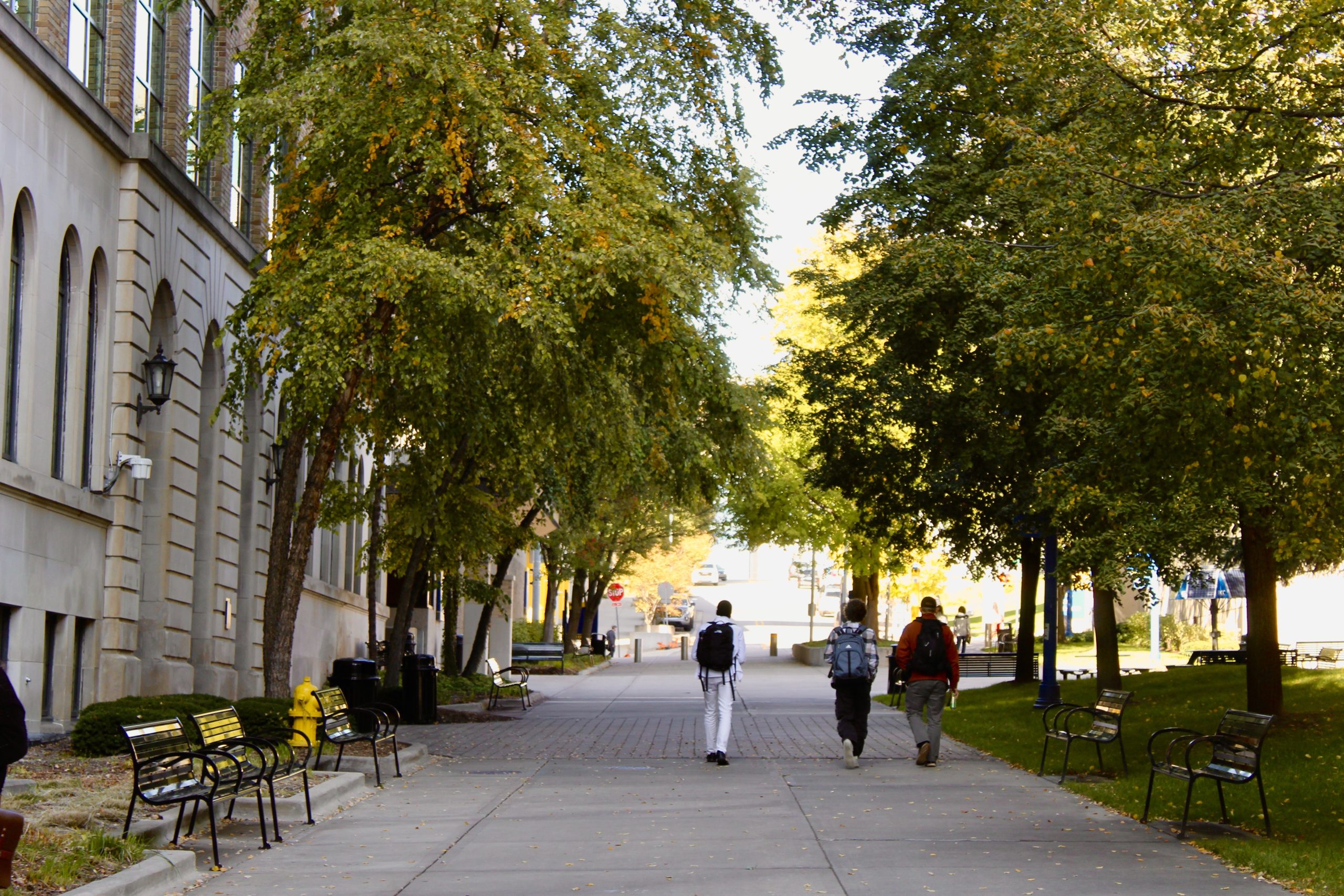
The Collegiate interviewed Grand Rapids Community College students on campus for their opinions on the conflict and the role of the U.S.
“I’ve seen it all over,” said Olivia Stachowiak, 19, of Rockford. “Yesterday, I was in a restaurant, and it was on the TV.”
Many students agreed that exposure to the war is unavoidable, often citing social media in addition to traditional news outlets as the source of their information stream. Most also expressed disapproval of the invasion and subsequent military action.
“I don’t think it’s a necessary act. I don’t think (Iran is) really capable of developing nuclear weapons, at least anytime soon,” said Sam Bott, 19, of Grand Rapids. “There has been a little bit of justification for it. Iran is still a relatively aggressive power in the region, not just to Israel, just to many other countries… (but) I don’t think we need to be there.”
Abraham Dominguez, 19, agrees.
“My family comes from a different country, so the idea of them fleeing from something that they were afraid of just to come here and, you know, learn that this country is also going through it too, is just absurdly upsetting. Even heartbreaking,” said Dominguez.
Opinions differed, however, on the level of engagement that average Americans should have with the war. Dominguez believes that everyday people have a role to play.
“It might make us feel like we’re small and like nothing can be done about it. But if we were to just stick together and try to cooperate, like listening to one other. Speaking and trying to not argue. I think that’s how we should, you know, do it,” he said.
Stephanie Brooks, 21, of Forest Hills, feels differently.
“You don’t have to go throughout your entire day talking about it and letting it be on your mind constantly. I don’t think that’s a healthy way to cope with this,” says Brooks. “There’s not much we can do. Except to have hope and hold on to the promise that was given to us as children, the America we were supposed to live in, the world we were supposed to live in. So I would recommend holding on to that hope.”
Collegiate reporters Tiannah Garcia, Grace Holmes, Raven Day, and Ari’ Browley contributed to this report.