By Ari’ Browley
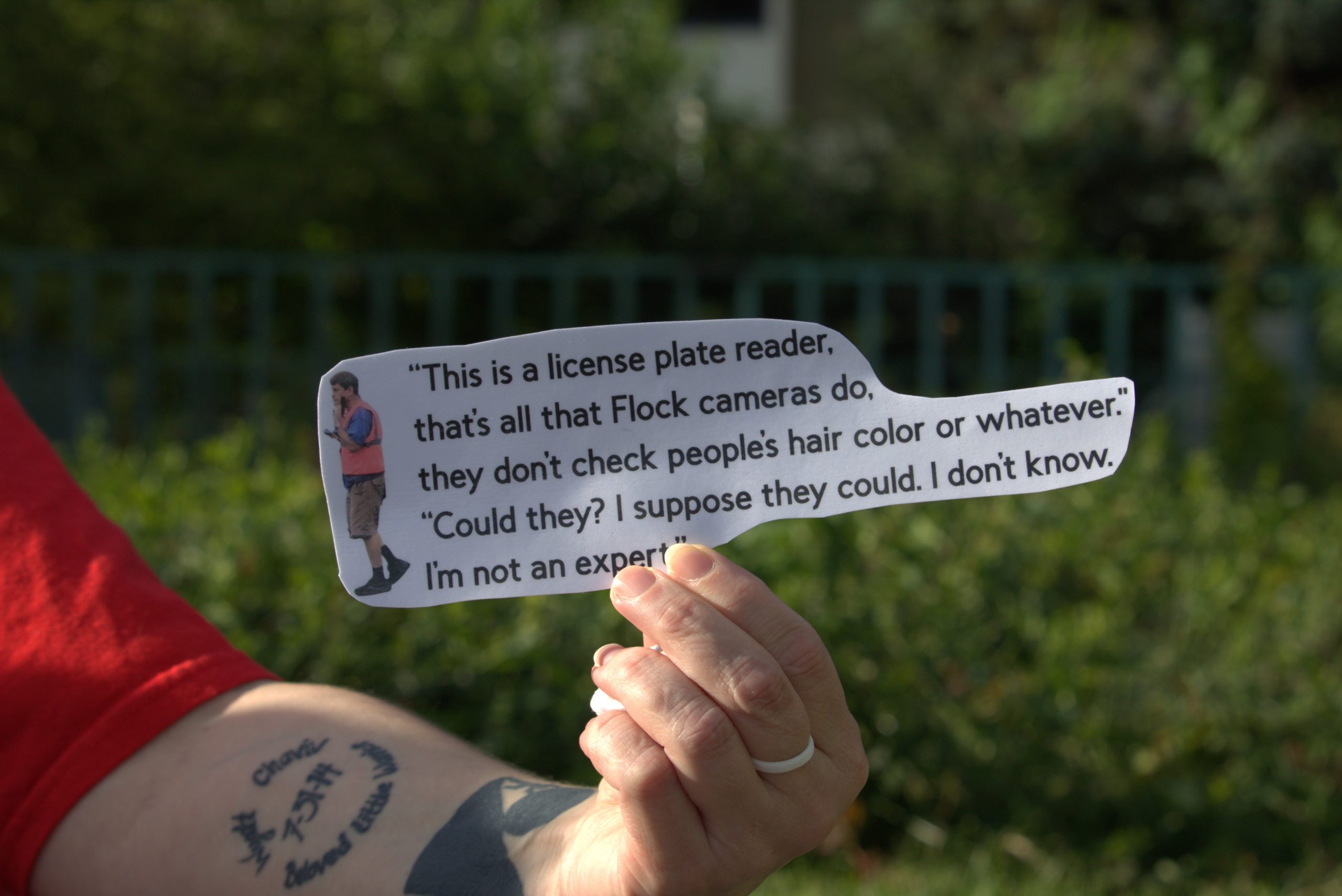
“Get the Flock Out” is a phrase you will hear frequently as more Grand Rapids residents oppose the city’s growing surveillance and immigration enforcement.
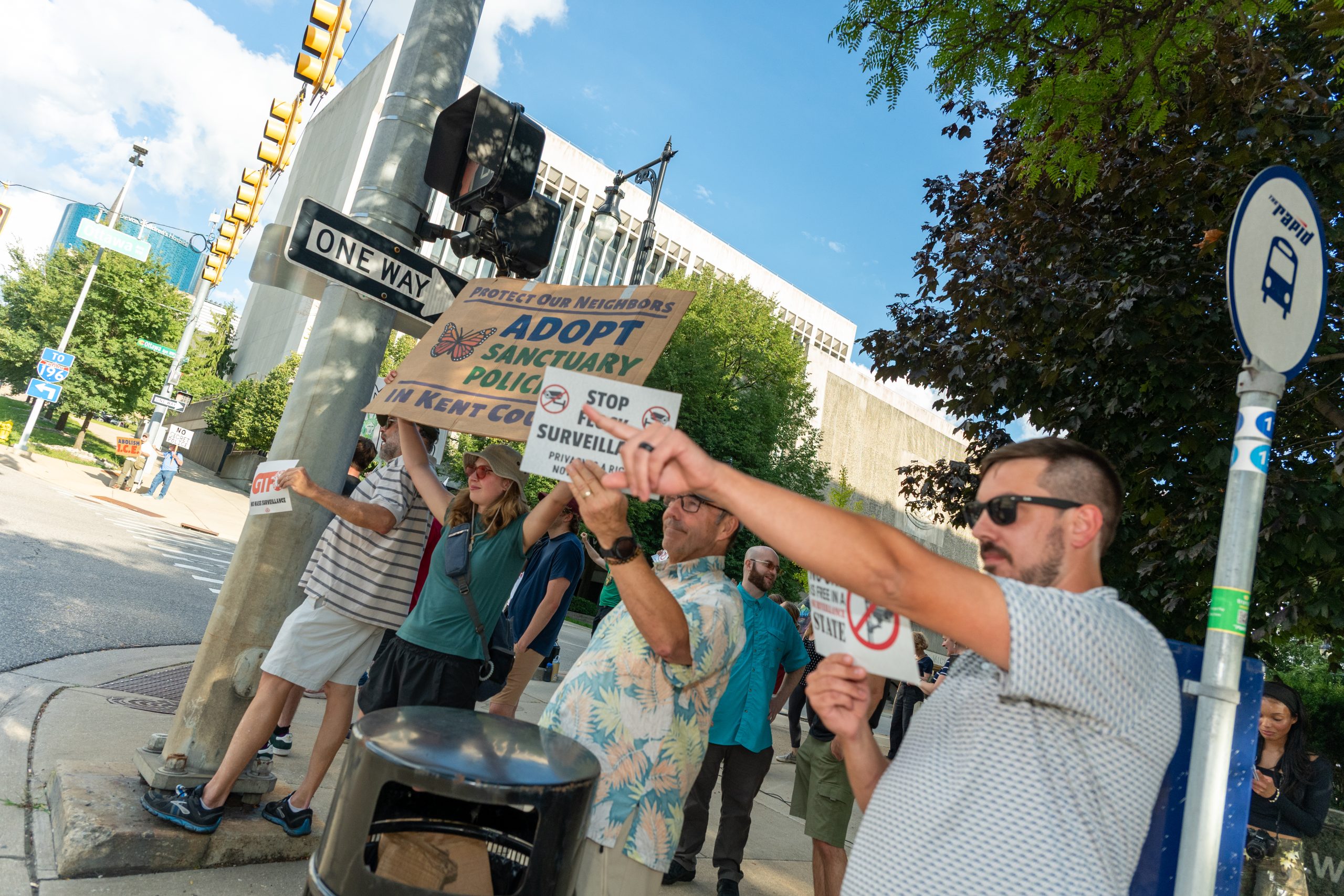
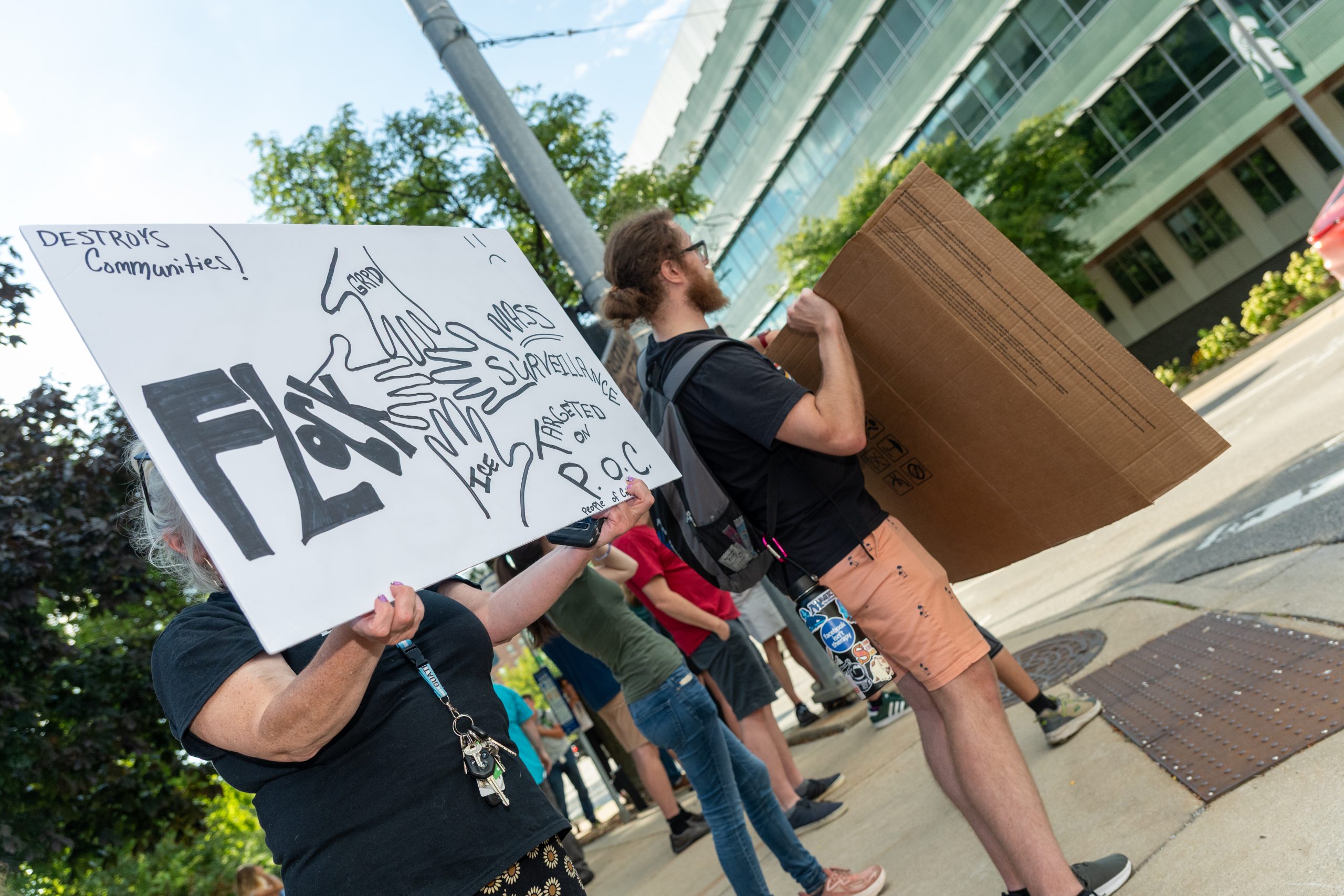
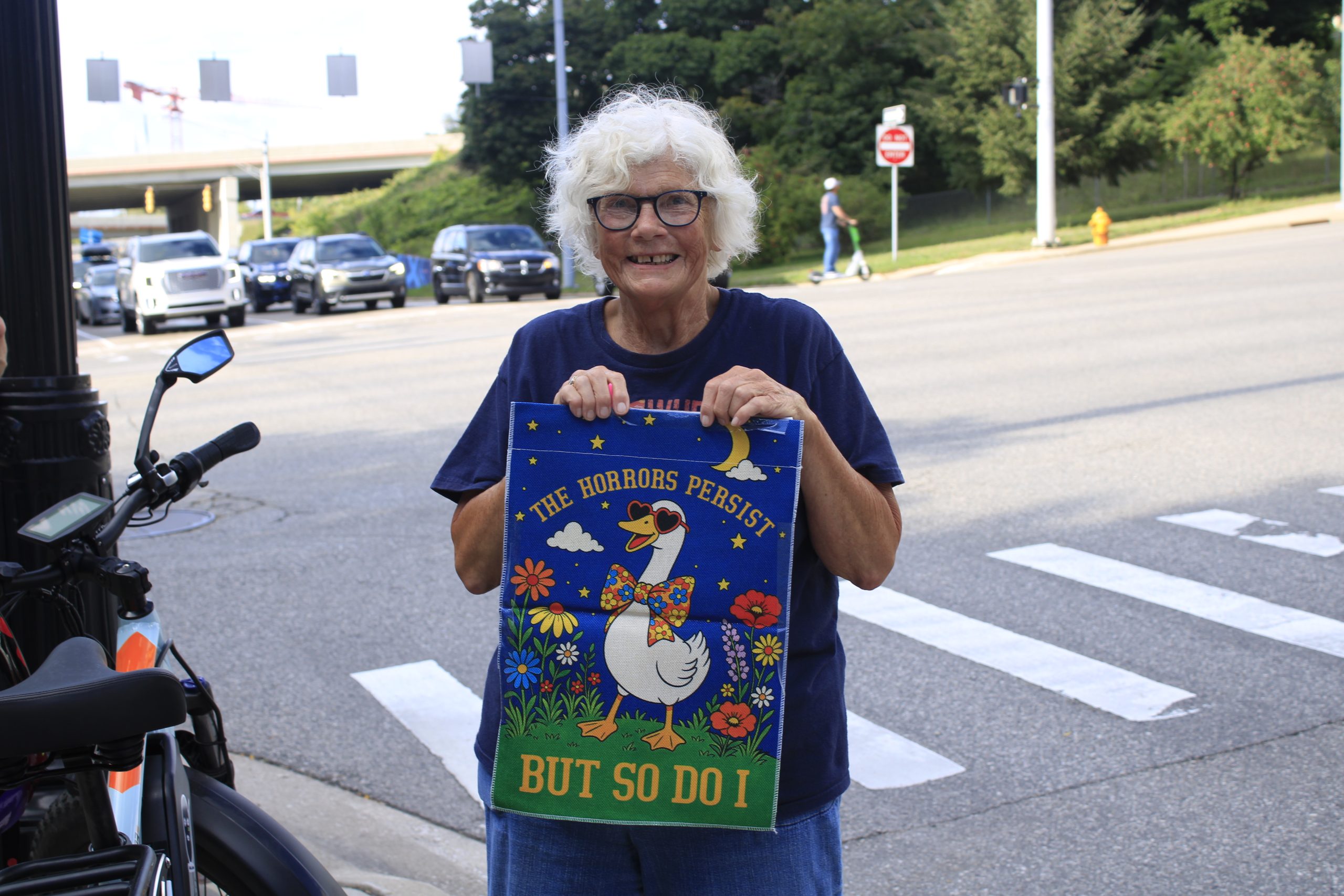
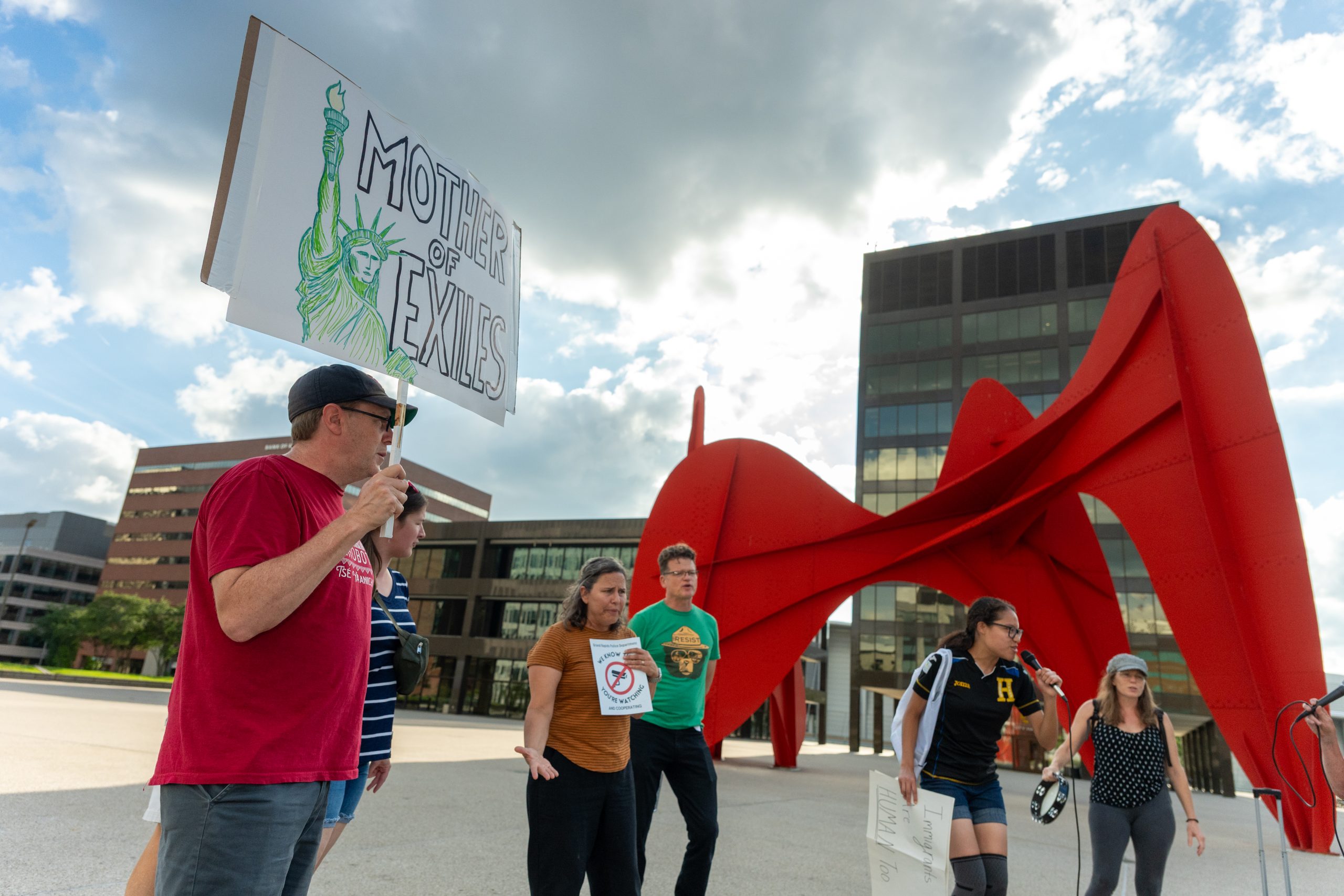
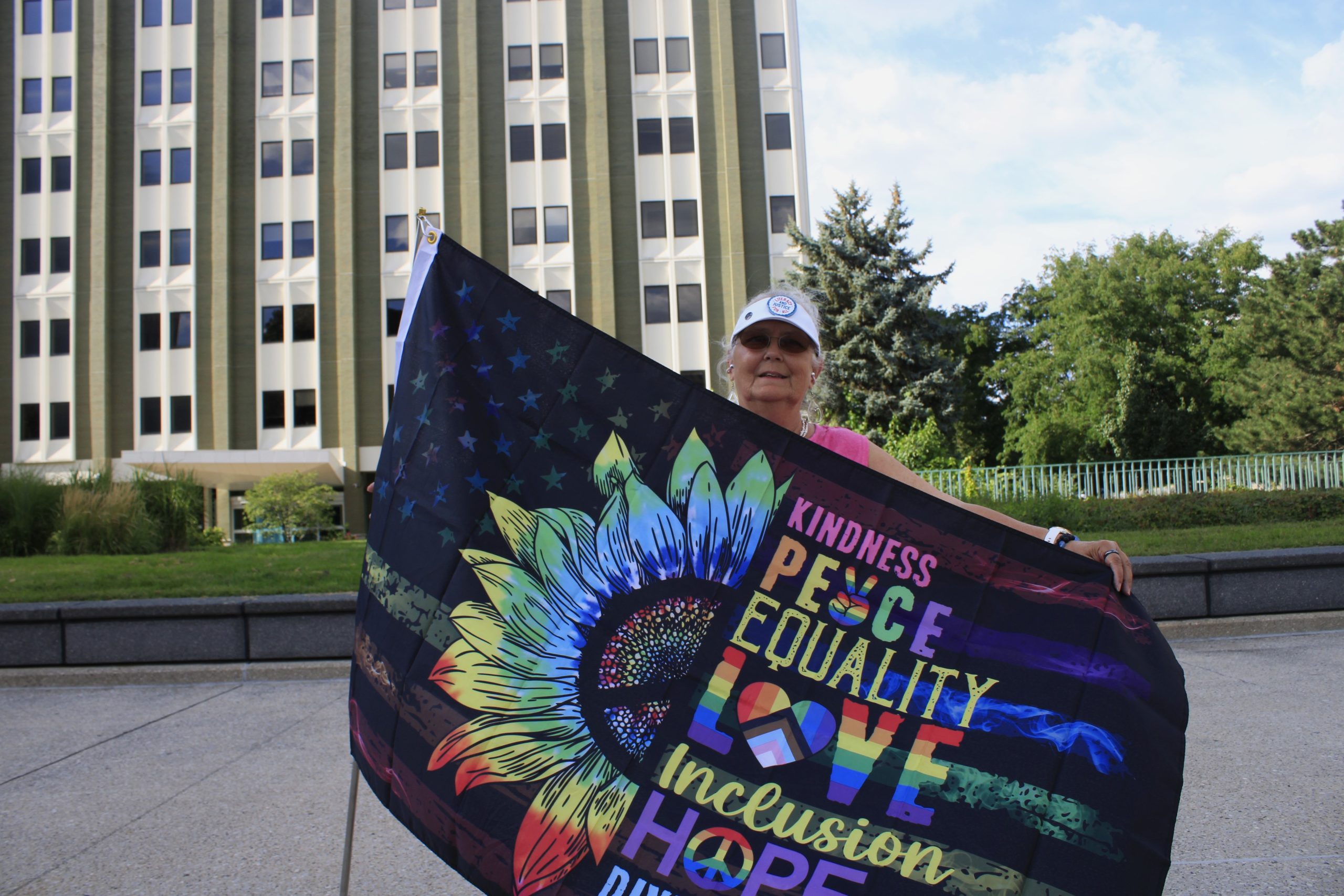
On Tuesday, Aug. 25 at 5:30 p.m., protesters gathered at Calder Plaza for the DeFlock Grand Rapids protest, a protest against the city’s use of Flock cameras and GRPDs involvement with ICE.
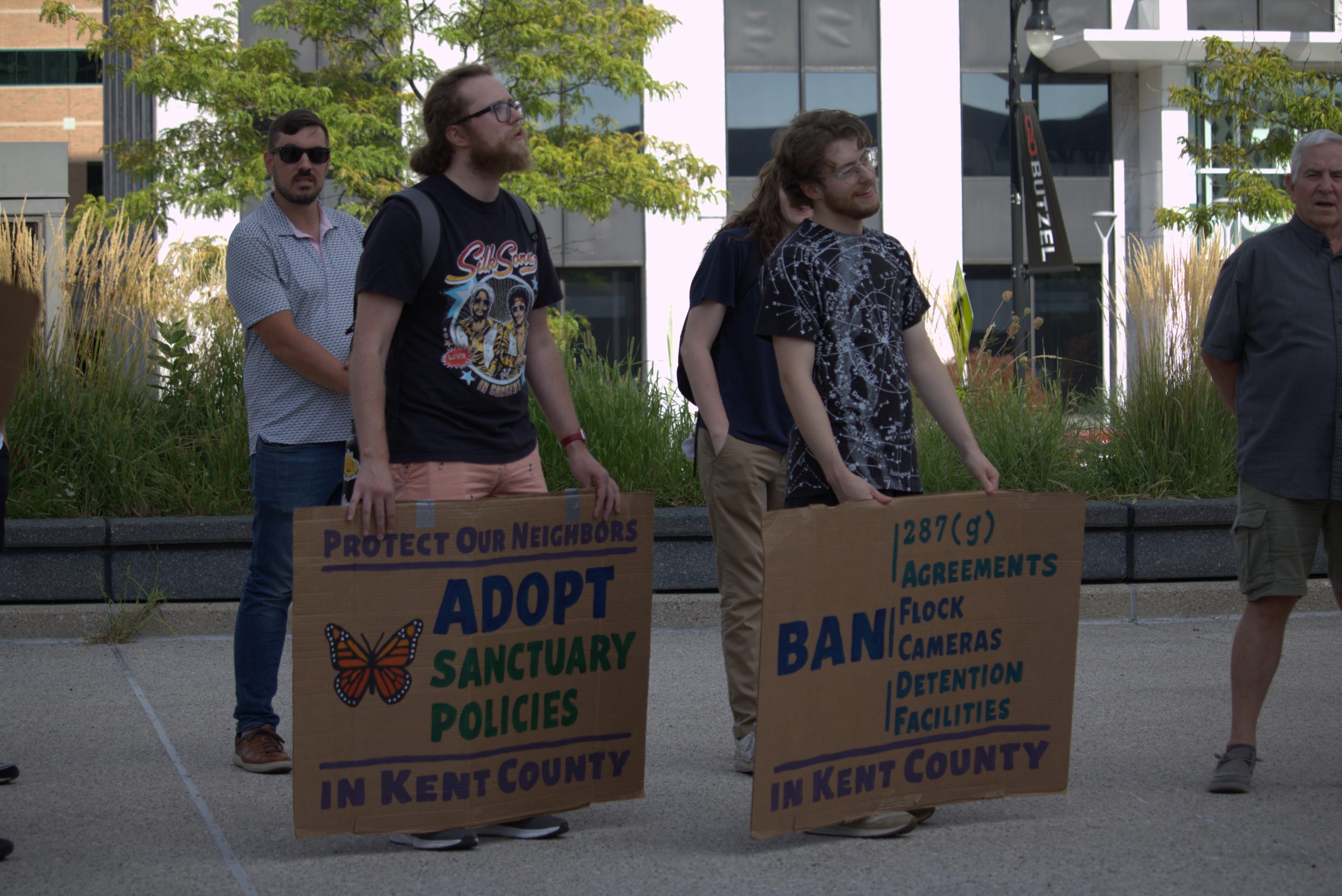
Alex Kelley, one of the many organizers of the protest, explained that Flock camera removal and enacting city sanctuary policies were the demonstrators’ top concerns.
“We want to have them (Flock cameras) gone entirely. We don’t trust the city to regulate itself. We don’t trust cops to investigate themselves,” Kelley said. “Flock cameras are a part of the existing system of master surveillance that GRPD and the city have had for years. Particularly here, we have concerns that they are… being used to aid immigration enforcement, despite the mayor (David LaGrand) saying otherwise. We also want the city of Grand Rapids to pass the six sanctuary policies, including the abolition of Flock, but also, very importantly, including the end of GRPD collaboration with ICE.”
Many Grand Rapids locals attended the protest to show support for the cause.
“I’m here to speak out against the Flock surveillance cameras and demand that the city adopt sanctuary city policies,” said Jacob Cristofori, a Grand Rapids resident.
“I think there has been history with Flock cameras being used and abused by police officers and people in power,” Cristofori said. “That’s been a big reason why I don’t support the funding that we are using. I think that could be used to better address the issues that cause crime. I believe that when we tackle issues of crime, we have to address root causes. Otherwise, we are not trying to fix the problem, we are just trying to perpetuate it.”
Grand Rapids resident Sadie Boxell also attended to protest against Flock.
“I’m here to speak out against Flock mainly. I heard about it, and I don’t like the surveillance cameras,” Boxell said. “I don’t like that the city’s solution to crime is funneling a bunch of money into a private company that just watches people all the time. I don’t like that police can access this national database of information outside of what would normally be their jurisdiction. They would usually, I believe… I believe that they would only be able to use that for federal cases and with specific coordination. And so, this expands the amount of surveillance that police are capable of doing for no reason, unjustly.”

Shannon Henderson, 38, shared similar reasoning for wanting Flock cameras removed from the city.
“I think it’s important to speak out against the things that aren’t right in our society,” Henderson said. “Supposedly they (Flock cameras) are being used to help solve crimes or find missing people. But when you read the news, it feels like there are more stories about misuse than there are good uses of them.”
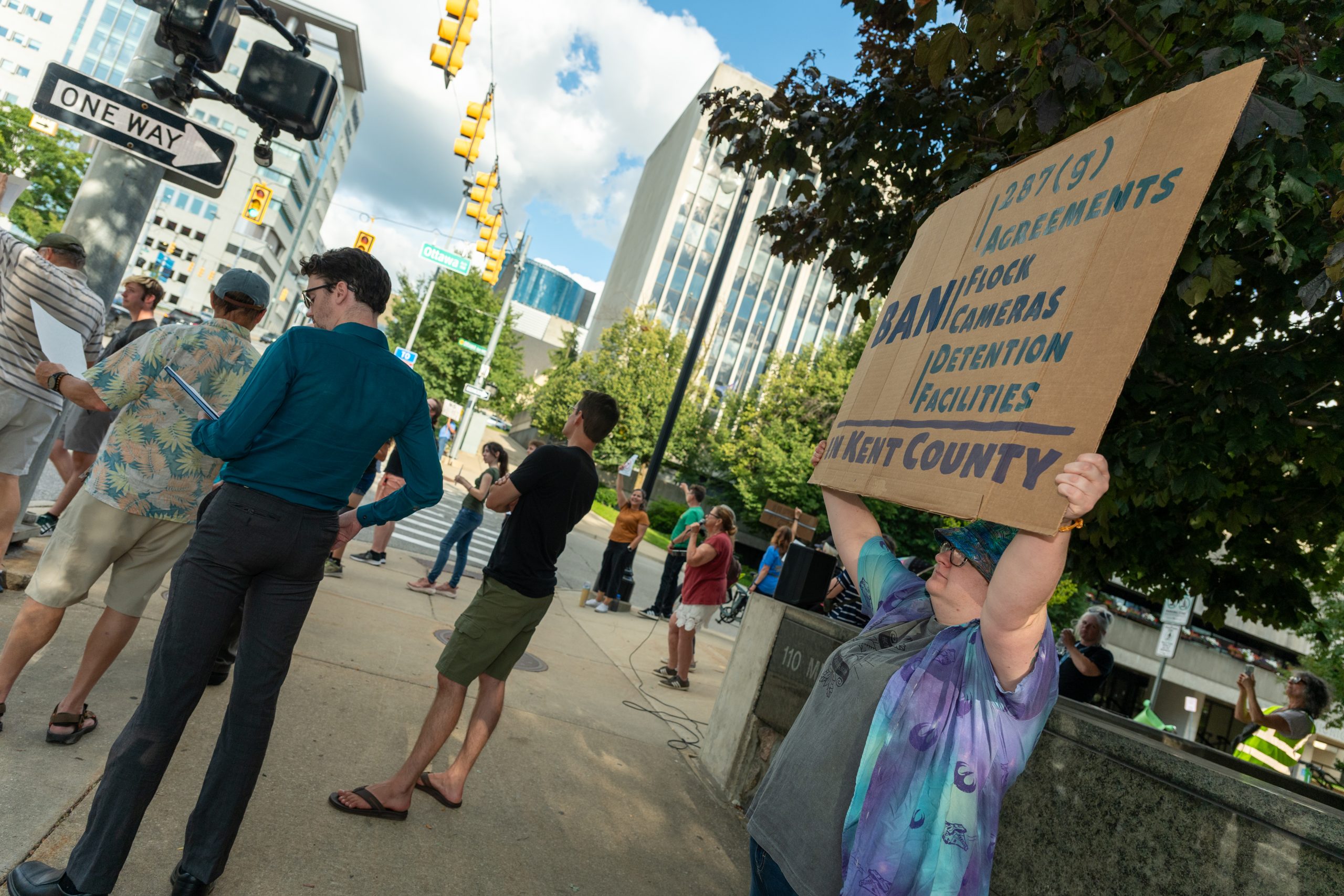
The protest, not far from Grand Rapids Community College’s main campus, reached student protestor Claire Newhall, 28, who also came to speak out for the cause.
“Things are looking pretty grim as far as the way people have been being treated,” Newhall said. “I hope that we can get on the city commissioners’ radar.”
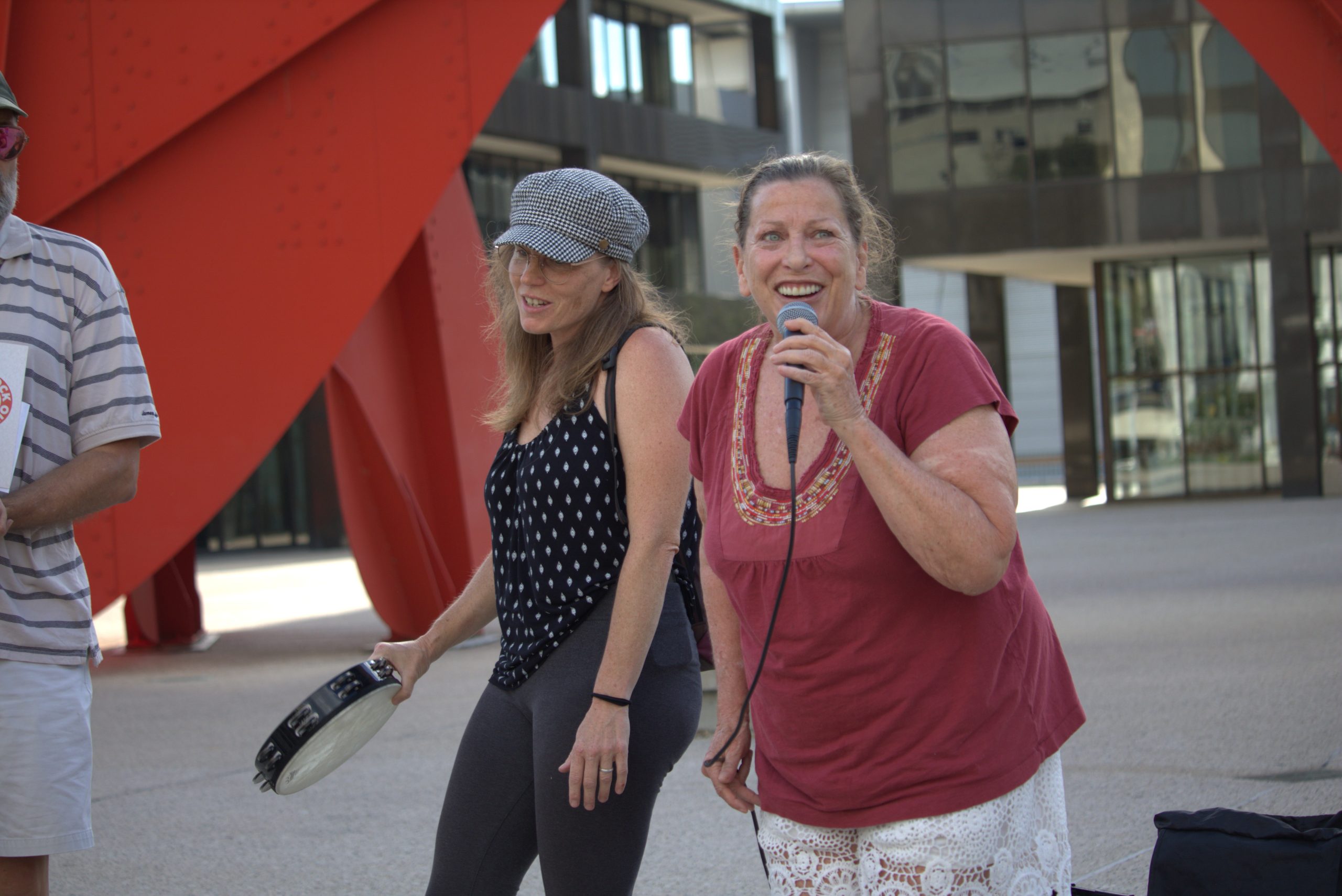
Among the protesters was the Singing Resistance, a nationally known and community-led movement. The group brought powerful and lively energy to the protest through their inspirational songs and chants like “This is what democracy looks like” and “Went down to the White House.” Protesters sang along as cars honked to extend their support for the cause.
A member of the Singing Resistance, Shelli Fyuewever, expressed why the group showed up to the protest.
“We are here today because we are not okay with the Flock cameras, and we want to talk about that and hear what they are gonna say at the city council meeting,” Fyuewever said. “We are not afraid; we are not okay with people being observed without their permission. We are not okay with our police picking up folks who look like they might not belong in the United States, because there is no look like you don’t belong in the United States. So, we are here to voice our concerns, to protest, to bring attention to what is going on, because people are not necessarily paying attention or hearing all of these things.”
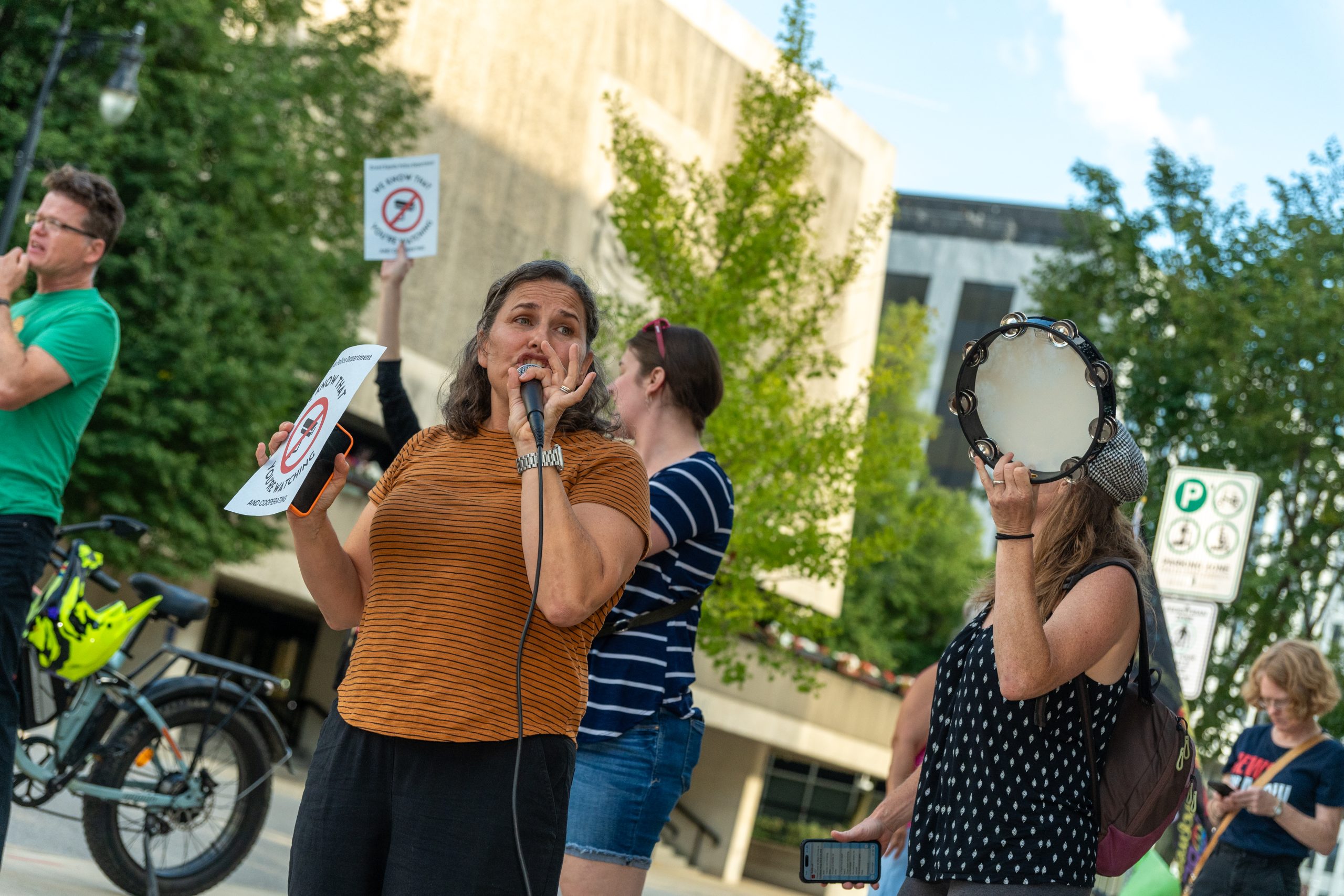
Lain Martinez-Vasquez, 26, who is another member of the Singing Resistance and a writer of some of their songs, explained why the group continues to advocate for this cause and others like it.
“One thing that a lot of people just got to be aware of: a lot of the issues that we are seeing are very intersectional, very much related, integrated. So, when you talk about Flock cameras, we know why they are putting those Flock cameras. They are trying to surveil very certain groups,” Vasquez said. “I realize that social justice, racial justice, those two, they go like this (together), always, always, always. And so, that is why I am here protesting, joining this protest, joining protests that are of similar issues as well because we need as many voices out there.”

Even through Vasquez’s advocacy, she has come to understand different perspectives on the situation.
“There are people that just do not get what we are doing here. They are just in a moment in their life where they cannot understand,” Vasquez said. “It’s been years of really just listening very intentionally, really coming to understand where people are coming from. And you know, just really adopting a mindset of, ‘Hey, I’m a person, and these are the experiences that shape me, but hey, these are people too, and they have experiences that might shape their understanding of the world.’”
After the protest, organizers, protestors and other locals attended the Aug. 25 Grand Rapids council meeting at 7 p.m. to discuss the same concerns with commissioners, including Flock cameras, six sanctuary policies, and GRPD collaboration with ICE.
“People need to know that in our city, there are people that live here, people that look like me that care about it, people that look like you that care about it, and that we are brothers and sisters, right, and that we belong together, and that we all belong in this home, this city,” Fyuewever said.






Collegiate editors Kyle Jackson, Ella Ware, and Kole Meschke contributed to this story.