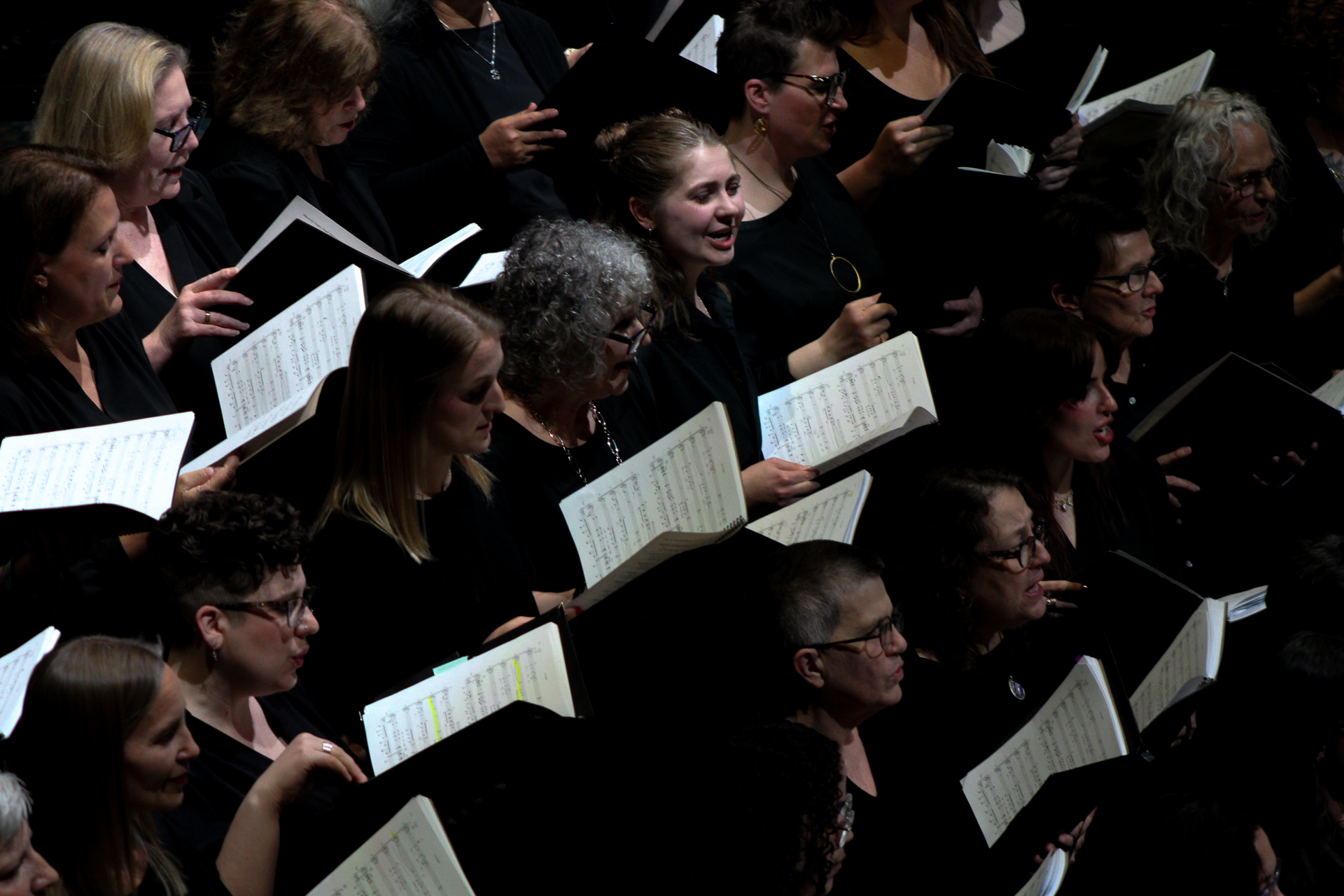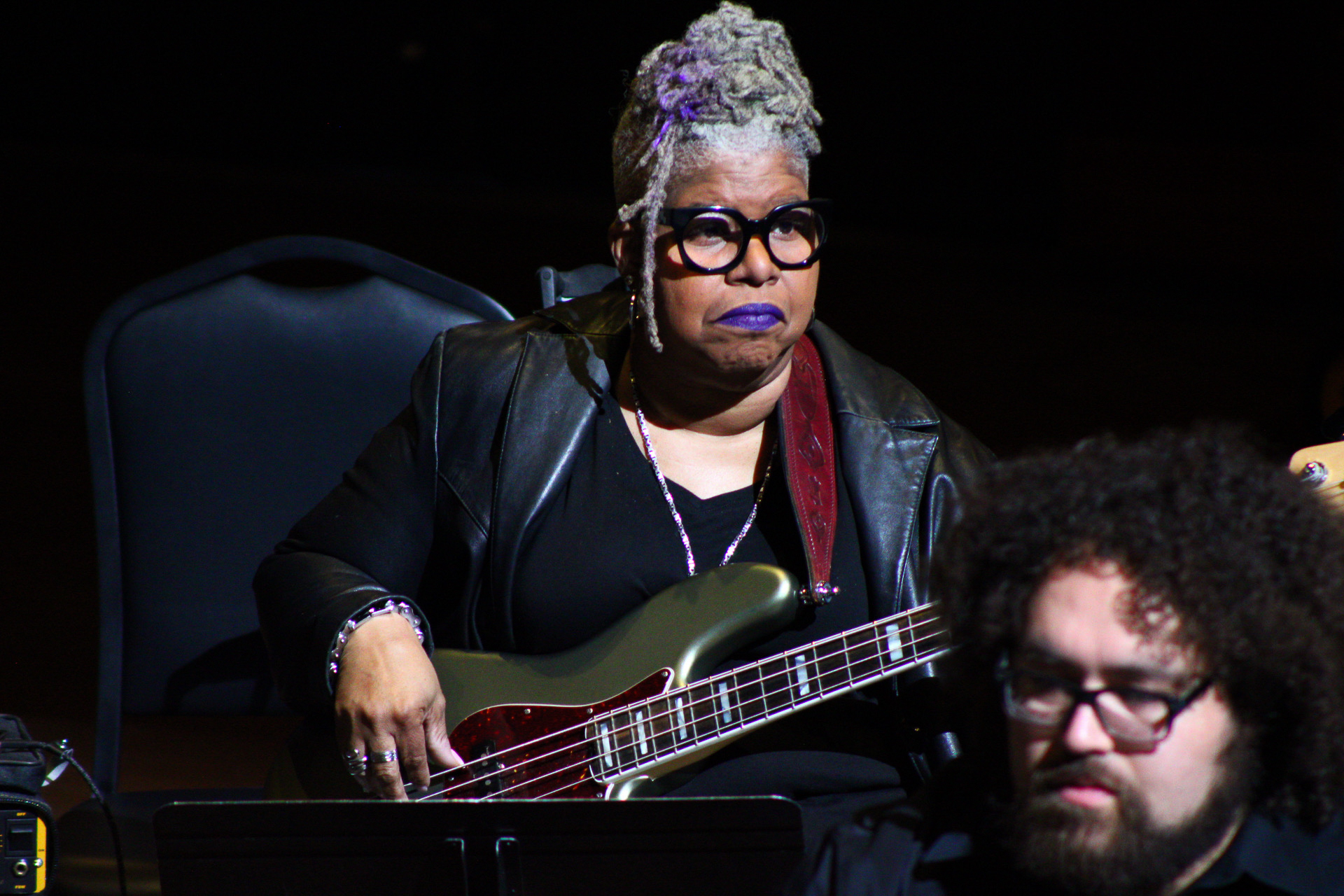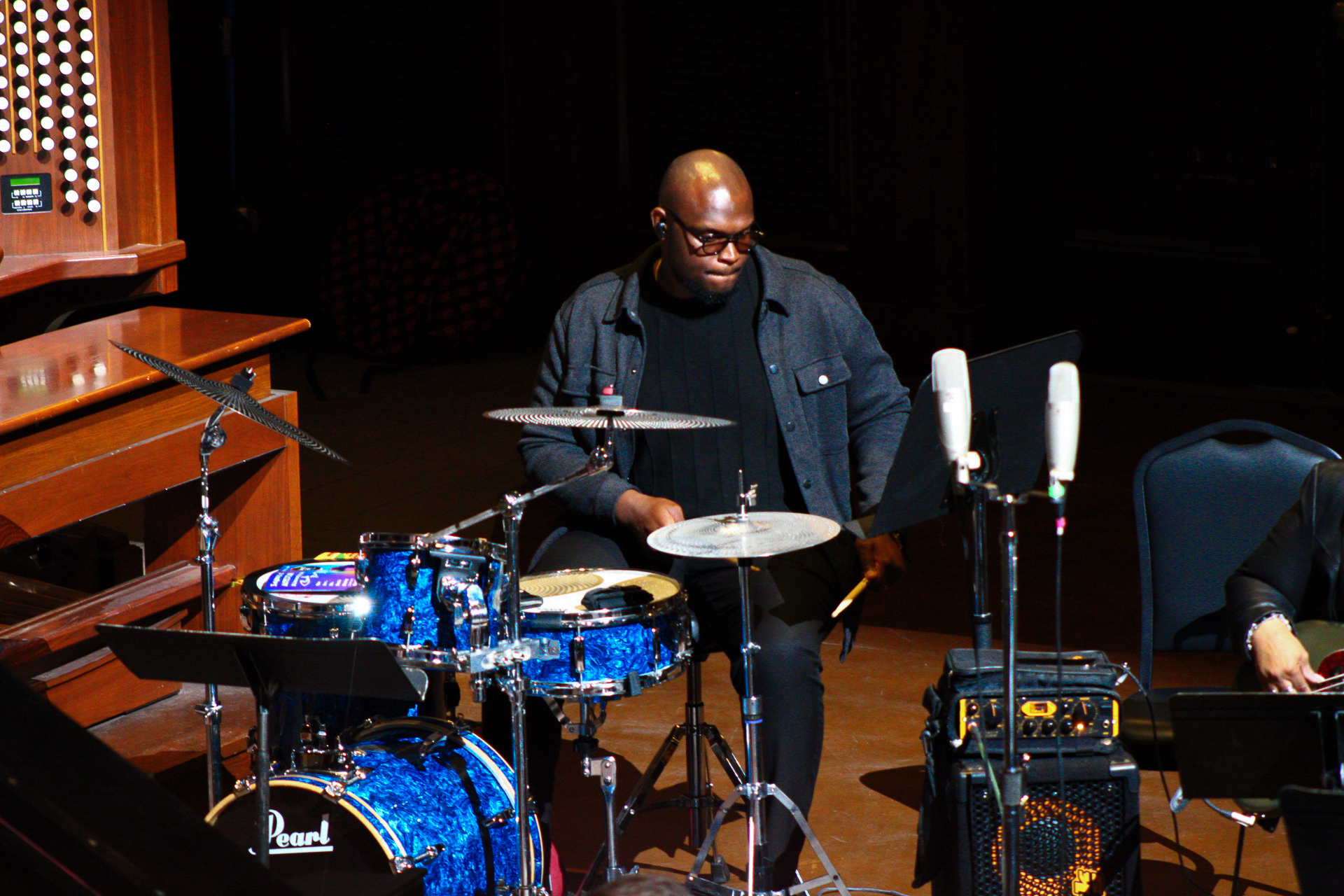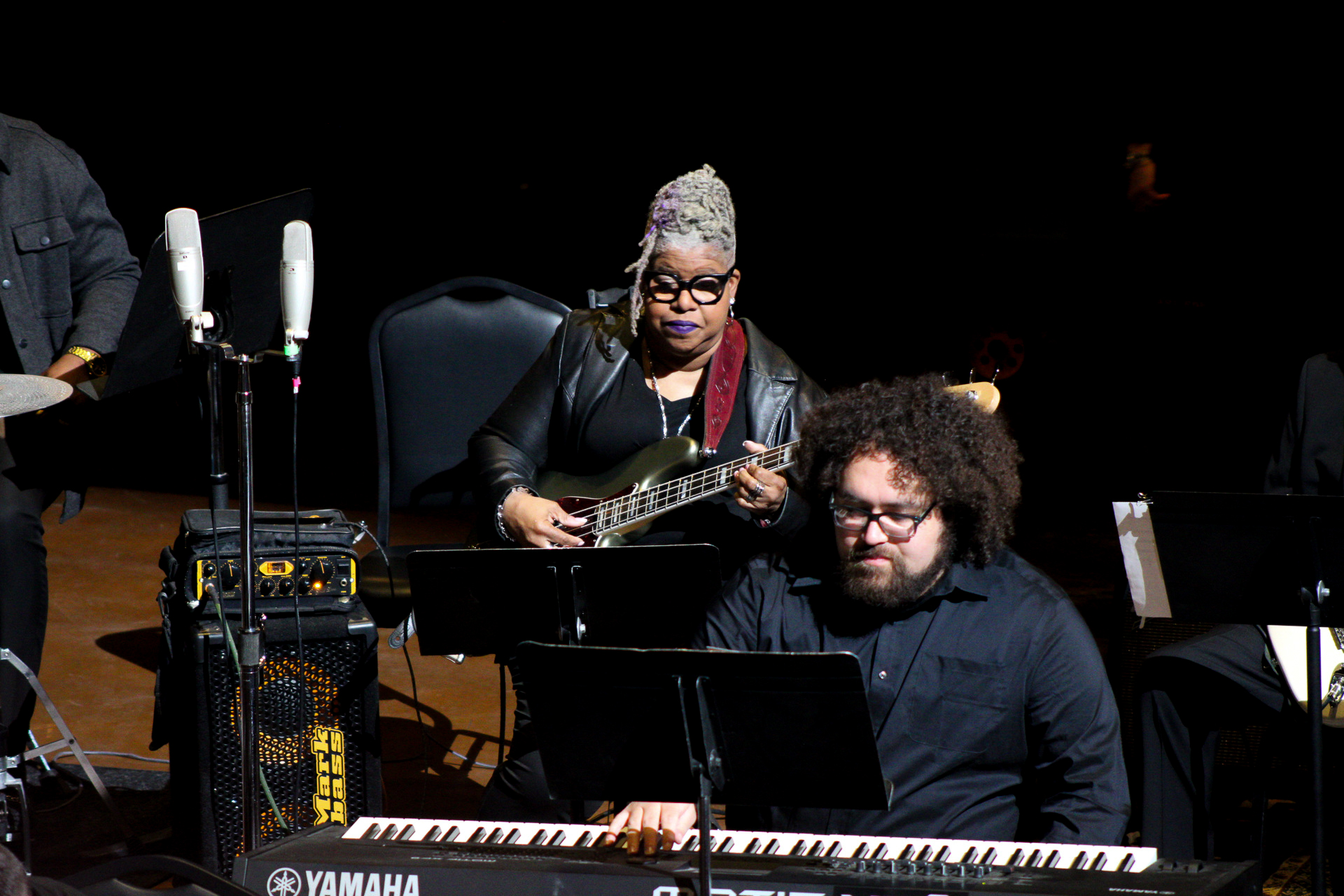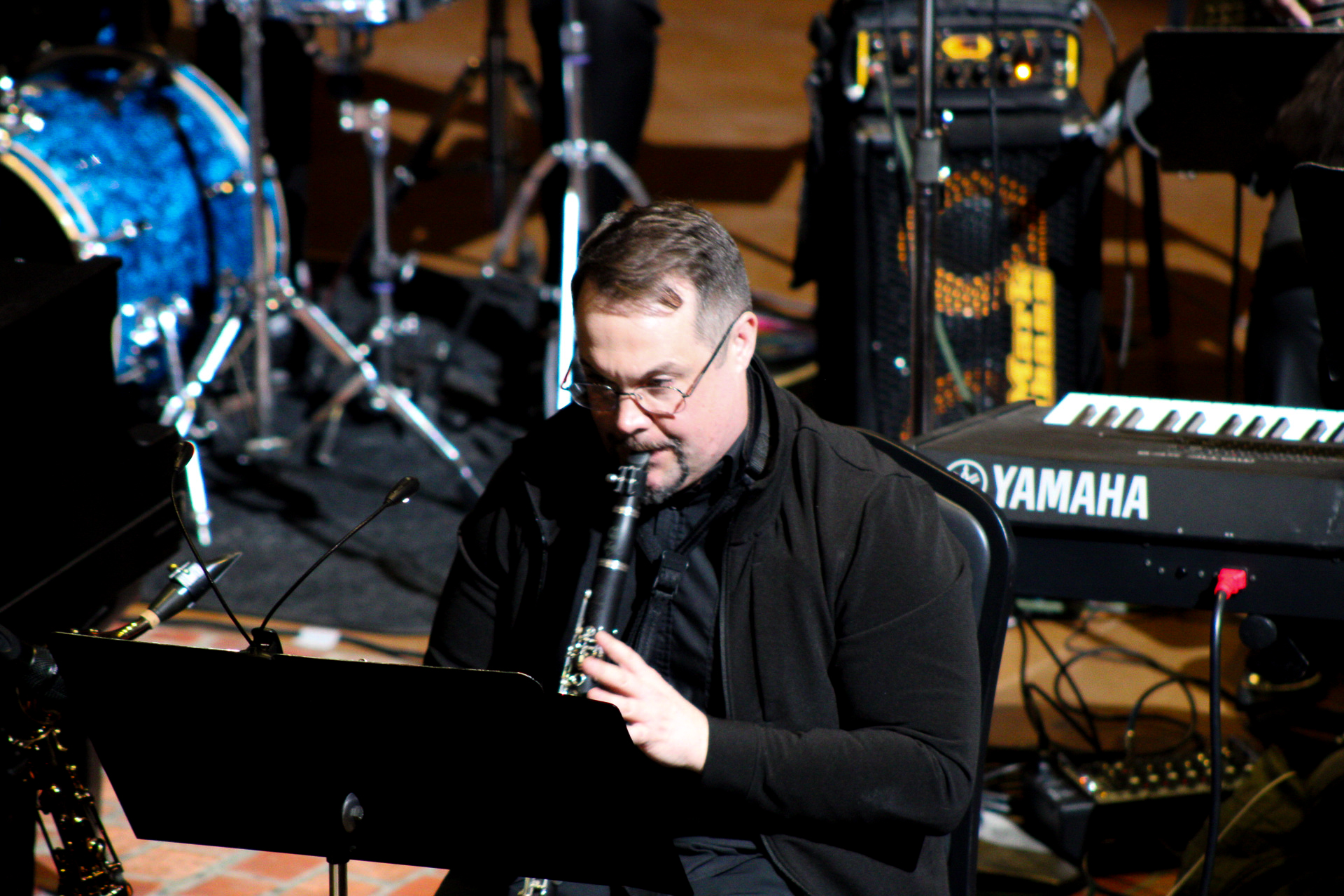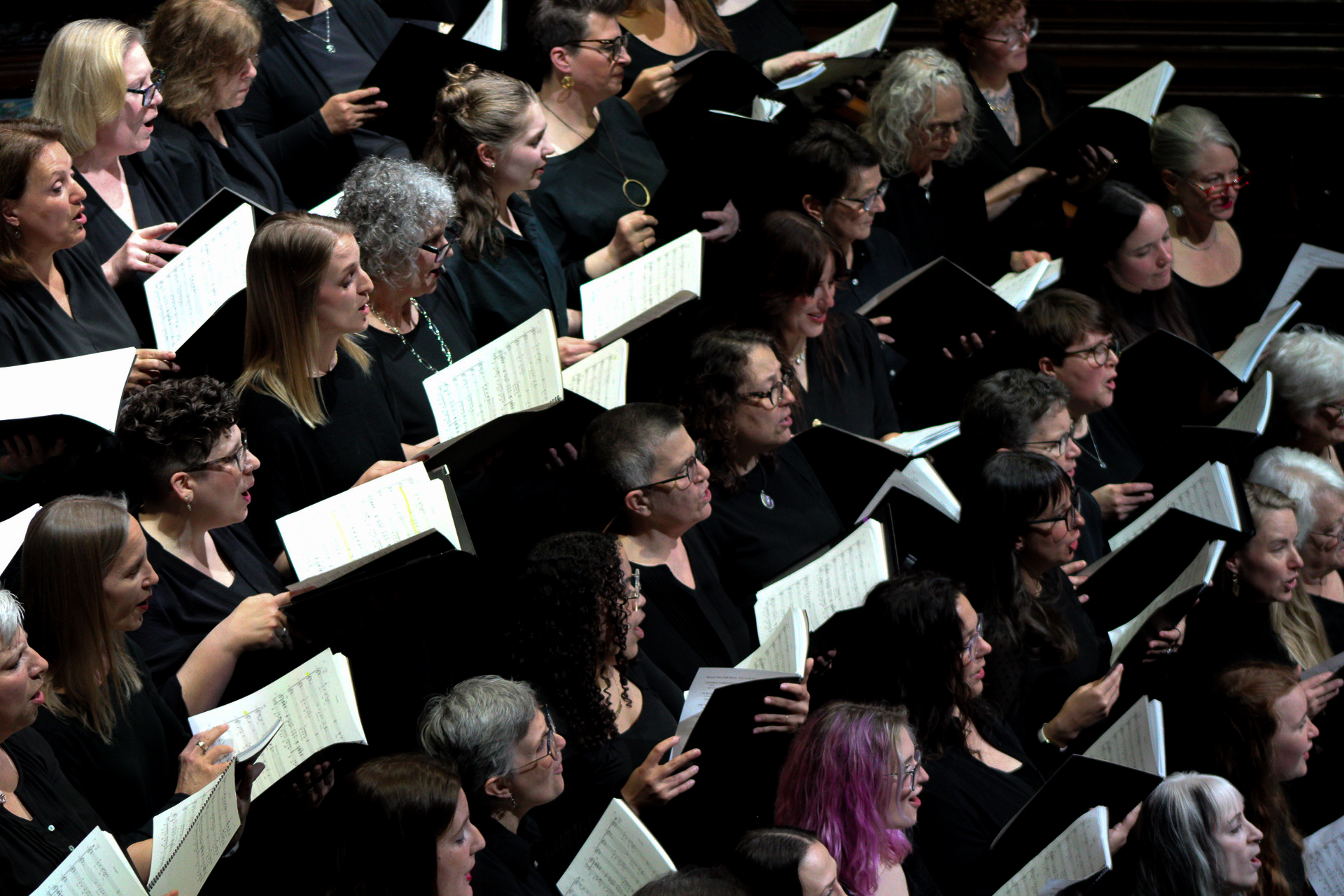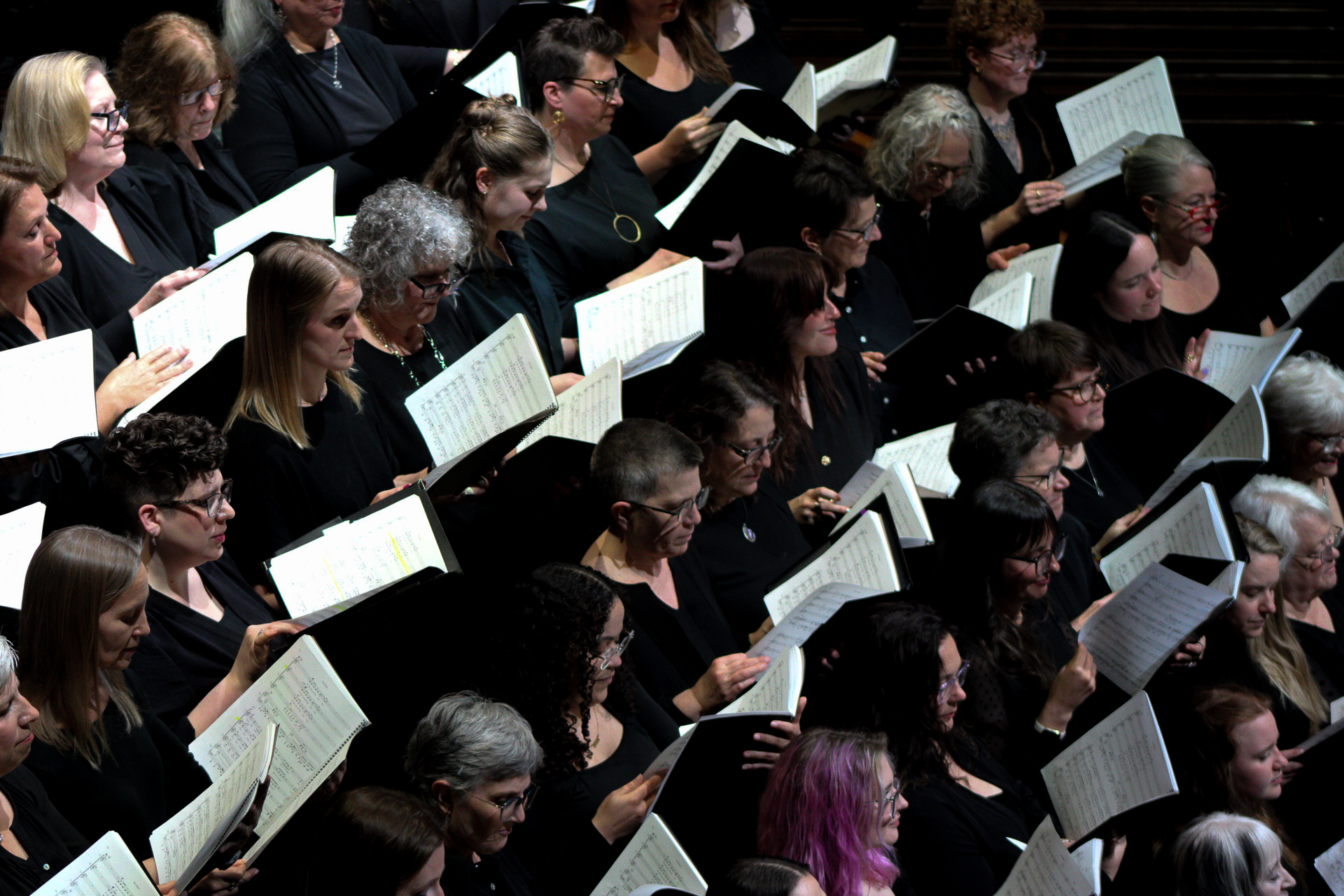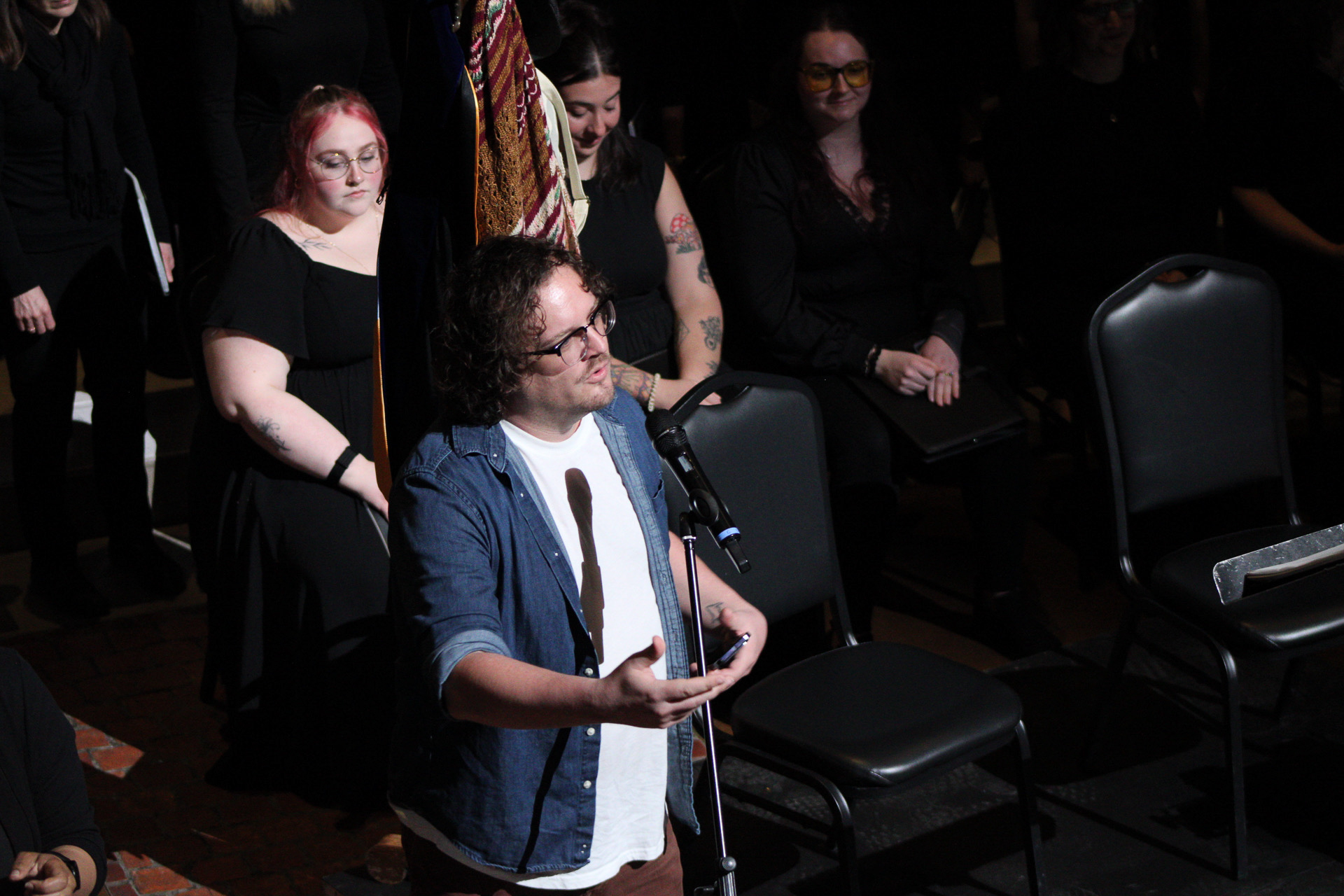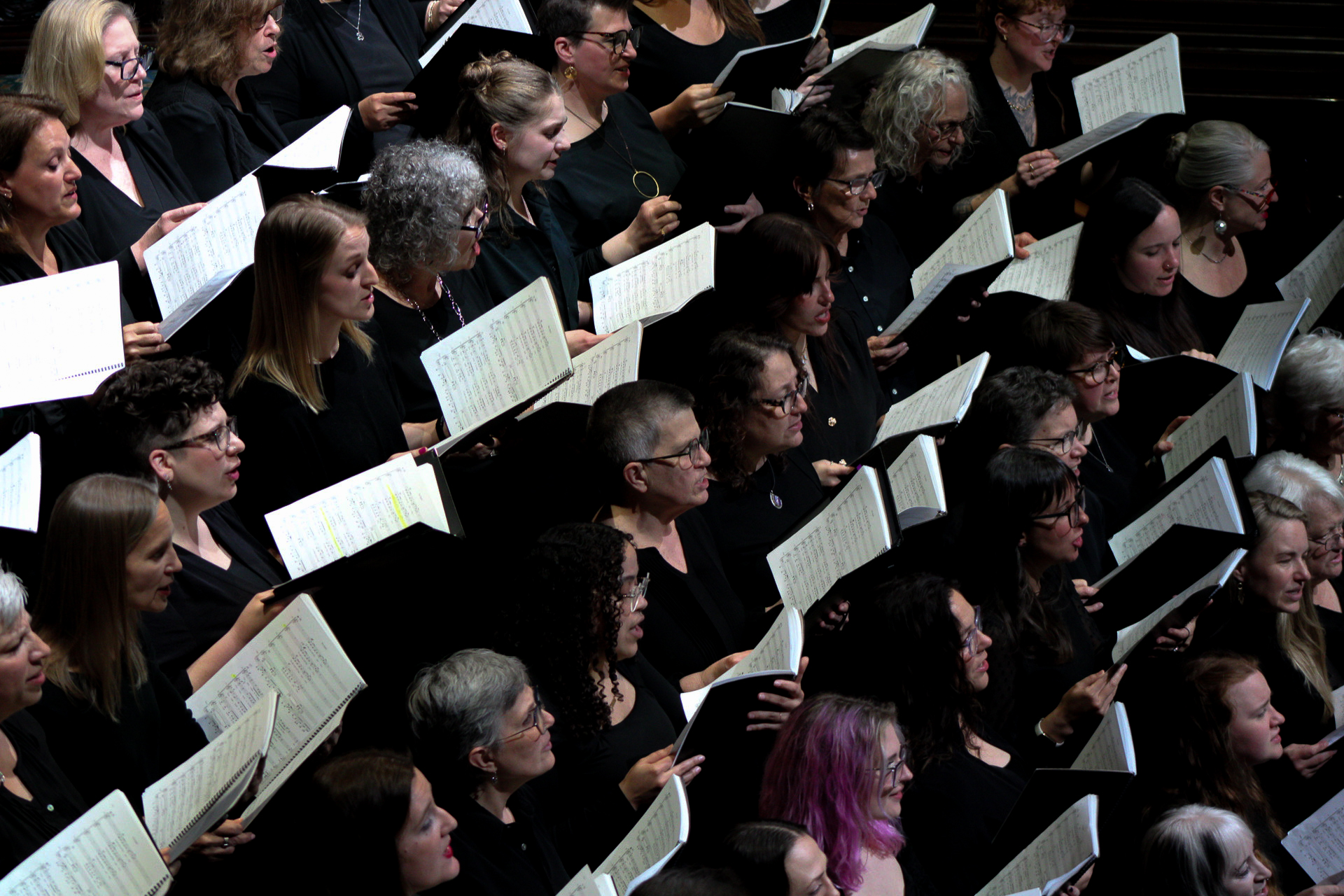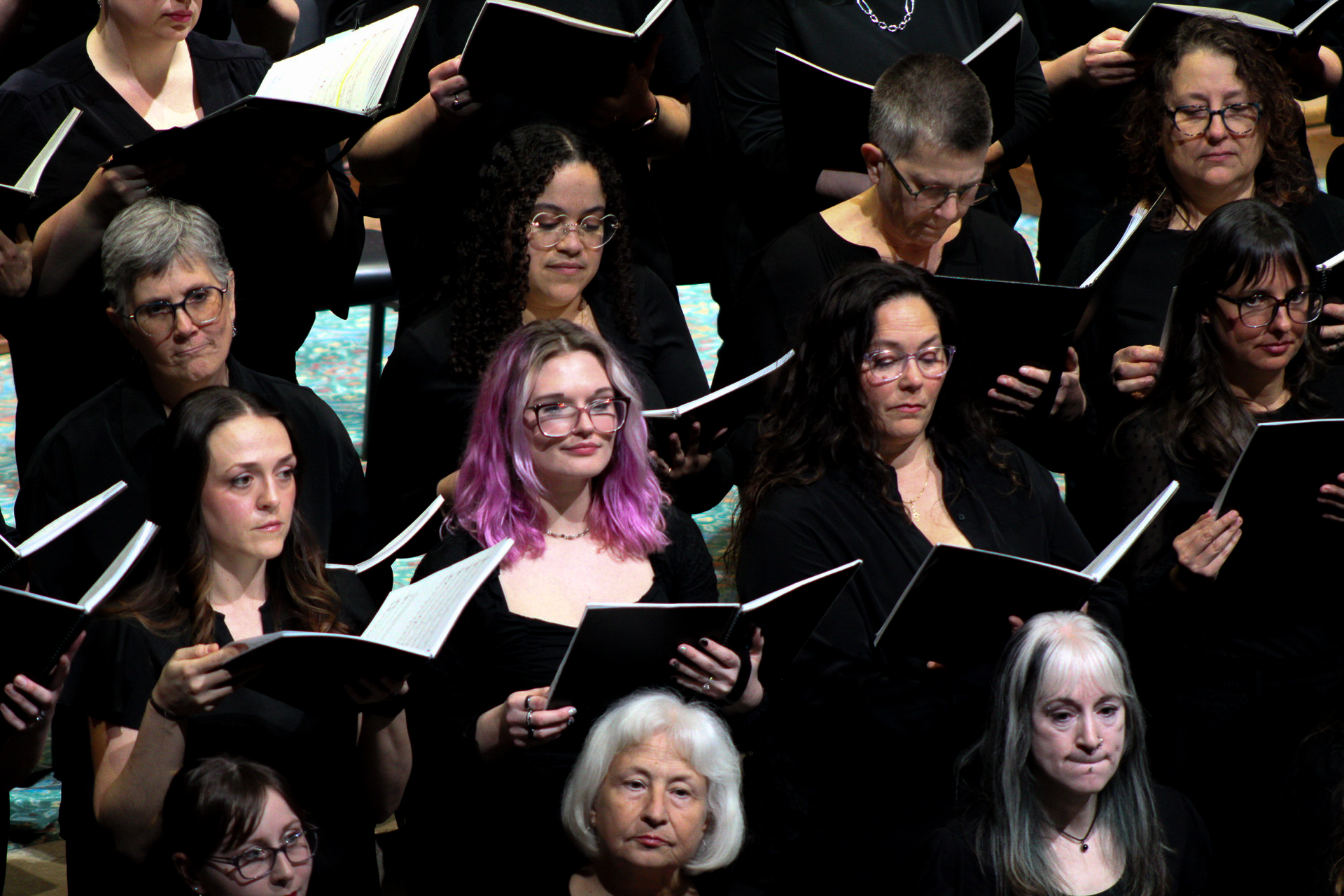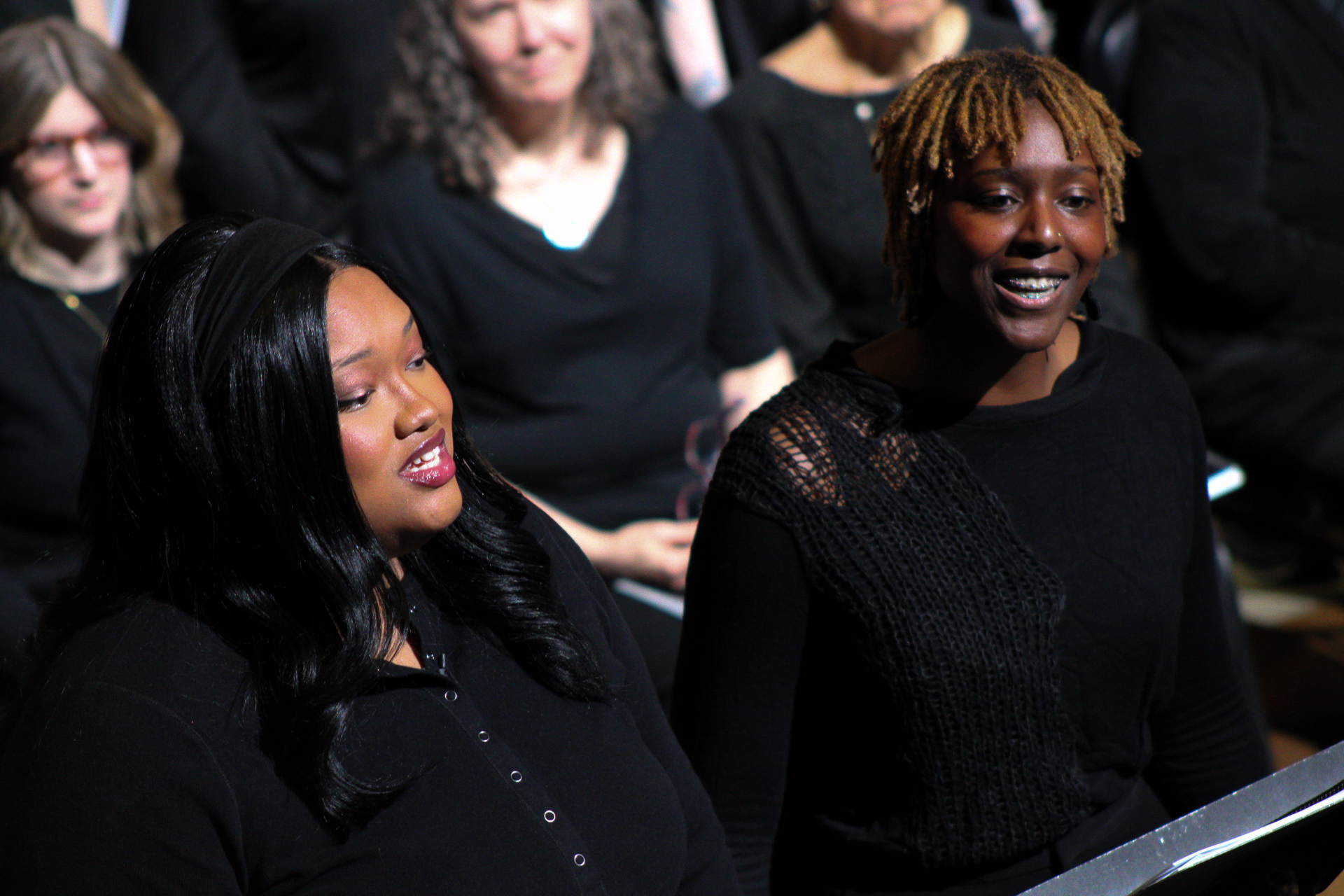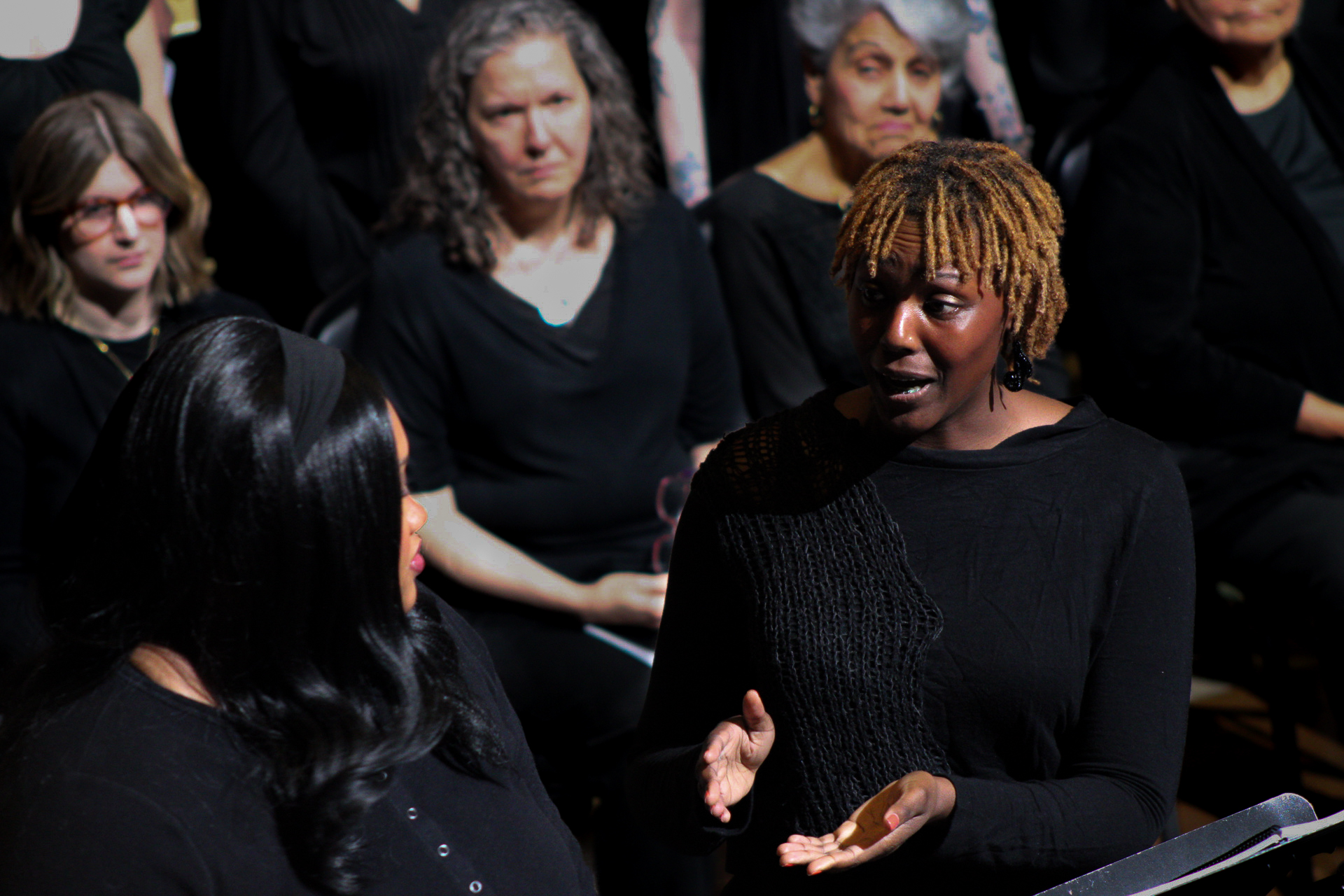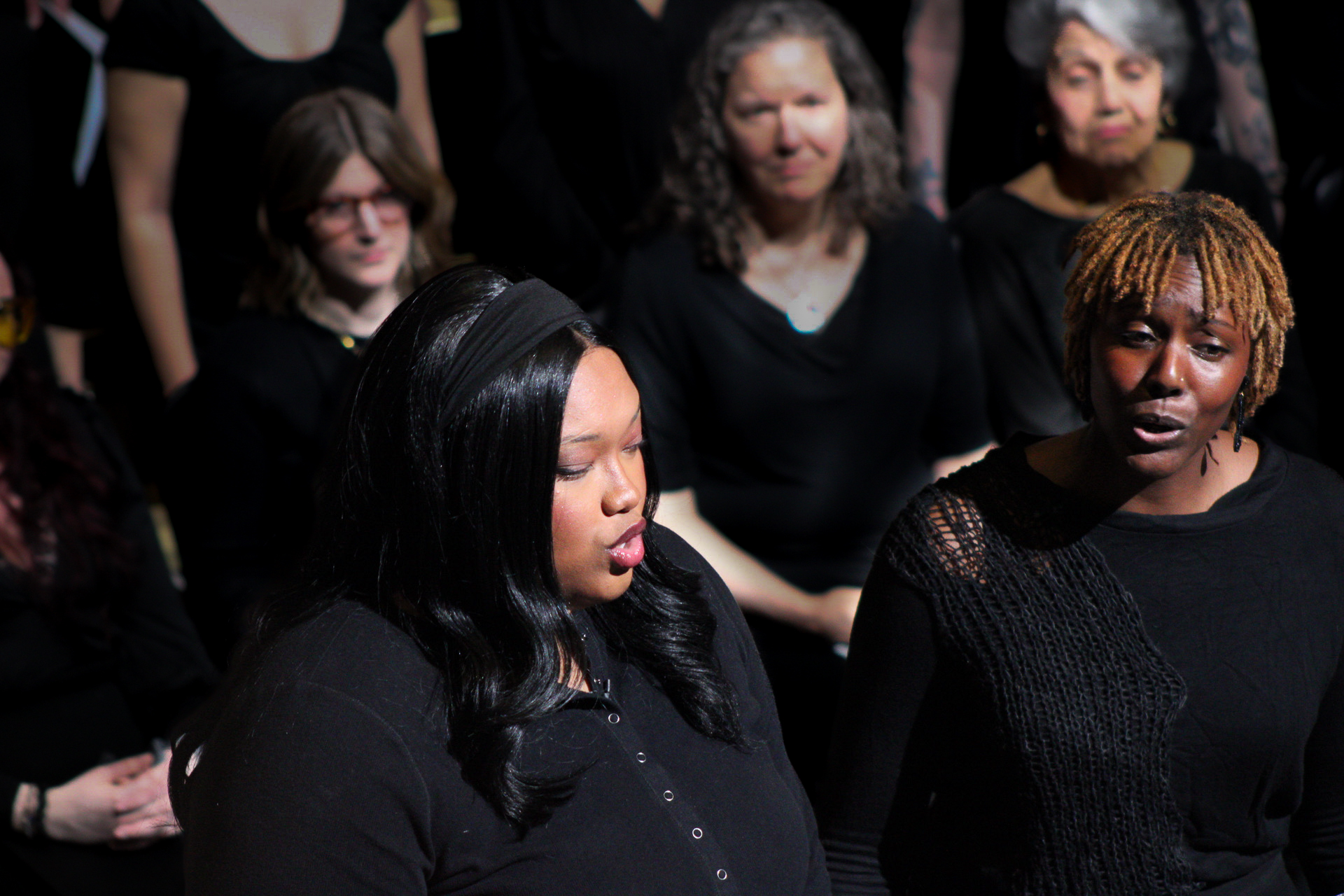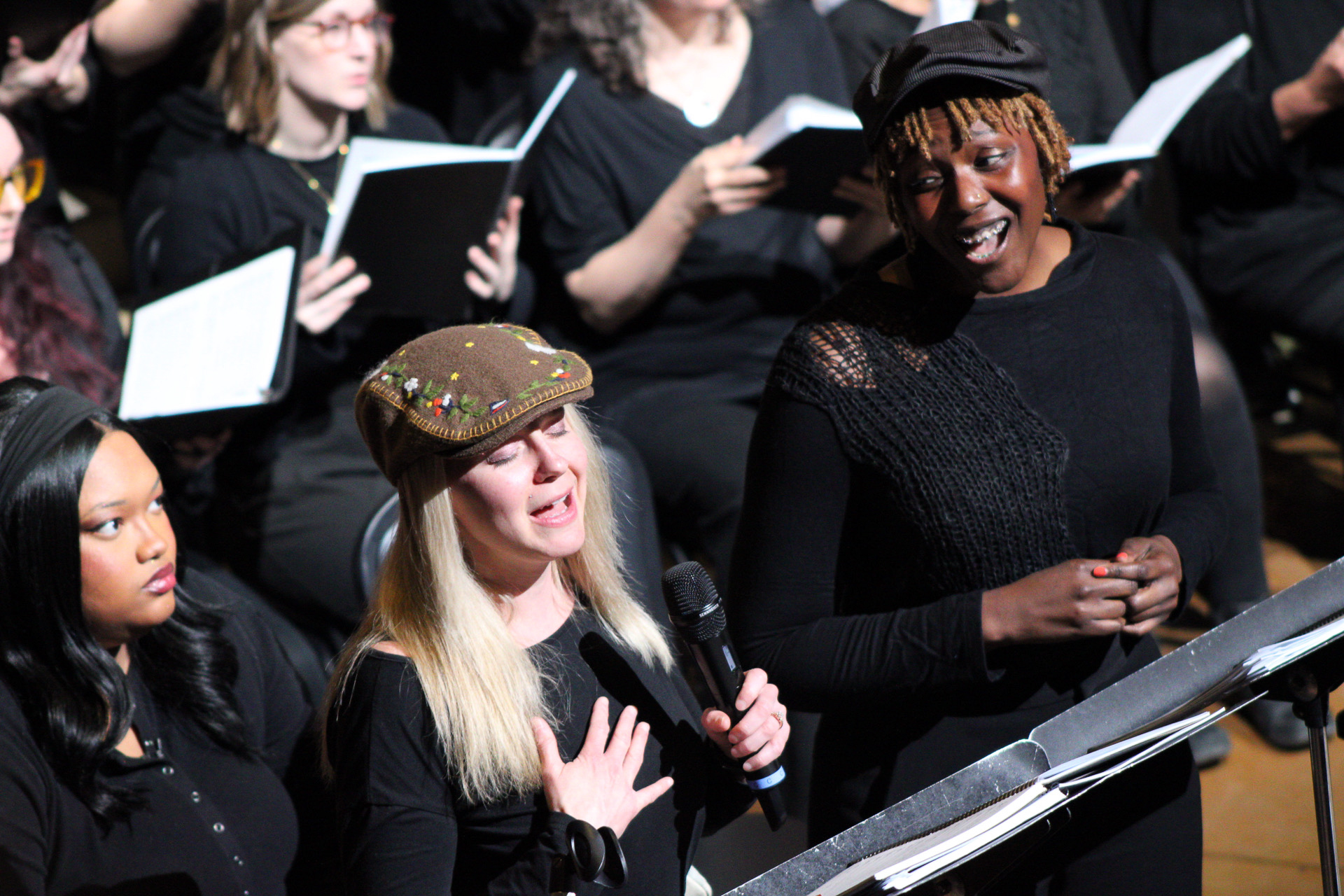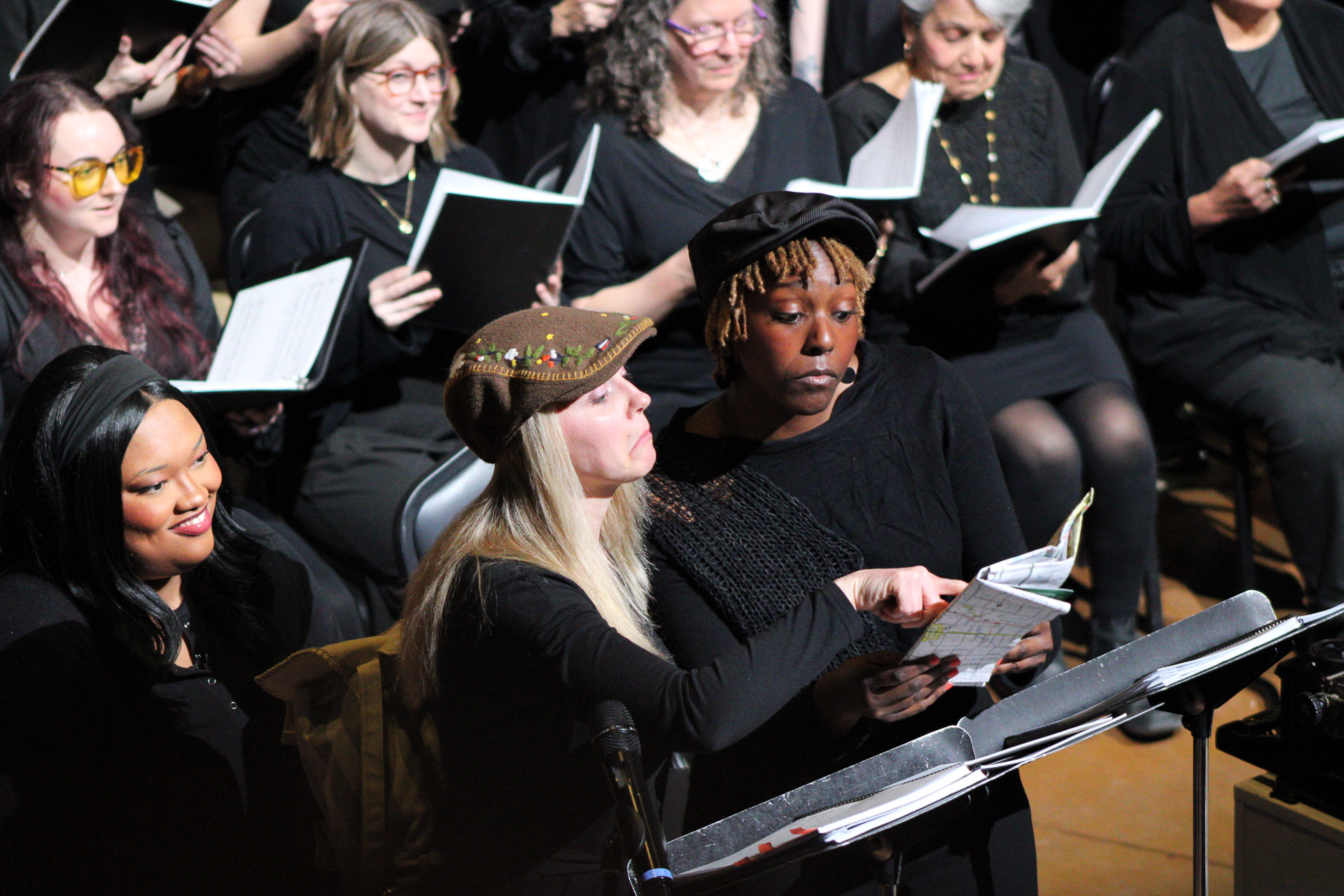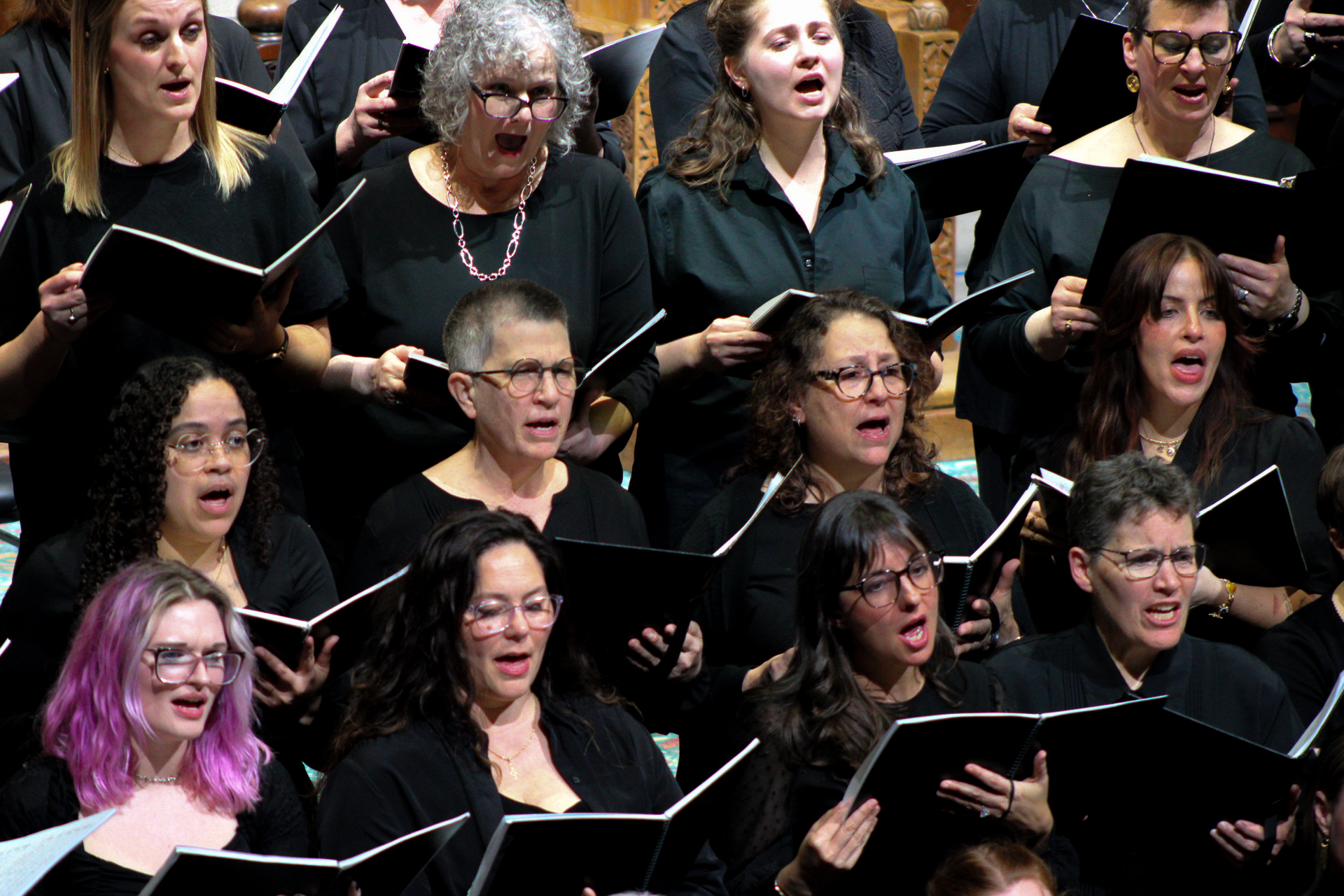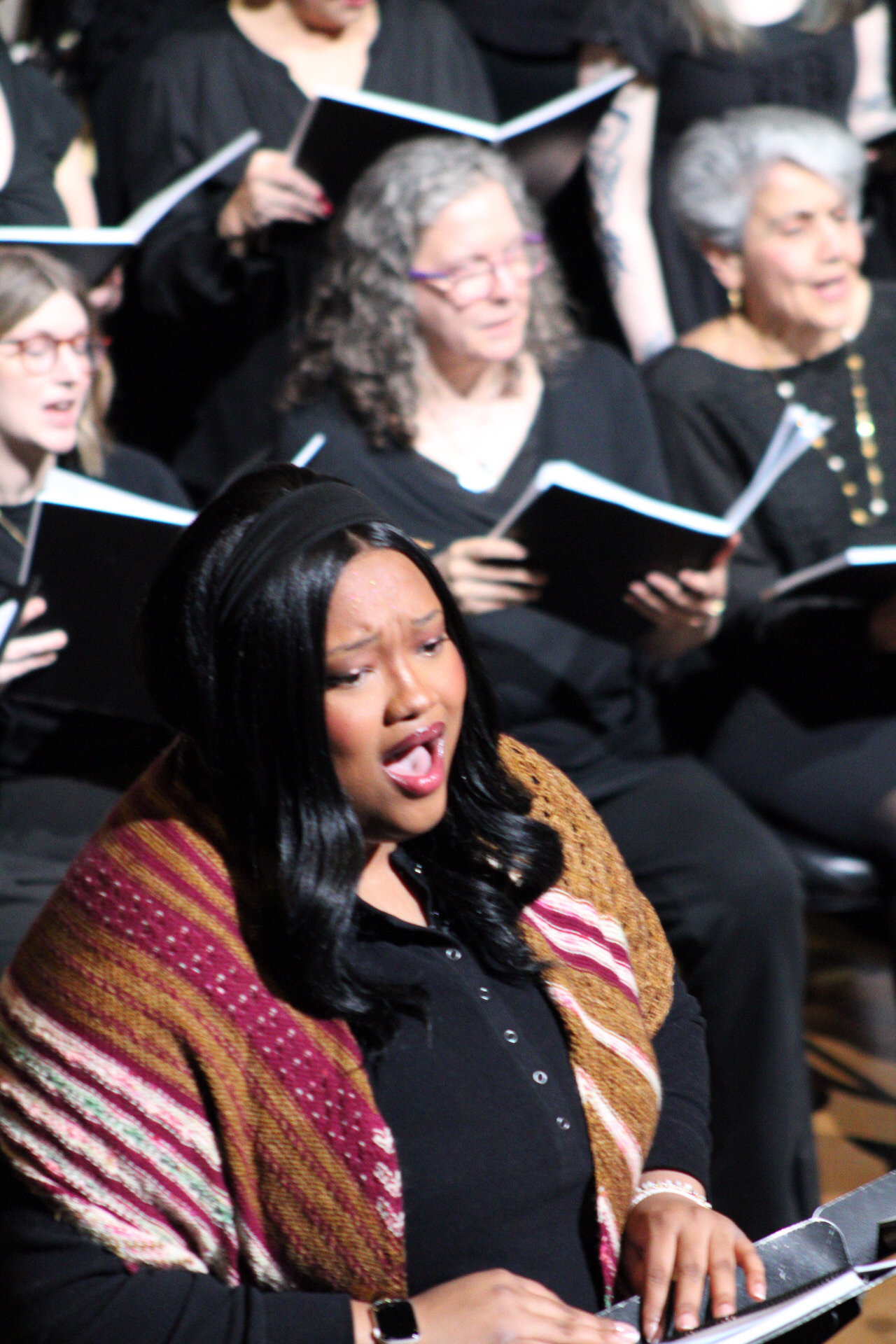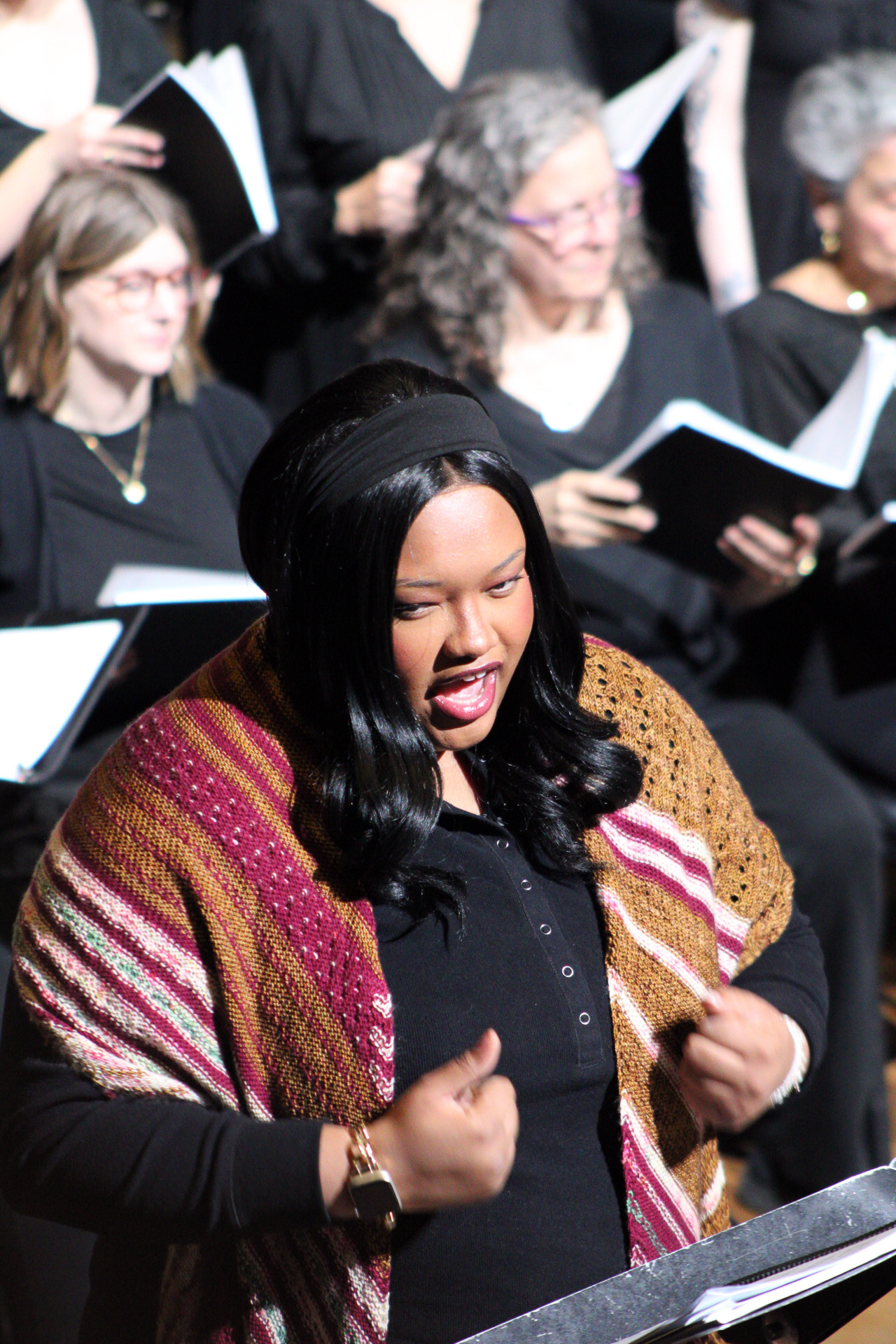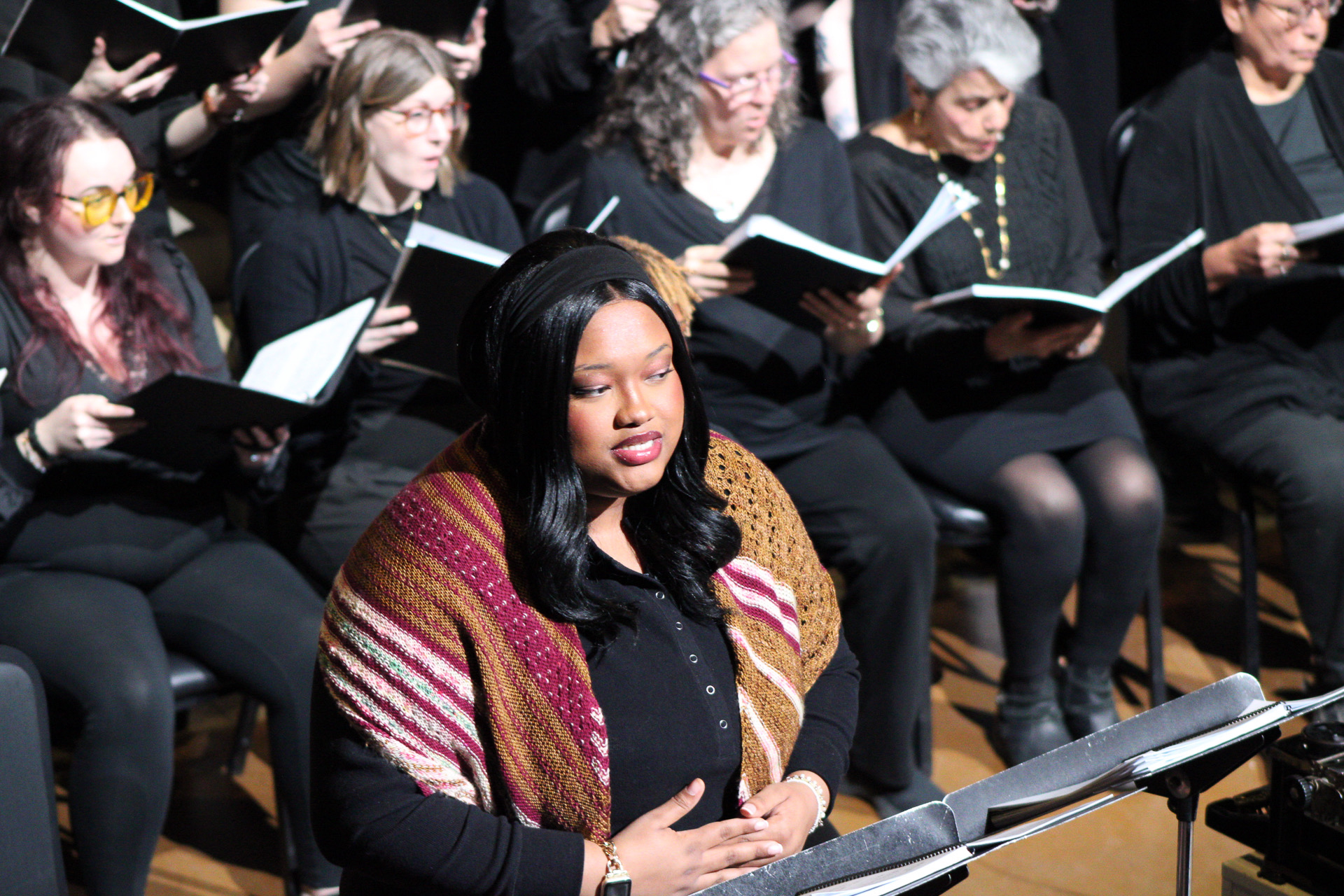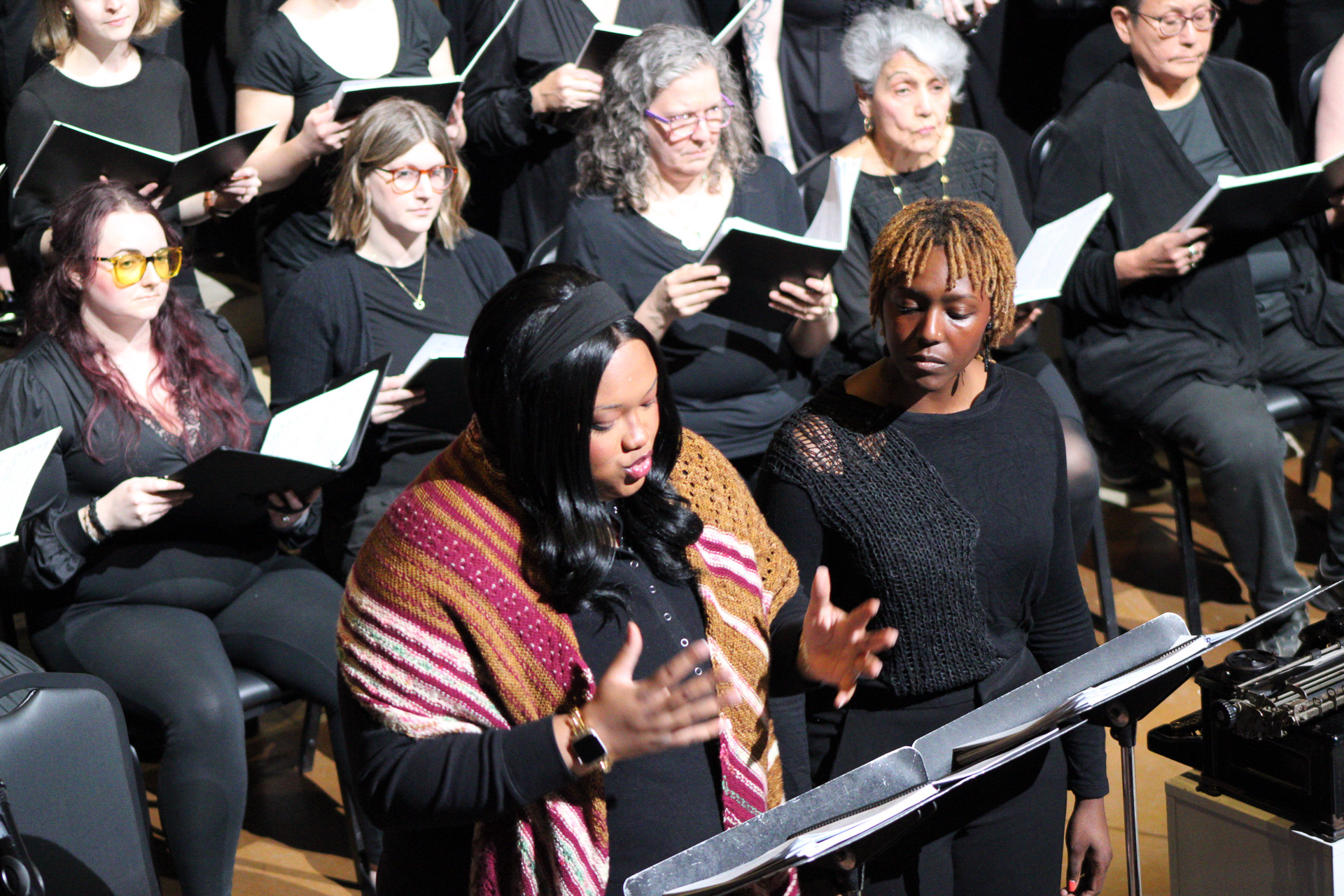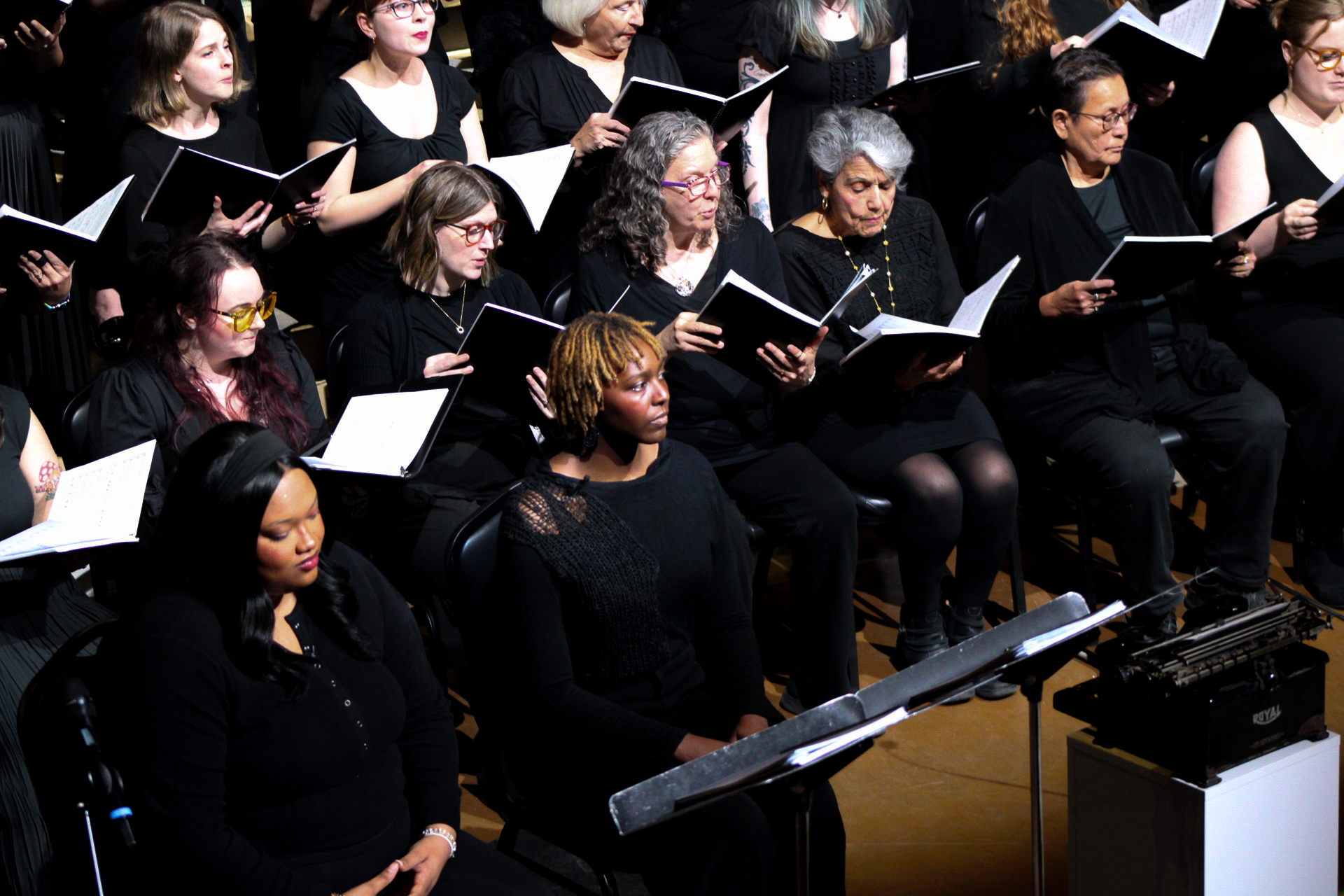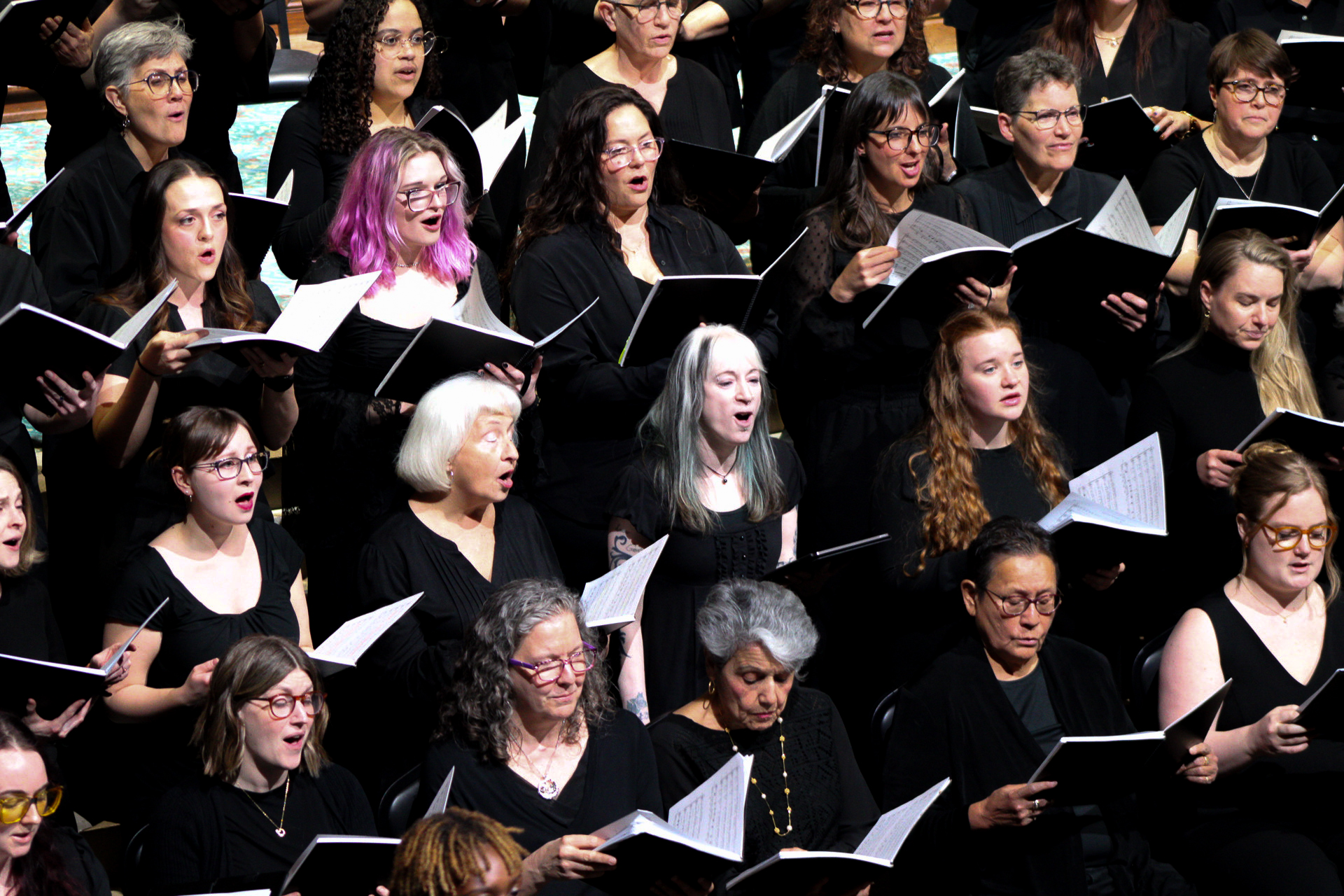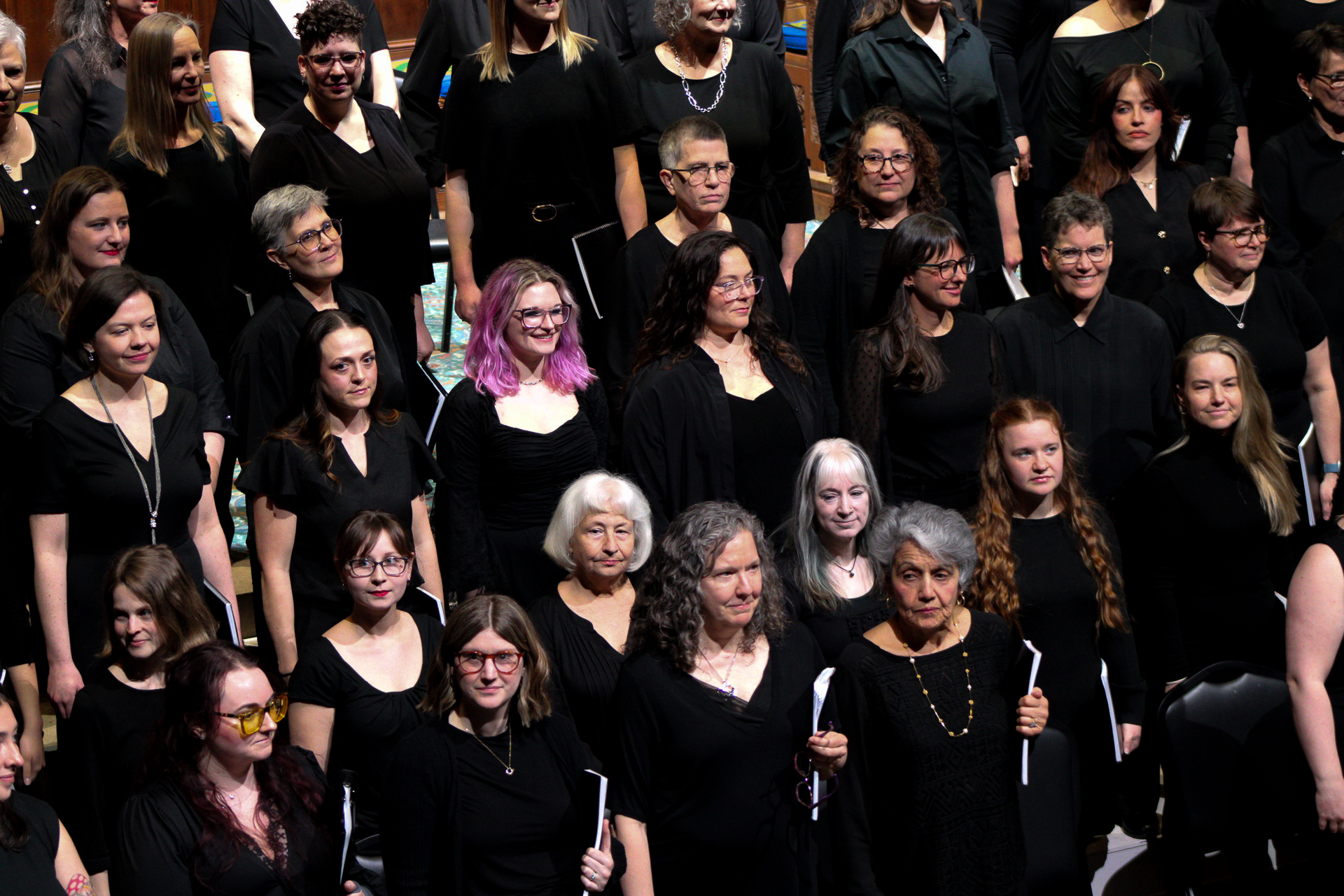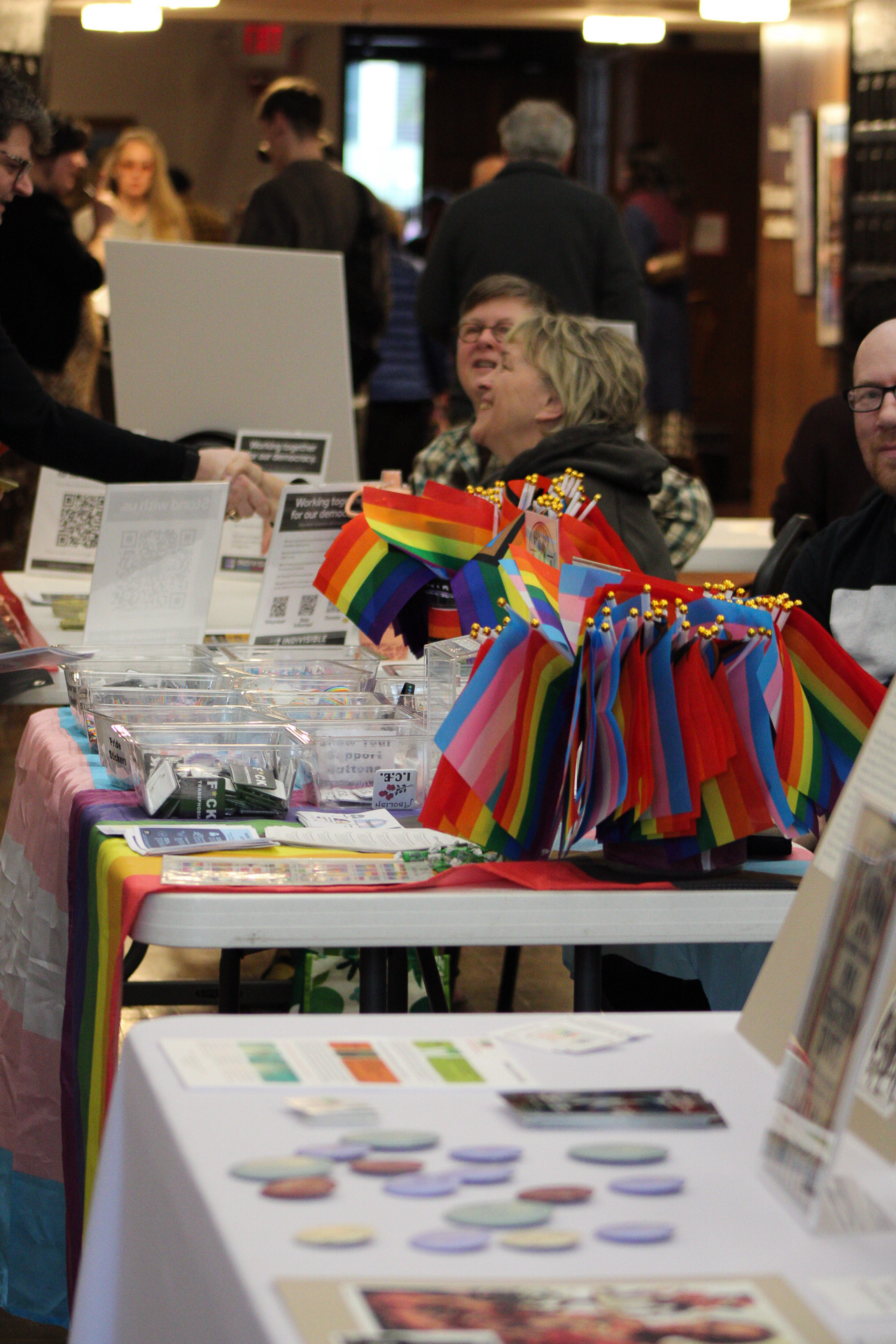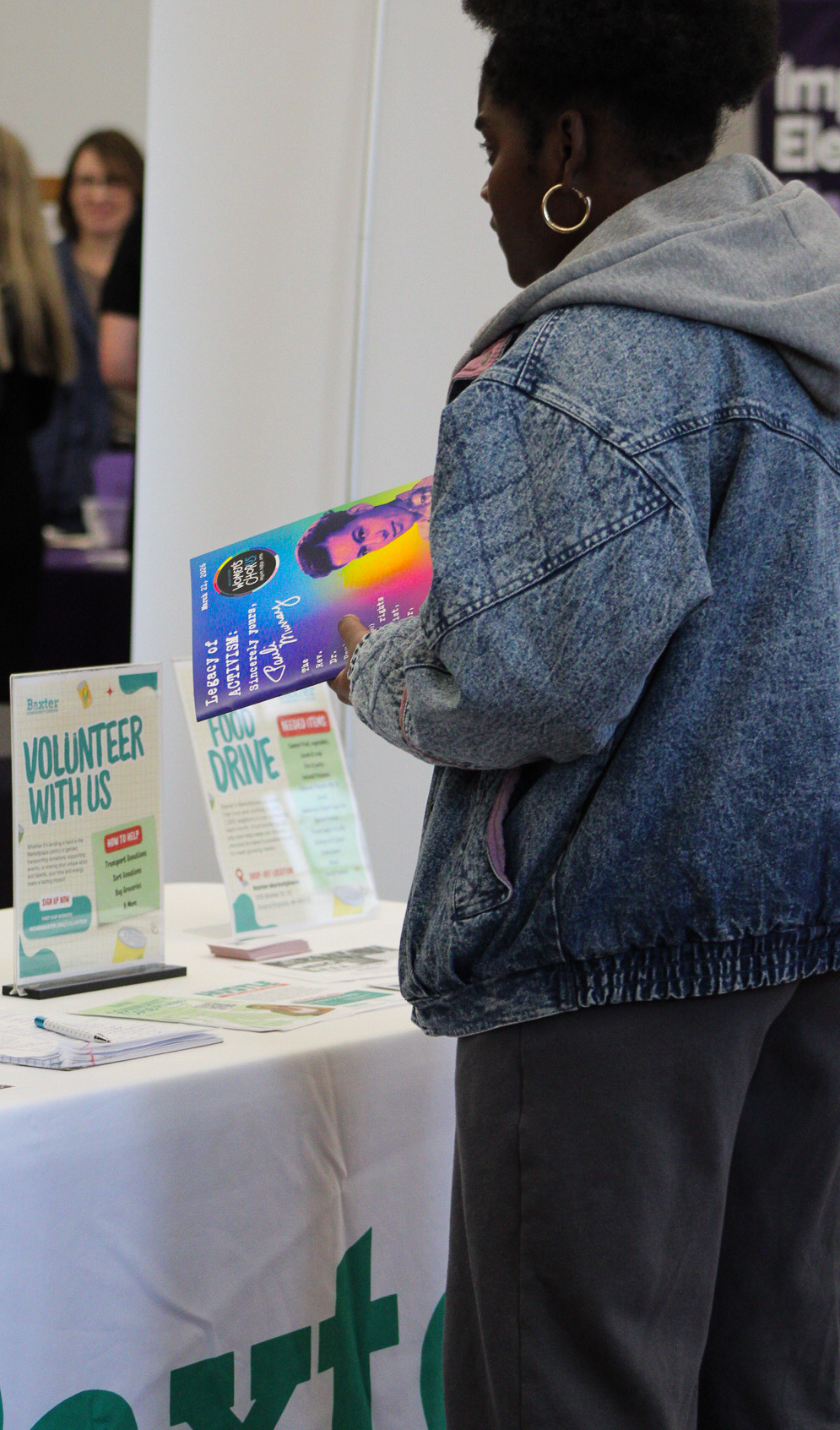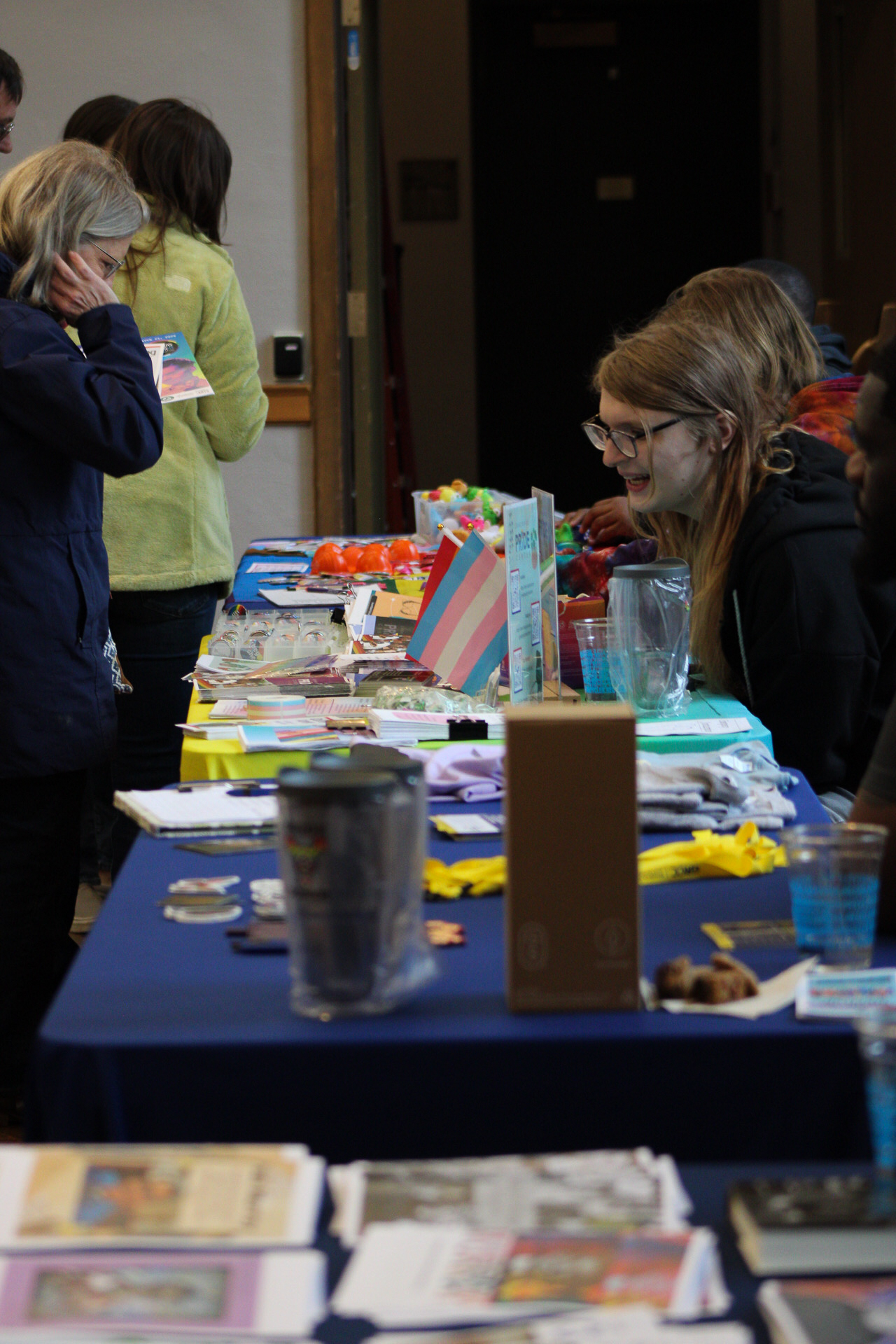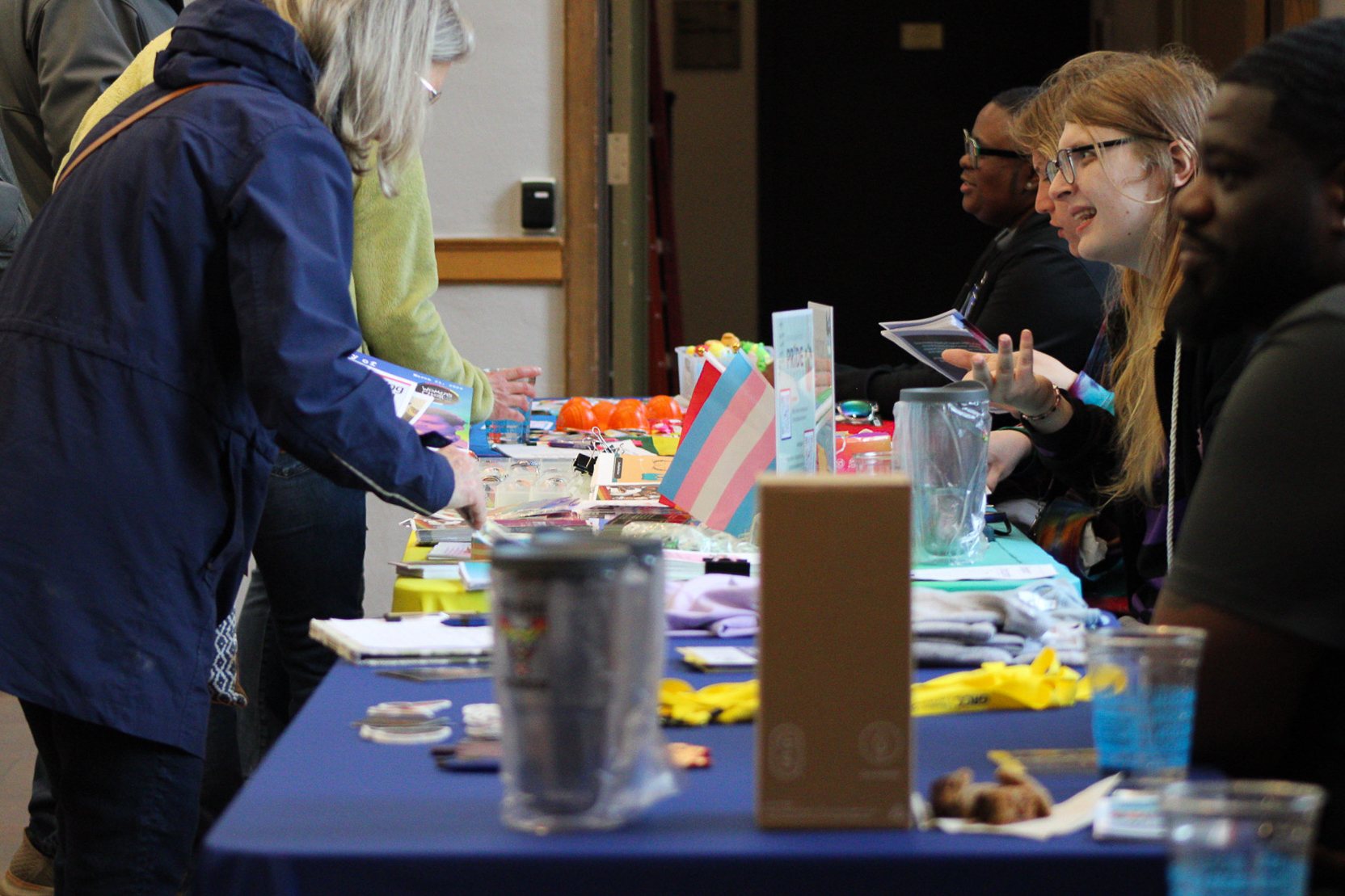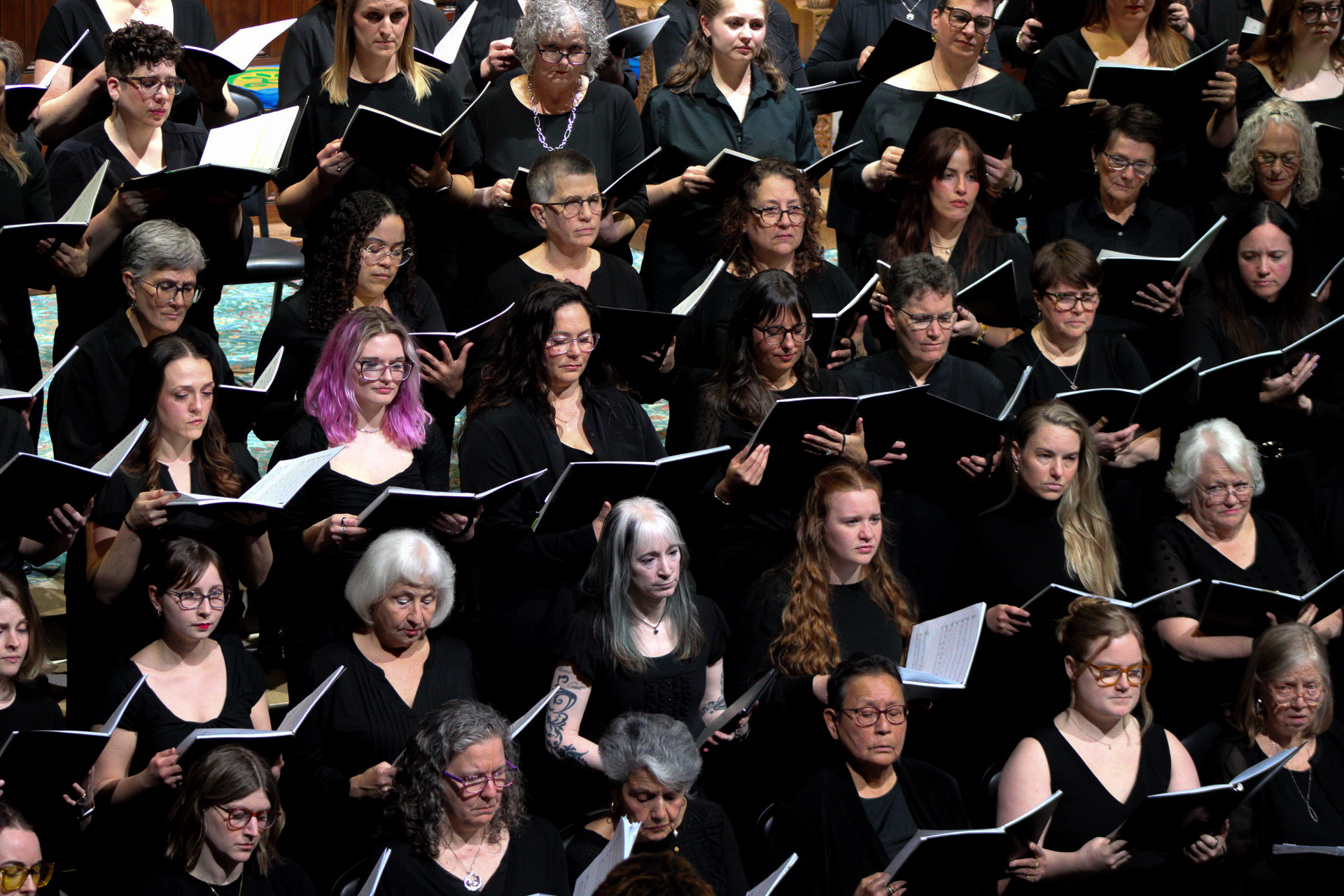
The chapel of Fountain Street Church, just across the street from the Grand Rapids Community College campus, rang with harmony and applause on Saturday night. The community gathered to honor the legacy of civil rights activist Pauli Murray through music, with a performance from the Grand Rapids Women’s Chorus.
Pauli Murray was a civil rights activist, lawyer, poet, and ordained priest who lived from 1910 to 1985. In her life, Murray formulated legal strategies to dismantle Jim Crow Laws and challenge gender discrimination. She was also one of 12 founders of the National Organization for Women, a grassroots organization that is still prevalent 60 years later. Murray was the first African American woman ordained as an Episcopal priest, and has since been named a saint in the Episcopal Church.
Artistic Director of the Grand Rapids Women’s Chorus, Lori Tennenhouse, shared how GRWC chose to highlight Murray’s life through the dramatic cantata by Steve Milloy, Kim Hines, and Jane Ramseyer Miller.
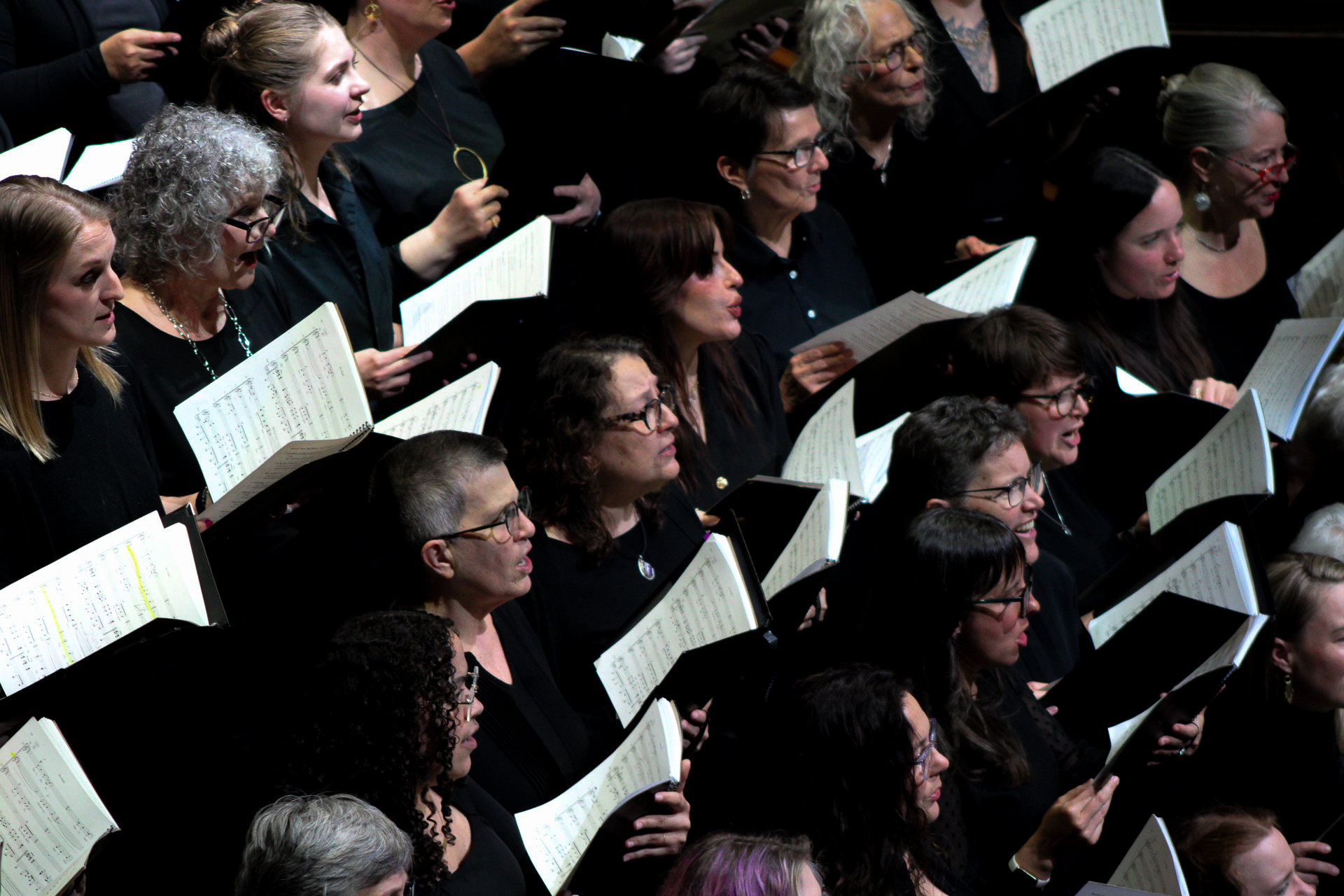
“This year, our music committee decided we were ready to move beyond just talking about hope. We’ve done that for years. We wanted to focus on action, resilience, standing up, and truly listening to others,” Tennenhouse said.
“When I learned about Pauli Murray’s story, it felt like the perfect fit. Here was someone speaking out for civil rights during Jim Crow, during a time of intense misogyny, when women had very few rights. And right now, when parts of Black history are being challenged or removed from public spaces, it felt especially important to lift up voices like Murray’s – people who persisted even when everything was against them.”
The story of the performance follows Pauli Murray’s life, beginning with her childhood and moving through key events of her life, through her struggles with identity, activism, legal work, and relationships.
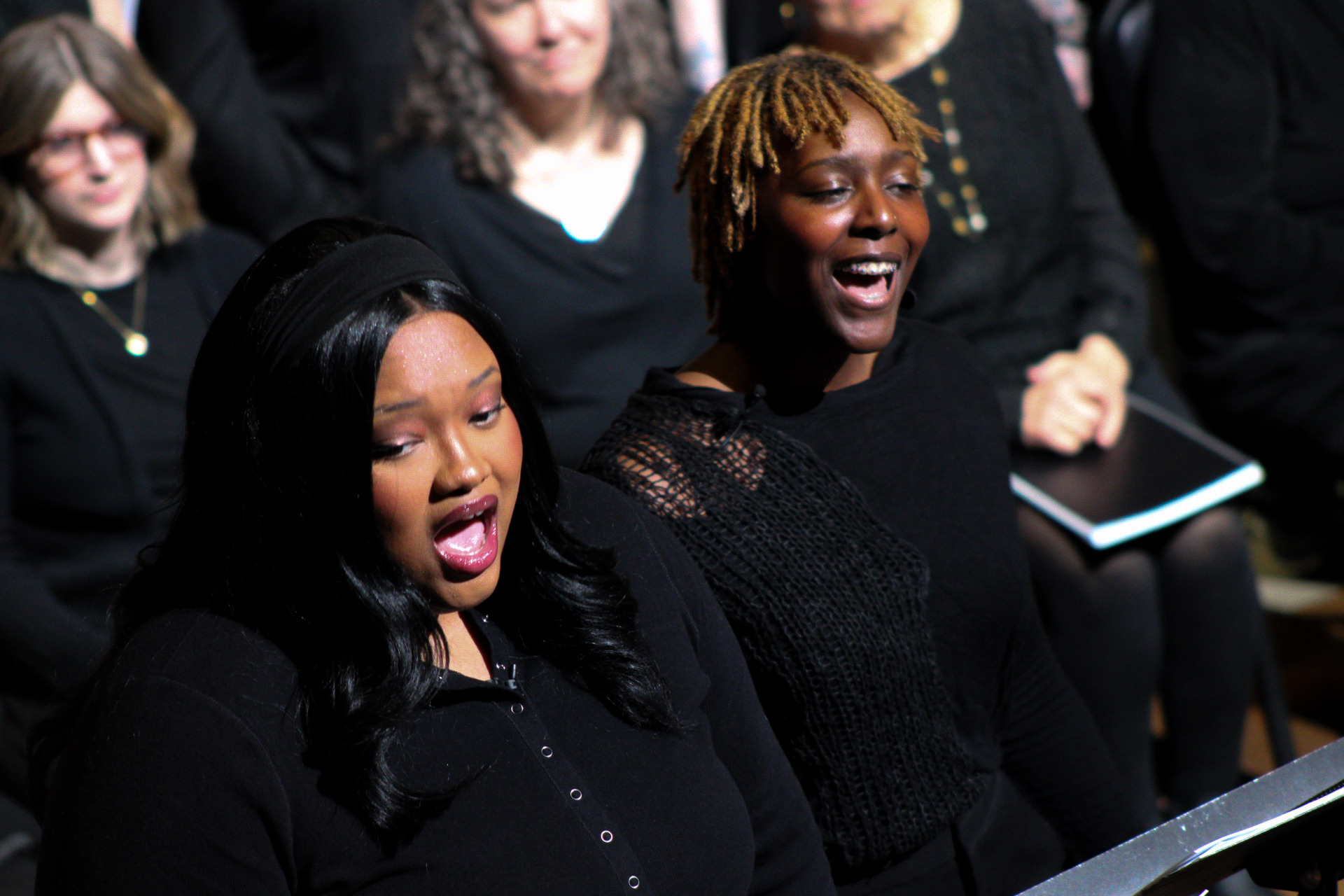
Musically, the 10-movement show moves through a wide range of genres and feelings. “It’s emotional, it’s engaging, and it really brings her story to life in a way that allows people to connect more deeply,” Tennenhouse shared.
“Legacy of Activism: Sincerely Yours, Pauli Murray,” not only highlighted the impact of Murray’s life, but the ongoing work of the community following in her footsteps.
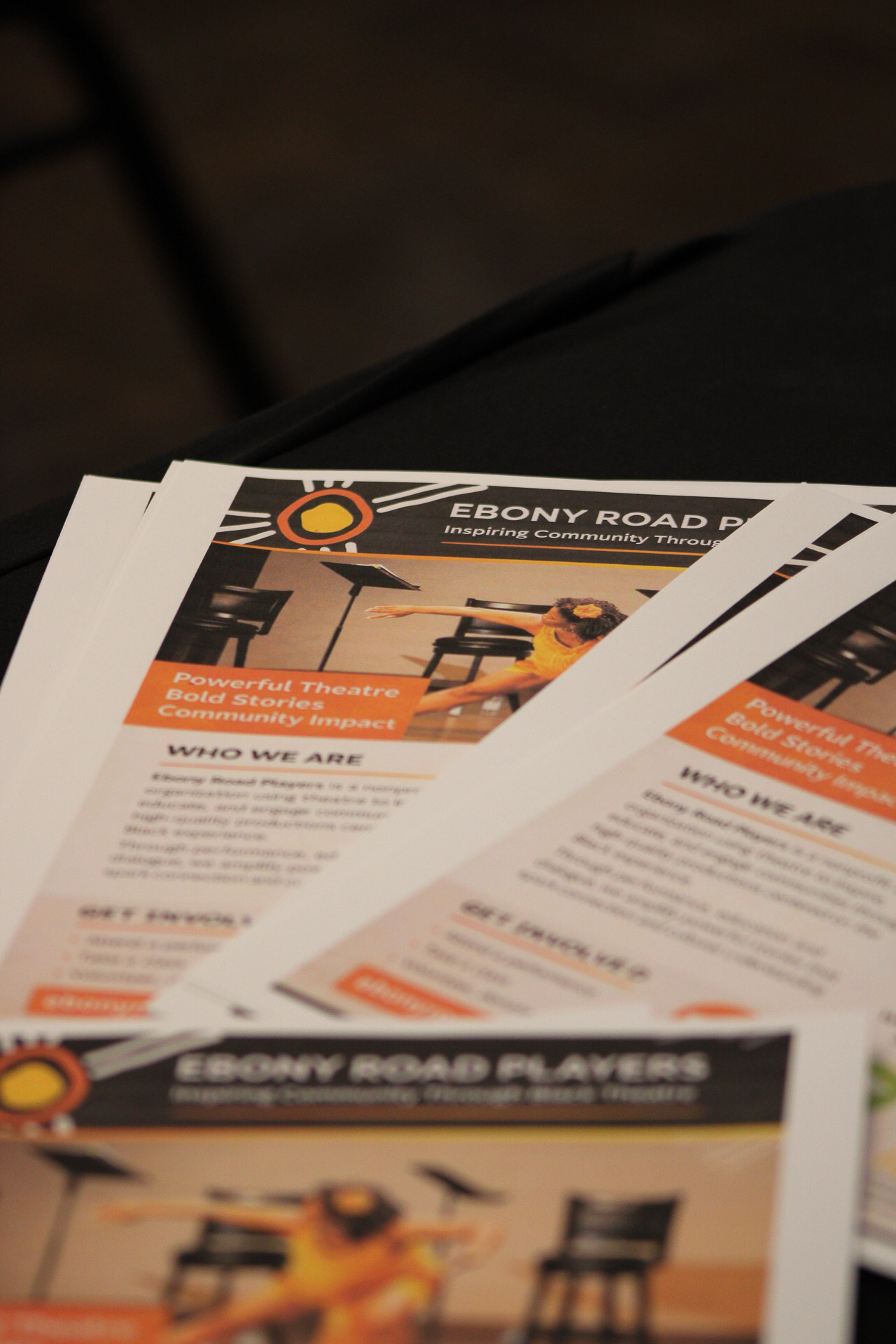
Among the community is Ebony Road Players, whose impact takes the shape of storytelling.
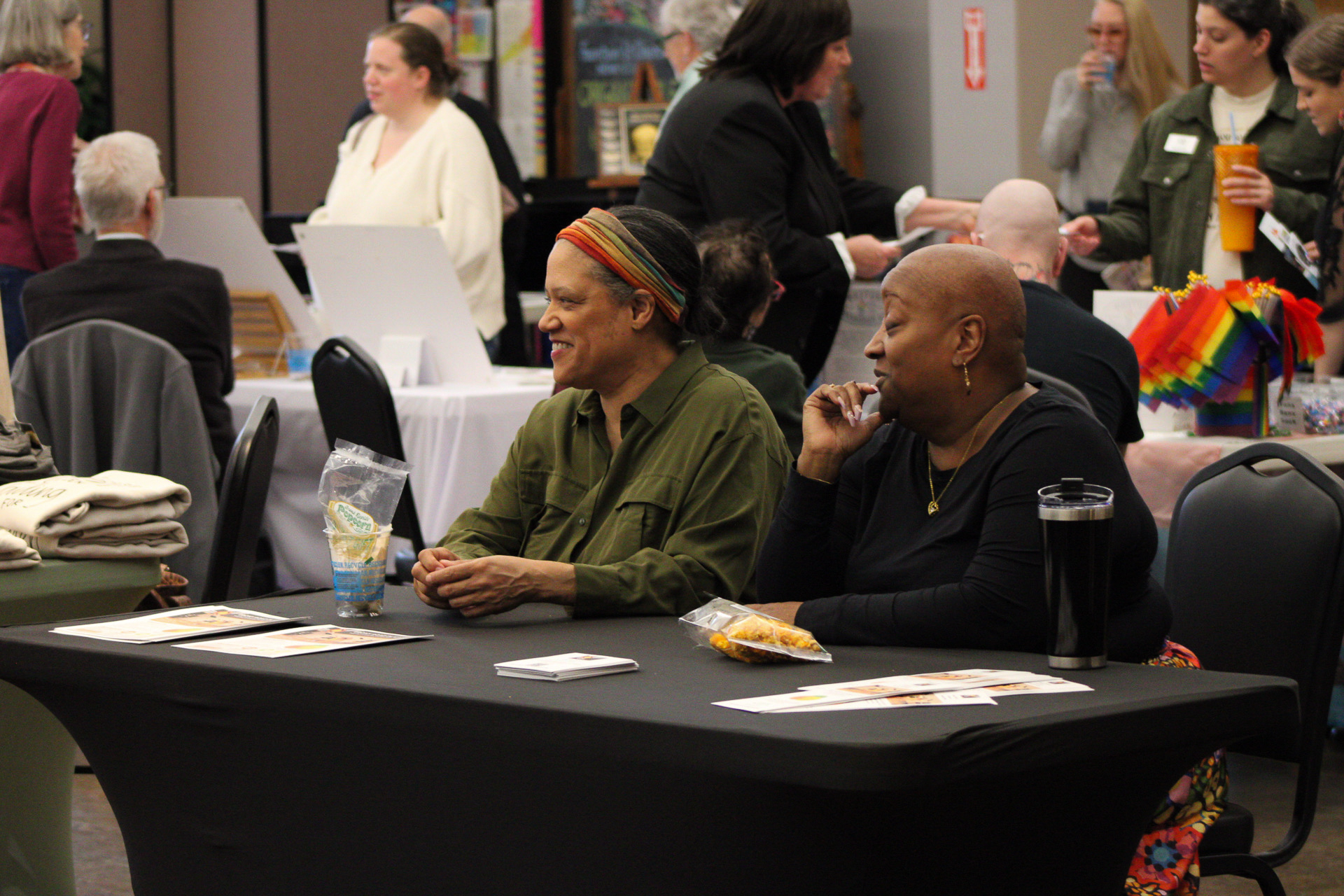
“Theater, particularly Black theater, is a voice that’s very important. It helps to bridge cultural gaps, and we are the only one in Grand Rapids,” Carolyn Ferrari, Secretary of the Ebony Road Players Board of Directors said. “I think opportunities like this, where we can talk about how theater can be integrated into other causes, is very important. It’s about partnership and learning. I think it’s important for us to be here for those reasons.”
Marguerite VandenWyngaard, Ebony Road Players Board of Directors President, expanded on the idea, highlighting education, “Theater is activism. There are so many opportunities through theater. We have our kids’ production called Polka Dots, which is a Ruby Bridges story. It gives us an opportunity to really help students understand what it took for us to be where we are right now, even though there are folks that are trying to send us backwards. So theater as activism is incredibly important for us as Ebony Road Players.”
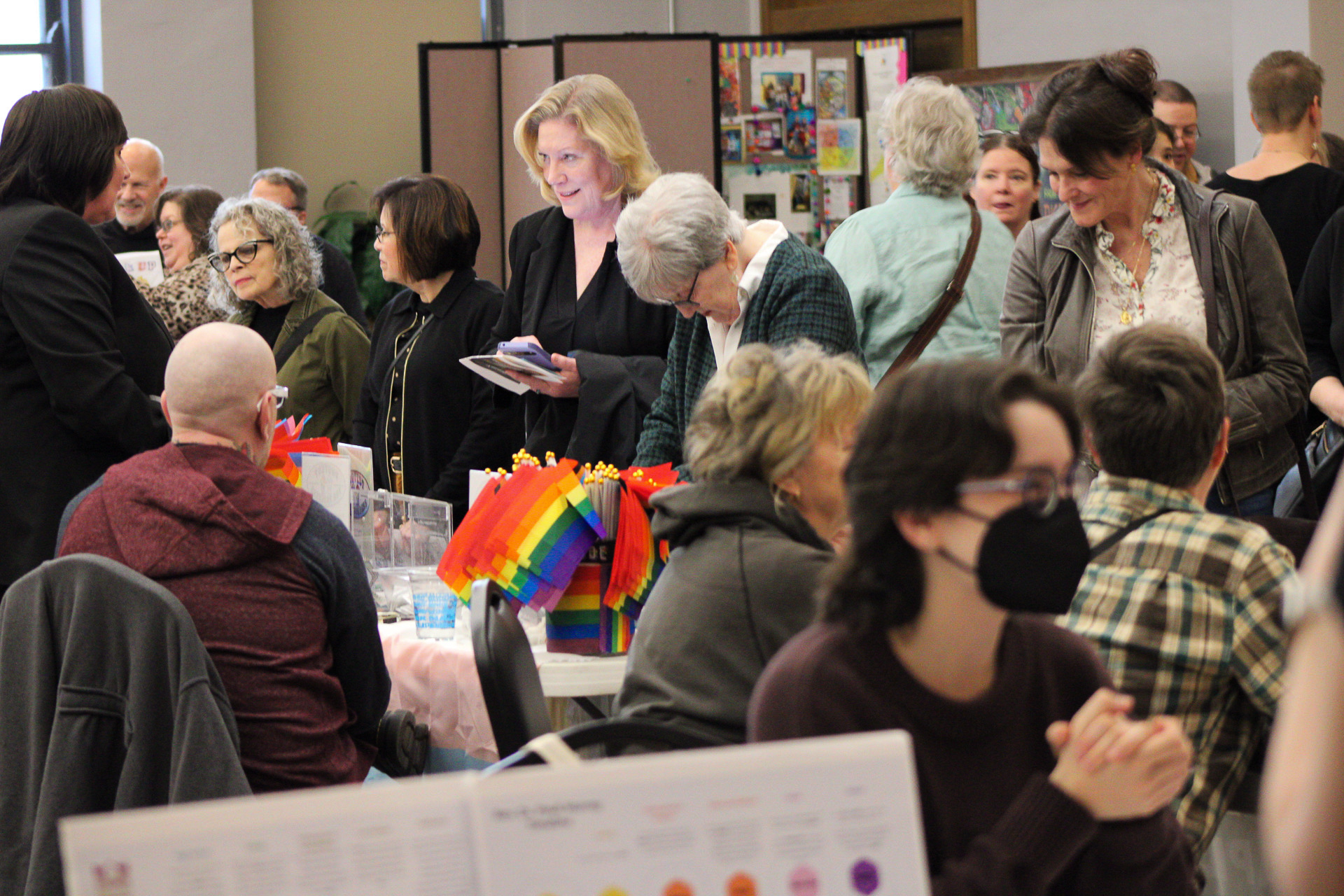
While Ebony Road Players engaged in activism through performing arts, other organizations highlighted different approaches to community impact.
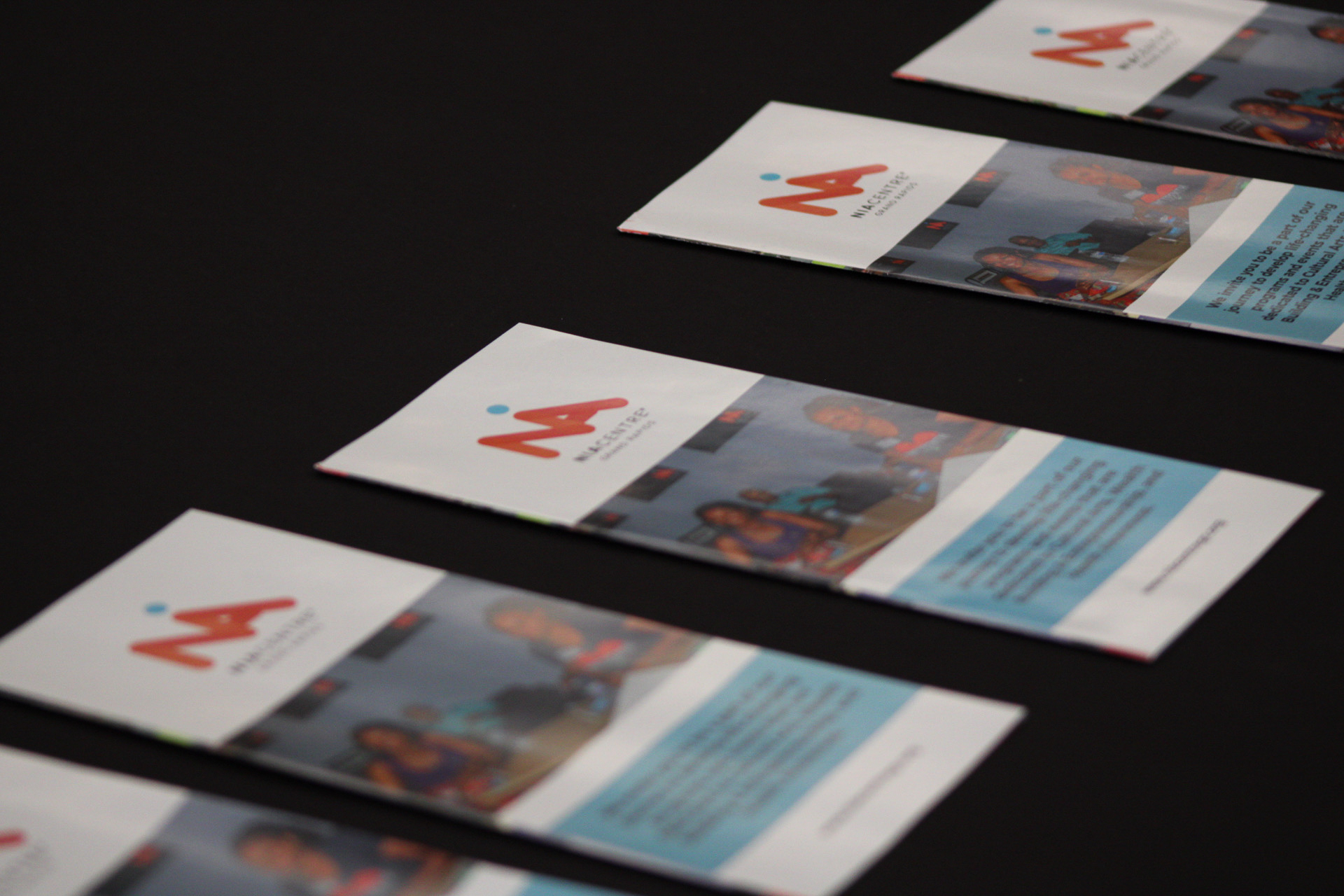
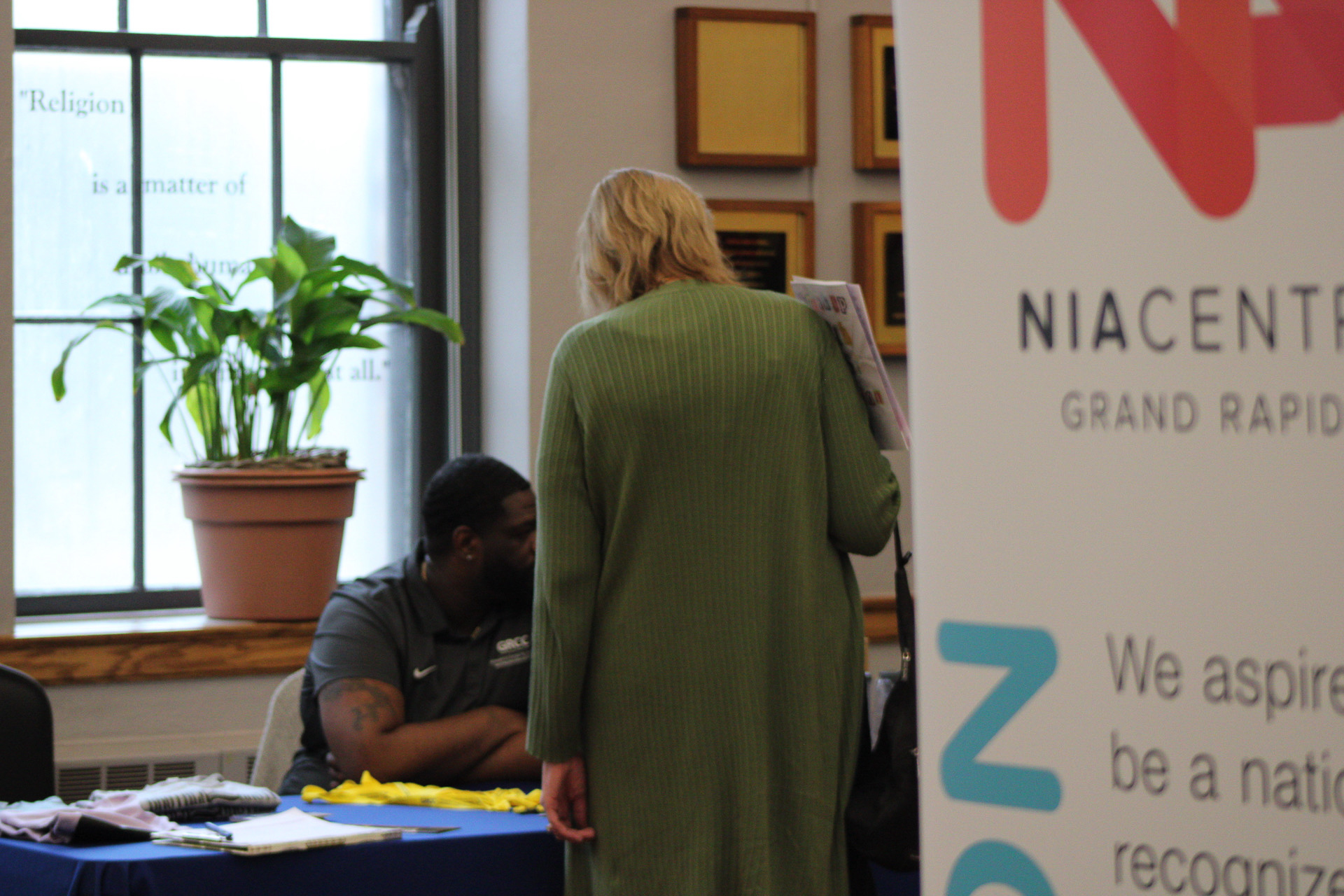
NIA Centre is an African American cultural non-profit organization based in Grand Rapids, supporting African American culture through exploring the intersections of health, art, wealth and education.
“Our heart is trying to be an organization that is sensitive to race, ethnicity, and diversity and inclusion. That is what NIA Centre is all about, that is our DNA,” NIA Centre Board Chair, Robert Upton said. “We welcome everybody into our center, into our space. At NIA Centre, the organization’s office is a safe place for anyone to come, to talk, share their story, and learn from one another. It’s beautiful. We’re doing great work in the area of cultural arts, health awareness, and entrepreneurship. Our goal is to help everyone be able to achieve great success in their dreams, whatever that may be.”
Upton said honoring Murray’s legacy is essential.
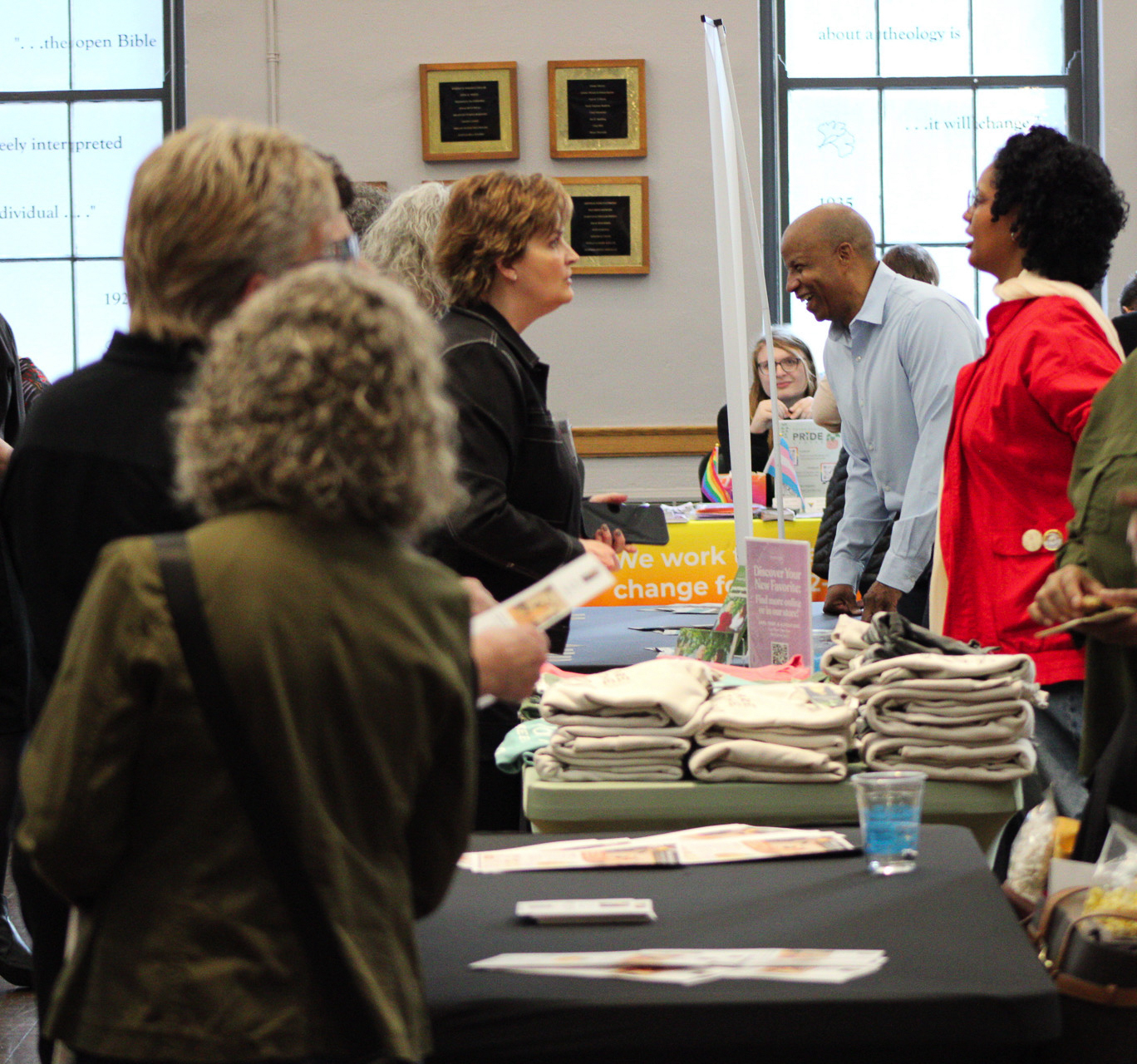
“To honor this great woman, who has done remarkable work and has left as a civil rights and a human rights leader, a legacy that cannot be ignored, I’m just thrilled. I’m honored to be here to celebrate her life. And I really believe this woman’s story has to be told to the world. So, again, I’m just honored to be here and celebrate this remarkable woman.”
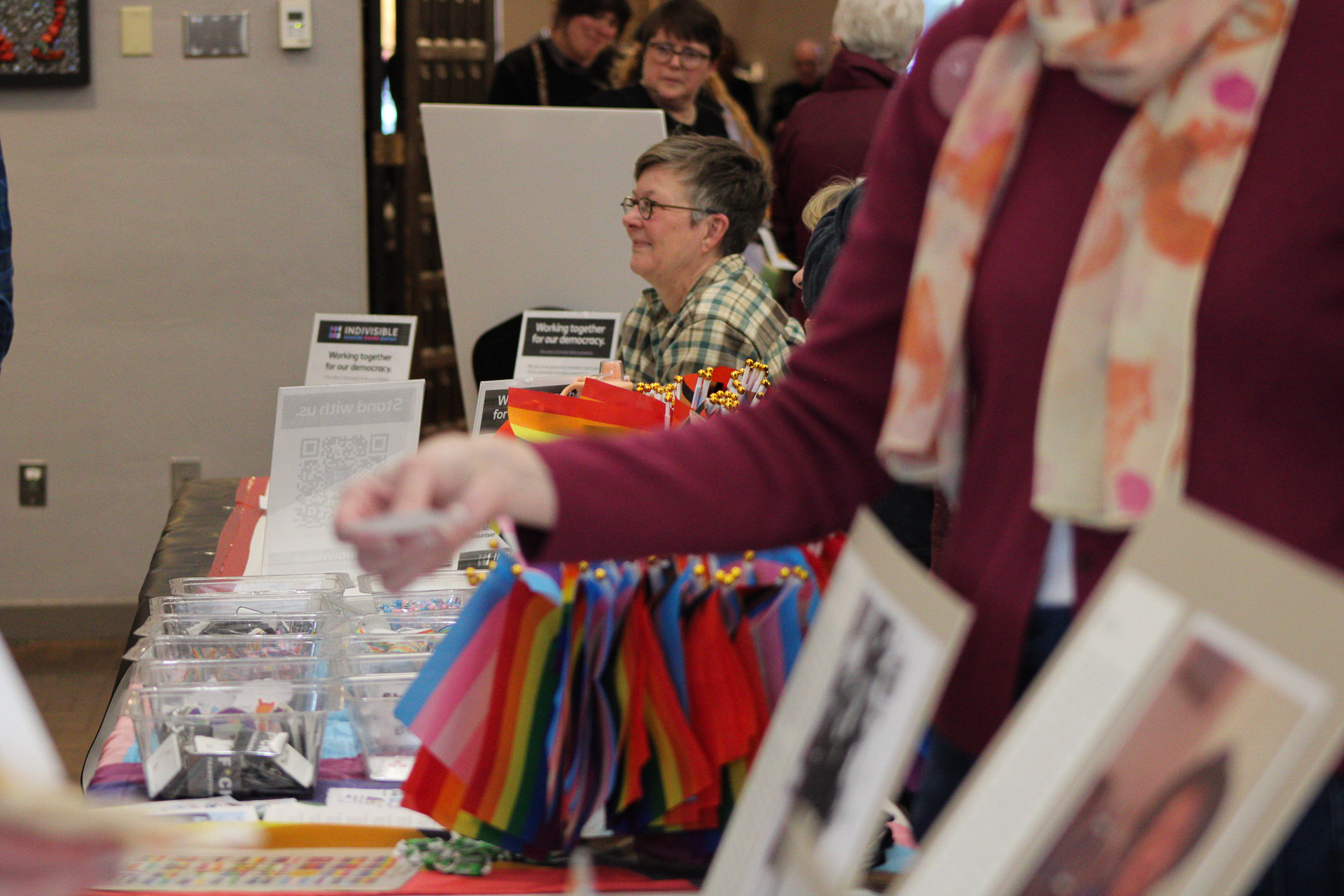
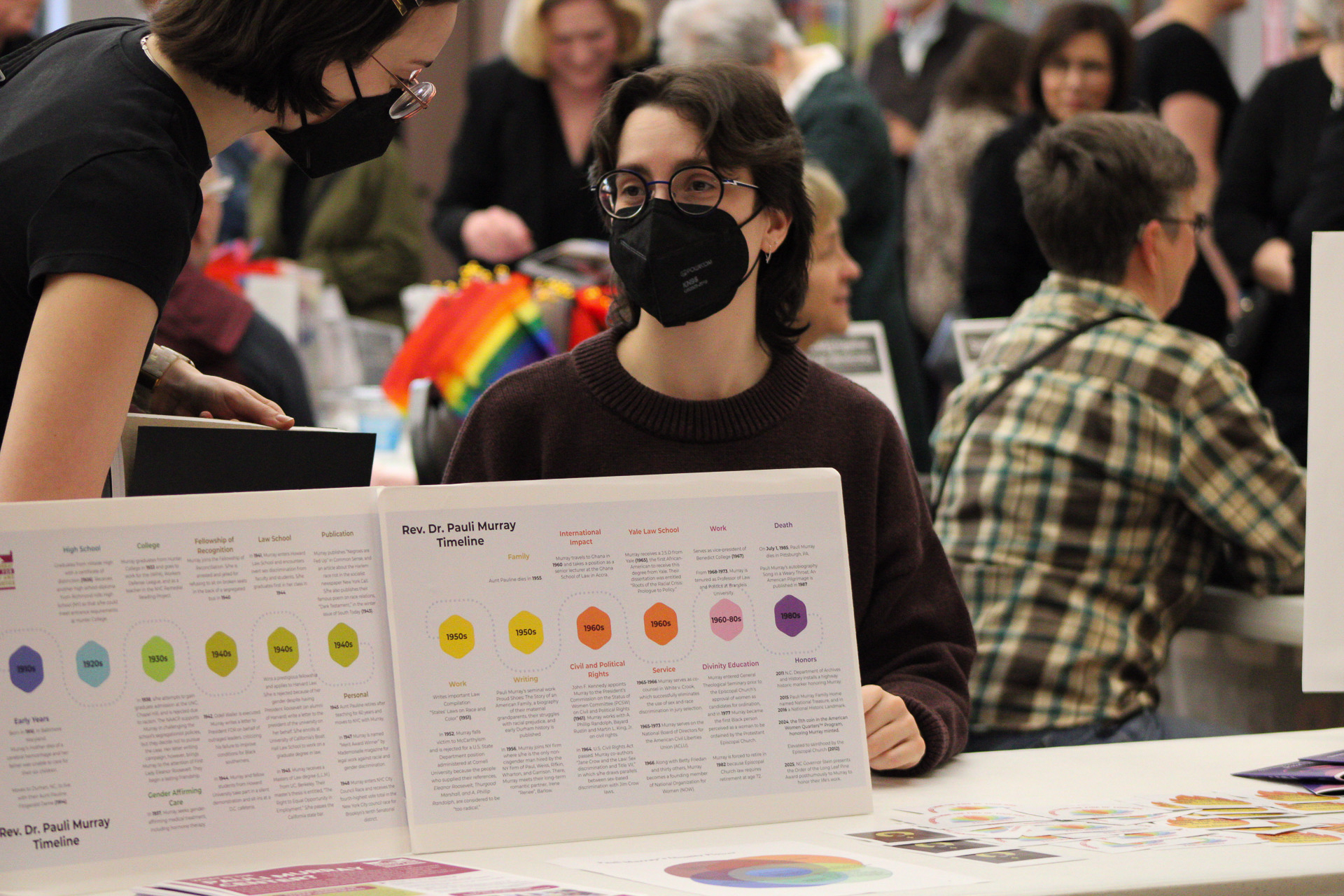
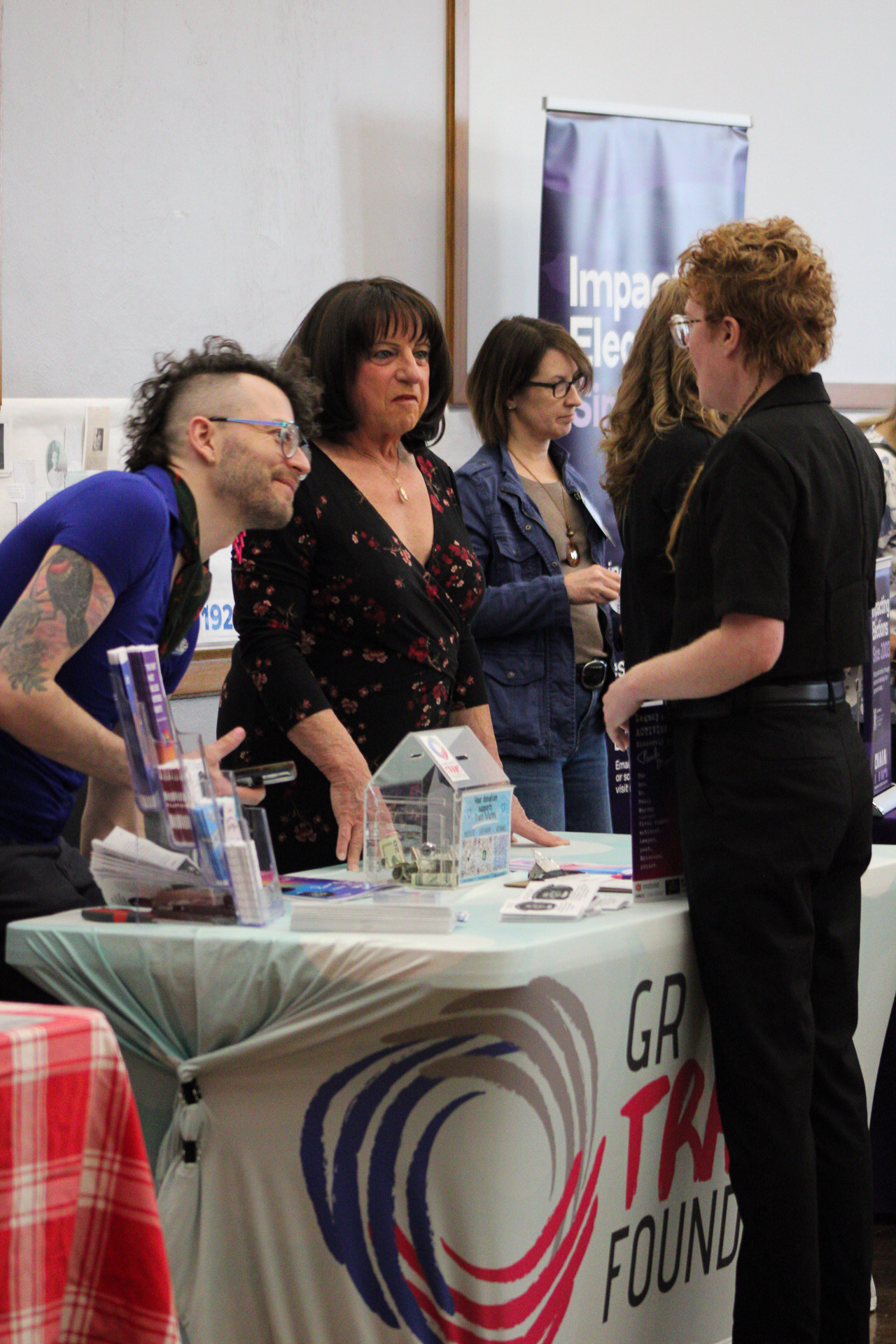
In addition to cultural and arts-themed organizations, there were also programs focused on building connections and providing resources to the community. Namely, GRCC’s Bob and Alecia Woodrick Center for Inclusion and Multicultural Affairs had a table at the event.
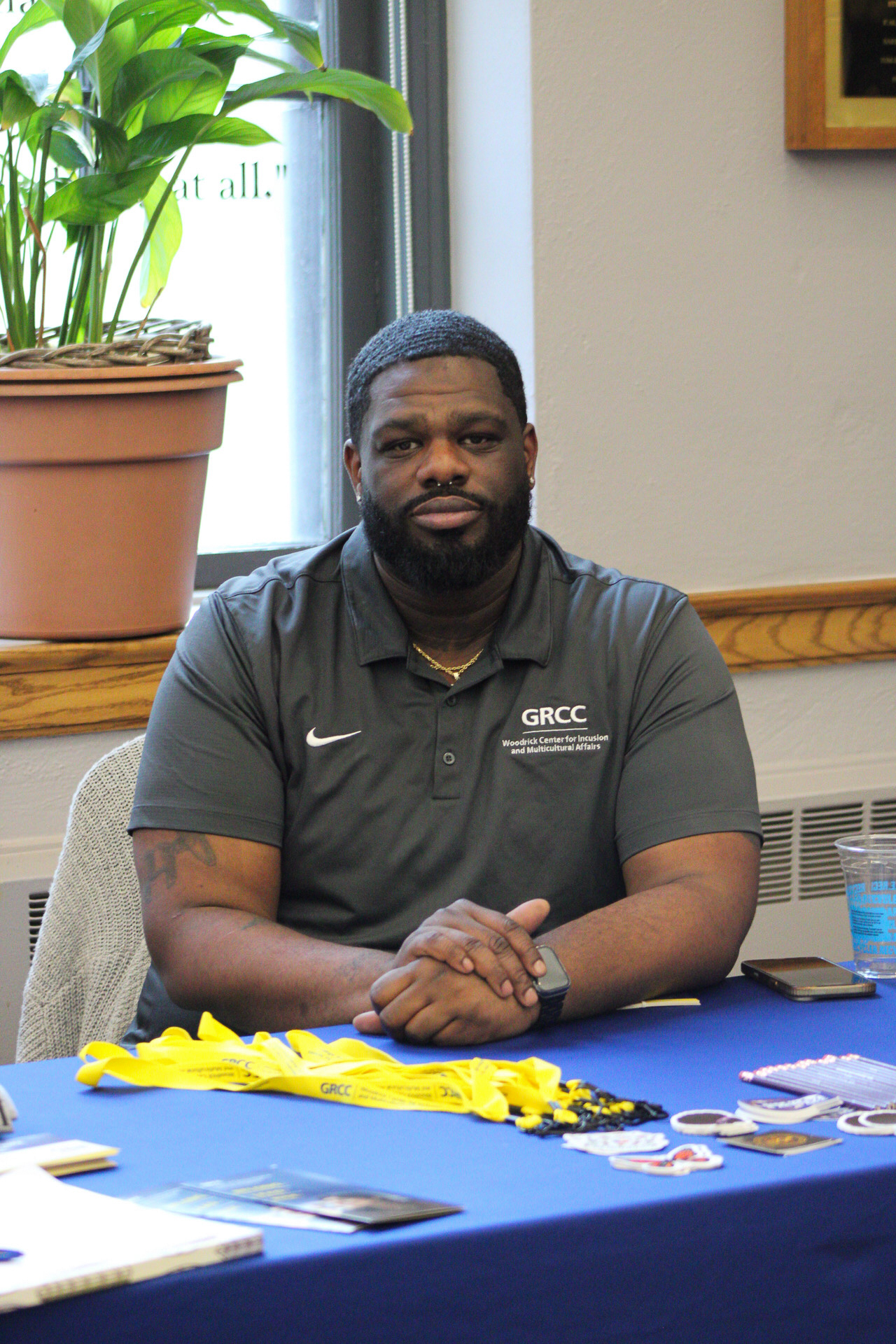
“It’s important for the Woodrick Center to be here today to let the community know what exactly we’re doing for students on campus, and how we’re here to support the students,” said Marcus Harris, a Woodrick Peer Mentor. “We’re fully inclusive, we’re supporting women’s history month at this event, and we want the community to know that we’re here to take care of their children, and them if they choose to become a student at GRCC.”
Beyond outreach, Harris reflected on his education about figures like Pauli Murray, who are often overlooked in traditional educational settings.
“I didn’t hear about Pauli Murray until we started this series and started collaborating with others that are like-minded people in terms of what Pauli Murray did and stood for. It’s important that we have these conversations in our communities and in our schools around women like her, who are not on the forefront.”
Madison Blanton, a Pre-Sociology student at GRCC, reflected on the opportunity to learn about Murray.
“As a student, it was really phenomenal to learn about somebody who you don’t traditionally hear about in academics, at least your K-12. So much of history is not only whitewashed but very androcentric. To see somebody who is at so many intersections, fought so hard, and did so many things, it was a wonderful experience to really learn about her and her life. I love it so much,” Blanton said.
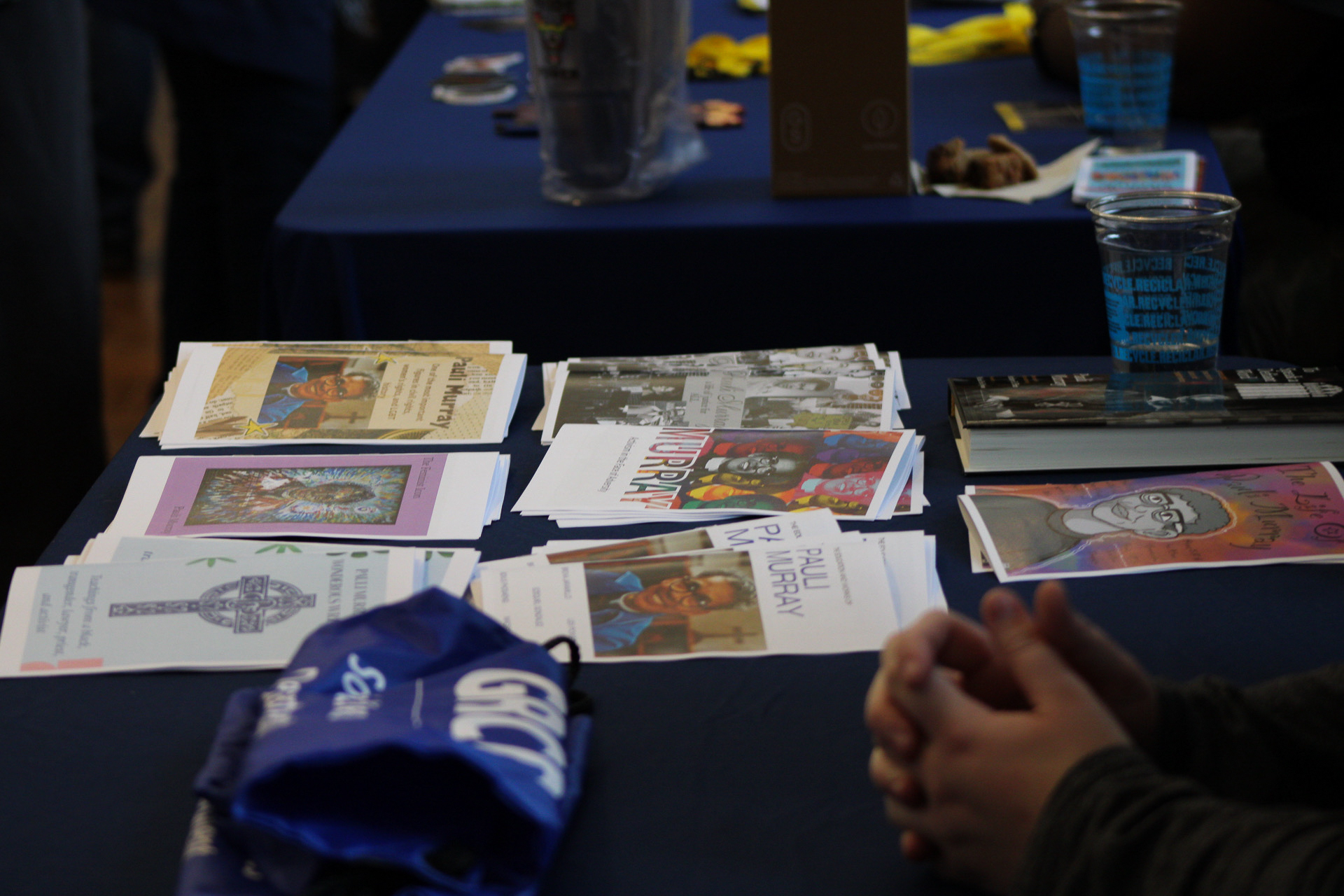
Emily Pain, Gender Studies Coordinator and Assistant Professor, shared information about the work of the Introduction to Gender Studies classes at GRCC.
“We made Pauli Murray zines to distribute. Gender Studies made several different zines about Pauli Murray’s life and work, so we’re here to try to spread word to the community as a form of education, as a form of advocacy. They’re a little bit social justice focused, because that’s what Pauli Murray’s work was about.”
Pain also shared the impact learning about Murray had on them, “I think that Pauli Murray is such a central figure in terms of feminist perspectives and the intersection of racism and sexism. I want to incorporate that more into my own general studies now that I have learned a whole lot about Pauli Murray.”
For Tennenhouse, the message of the performance is clear.
“I hope people leave understanding that they’re not alone– that they’re part of a long legacy of people who have worked toward justice. You may not see the results in your lifetime, but your work matters,” she said. “It’s never too late to speak up when you see injustice, and your voice matters, even when it feels like larger systems are trying to silence it.”