By Kyle Jackson
President Donald Trump signed Executive Order 14160, titled “Protecting the Meaning and Value of American Citizenship,” on Jan. 20, 2025, his first day back in office.
This executive order is designed to restrict birthright citizenship of children of Non-American citizens who were born within America.
This order is being challenged in the Supreme Court with Trump v. Barbara.
Trump v. Barbara began on Feb. 25.
“Barbara” is a pseudonym used to protect the plaintiff. Being a mother of three, Barbara left Honduras to evade the Mara 18 gang, traveling to New Hampshire seeking asylum.
Around the time President Trump signed the executive order, Barbara learned that she was pregnant with her fourth child.
Barbara, along with other anonymous people with similar fears, is currently represented by the American Civil Liberties Union and brought the case to the New Hampshire U.S. District Court.
According to the 14th Amendment, Section 1, “All persons born or naturalized in the United States, and subject to the jurisdiction thereof, are citizens of the United States and of the State wherein they reside. No State shall make or enforce any law which shall abridge the privileges or immunities of citizens of the United States; nor shall any State deprive any person of life, liberty, or property, without due process of law; nor deny to any person within its jurisdiction the equal protection of the laws.”
President Trump’s legal experts claim that illegal and temporary immigrants don’t fall under American jurisdiction. Therefore, their children should not be granted citizenship.
Darren Walhof is a professor of political science at Grand Valley State University.
“The only way to change an amendment to the Constitution is with another amendment.” Walhof stated in an email to The Collegiate. “For example, nationwide prohibition of alcohol was established through the 18th Amendment in 1919 and later ended through the 21st Amendment in 1933.”
Walhof has worked at GVSU since 2014 and specializes in constitutional law.
“If the Supreme Court rules in favor of the administration and upholds the executive order, it would represent a fundamental shift in the nature of U.S. citizenship,” wrote Walhof, “Since the end of the Civil War, when the 14th amendment was ratified, the U.S. has had birthright citizenship. Anyone born in the U.S. is automatically a citizen. The end of birthright citizenship means the government would be able to deny citizenship based on parental status to some of those born here.”
Currently, lower courts have stayed the executive order, preventing it from being enforced.
This resulted in the case reaching the Supreme Court in the Trump Administration’s attempt to have the stay lifted.
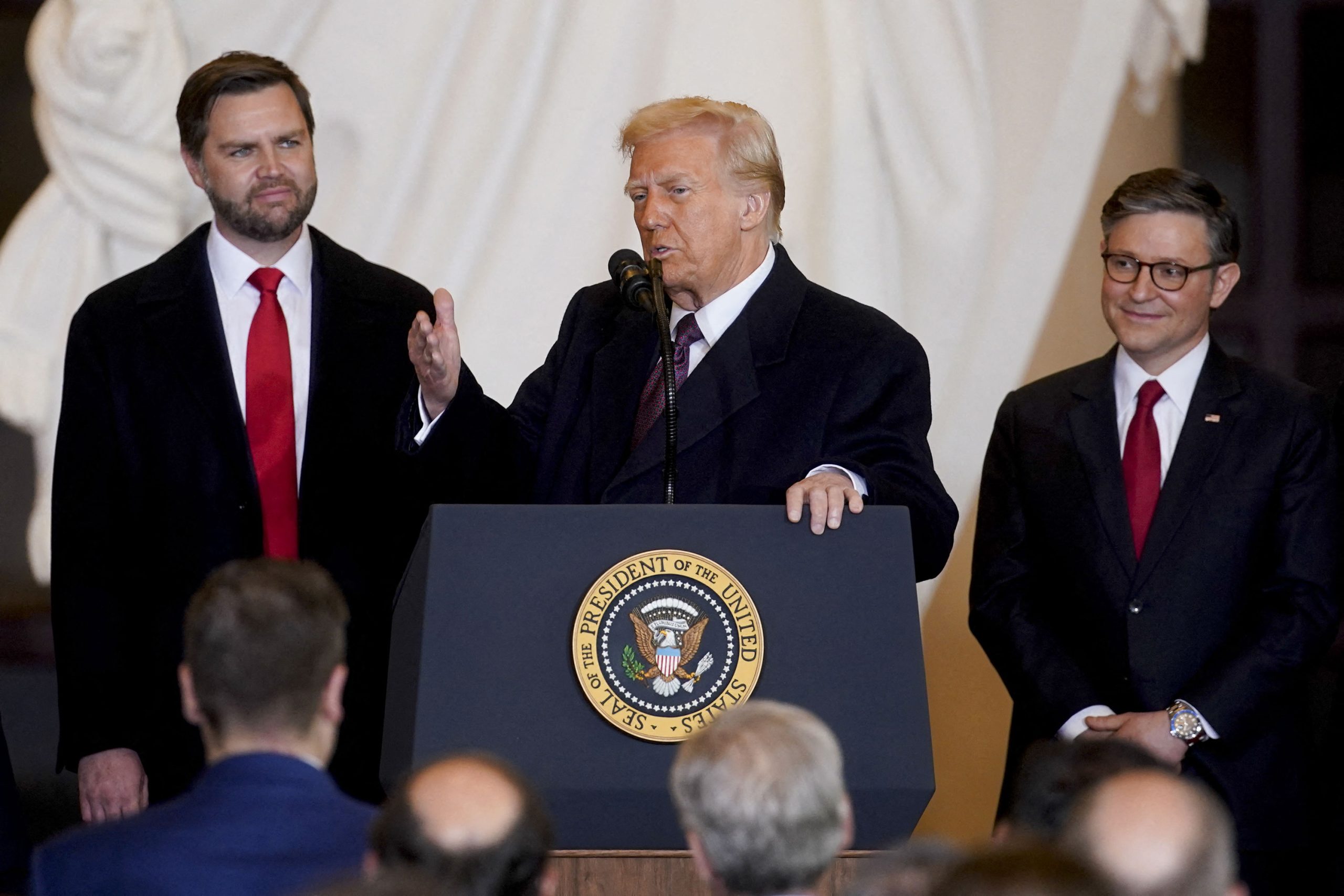
On April 2, President Trump attended part of the third Supreme Court hearing about his executive order.
“We are the only Country in the World STUPID enough to allow ‘Birthright’ Citizenship!” Trump posted an hour later.
The president only stayed for the arguments for his order on April 2, leaving before any oral rebuttal.