By Kole Meschke
If Grand Rapids Mayor David LaGrand has his way, the price to park in downtown Grand Rapids could increase dramatically.
On Jan. 14, 2026, the Mobile Grand Rapids City Commission gathered for its monthly meeting, where commissioners discussed several issues affecting downtown transportation and accessibility. Among the topics was the cost of street parking and whether higher prices could improve turnover and mobility.
During the discussion, Mayor David LaGrand suggested that Grand Rapids’ current on-street parking rates may be too low to serve their full purpose.
“Our street parking is too cheap,” LaGrand said. “I think this could be part of a coupled conversation where we ask, ‘How do we really increase the price of street parking?’ One reason to do that is cause then if you really need to get in to go into the bank, if street parking costs high enough, you can use it for its best use, which is, jump out of my car and do something a minute.”
LaGrand framed street parking as a short-term convenience rather than a place for employees or long-term visitors to leave their cars for hours. He argued that higher prices could encourage drivers to use city parking ramps instead, keeping curbside spaces available for quick stops.
“(Street parking) shouldn’t be used by the waitress at the wine bar downtown cause she grabbed a spot at 5 o’clock and knows that she just has to feed the meter till 7 and gets to occupy that spot the rest of the night,” LaGrand said. “That’s a terrible use of that space.”
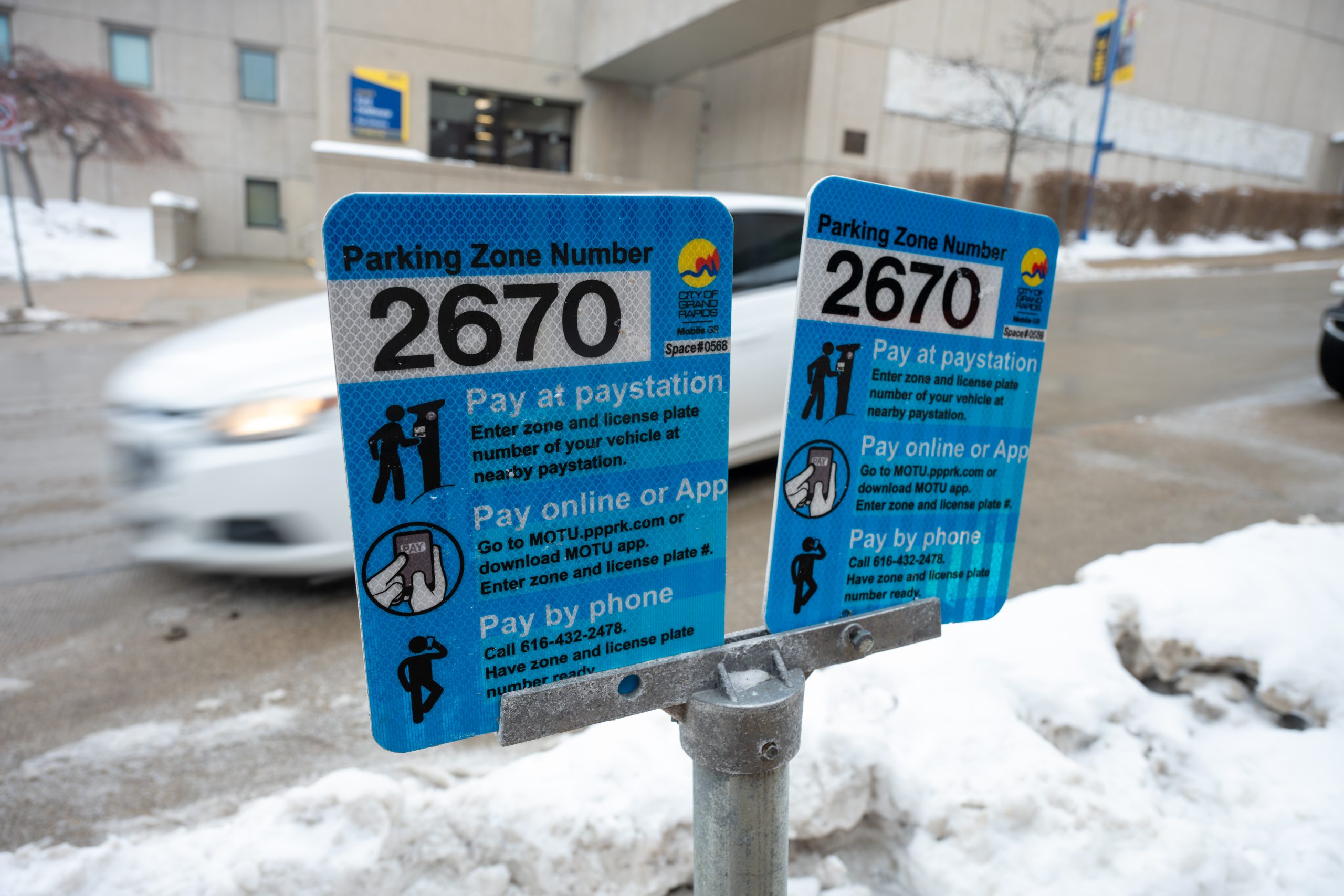
Under current rates, street parking costs between $1 and $2.25 per hour. City-owned parking ramps start at $2 per half hour, with a daily maximum of $24. Event parking typically ranges from $10 to $25.
Mayor LaGrand discussed what a higher price point might look like for street-parking, with figures as high as $6 per hour mentioned during the conversation.
For students and workers downtown, including many at Grand Rapids Community College, even a small increase could have noticeable effects. About 70% of GRCC students attend part-time, and roughly 70% live in Kent County, meaning the thousands of students who learn and work downtown would be directly impacted.
Peter Heintz, a Sports Management student at GRCC, said, “I probably use the street parking two to three times a month, just for going out with friends, you know? So, I’d have to say I have a negative opinion on this, definitely. Tripling the rate? Nope, no thanks.”
LaGrand also noted that other cities have reinvested parking revenue into downtown improvements, such as building facade upgrades or other neighborhood enhancements. He suggested that the additional funds could support safety initiatives, partnerships with organizations like United Way, and expanded Downtown Ambassador programs.
However, after public attention grew around the discussion, LaGrand released a statement clarifying that the conversation was exploratory rather than a formal proposal.
“At a recent Mobile GR Commission meeting, I participated in a brainstorming discussion about ways to encourage greater use of parking ramps as one tool to support downtown mobility,” LaGrand said. “As one of thirteen commissioners, I shared broad, exploratory thoughts as part of an open conversation, not a specific proposal or plan.”
He emphasized that the city remains focused on balancing business needs with affordability.
“Available street parking is vital for downtown and neighborhood businesses, and the City is committed to working closely with business owners to maximize convenience for customers and create the conditions for businesses to thrive. There is currently no proposal before the City of Grand Rapids to raise on-street parking rates, nor has City staff recommended an increase.”
For now, any potential change remains hypothetical. Still, the discussion underscored an ongoing tension between keeping parking spots affordable for residents and workers and prioritizing turnover that supports downtown businesses.